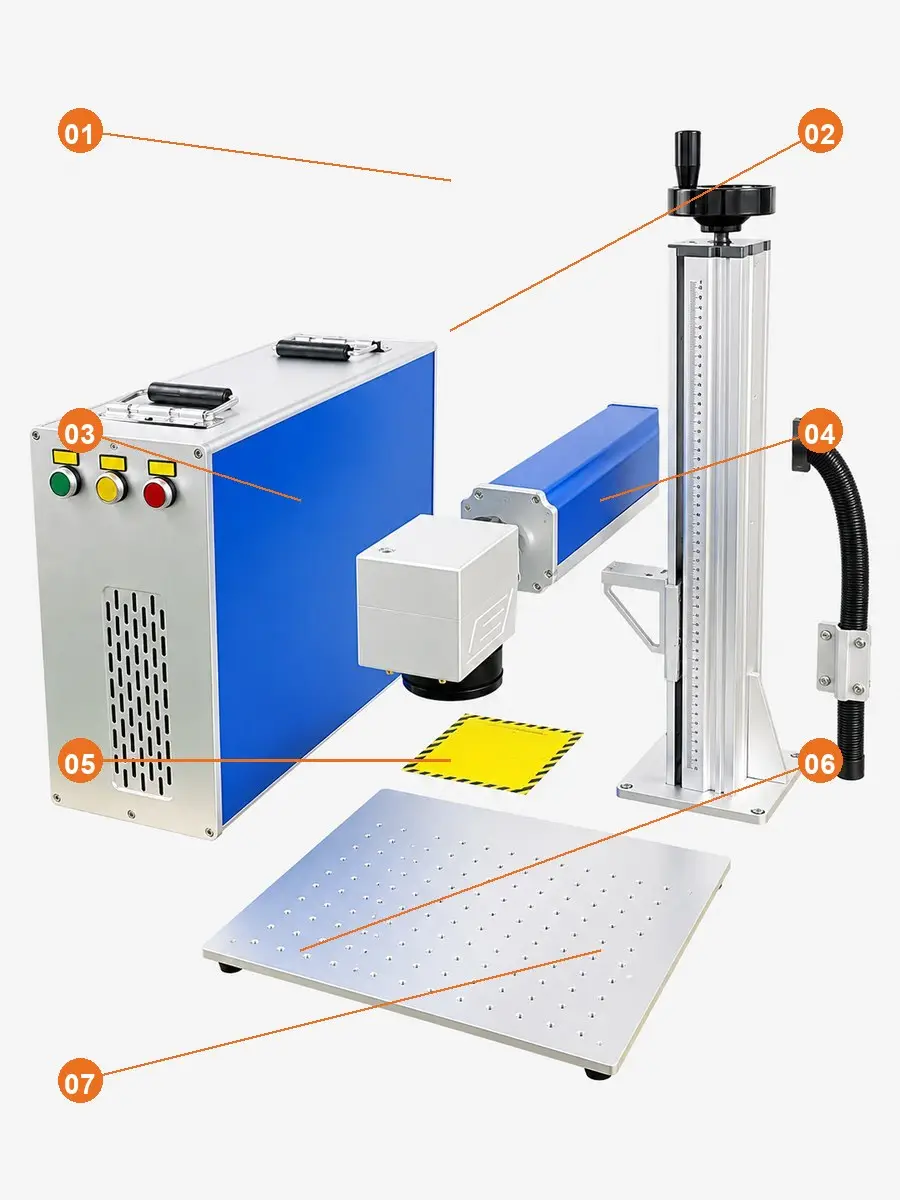
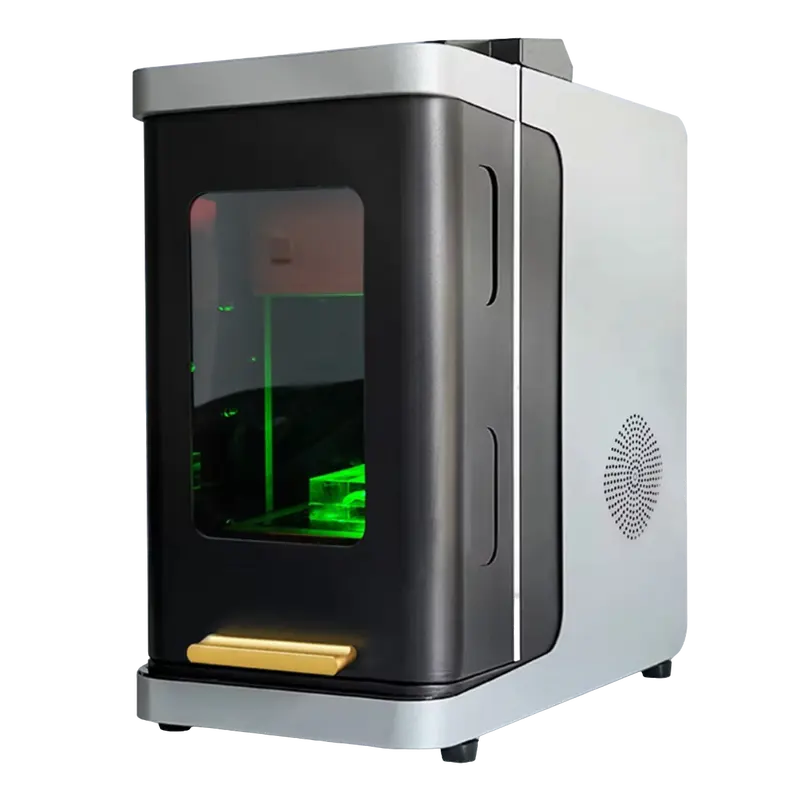
Main closed cabinet with front controls and carrying handles.
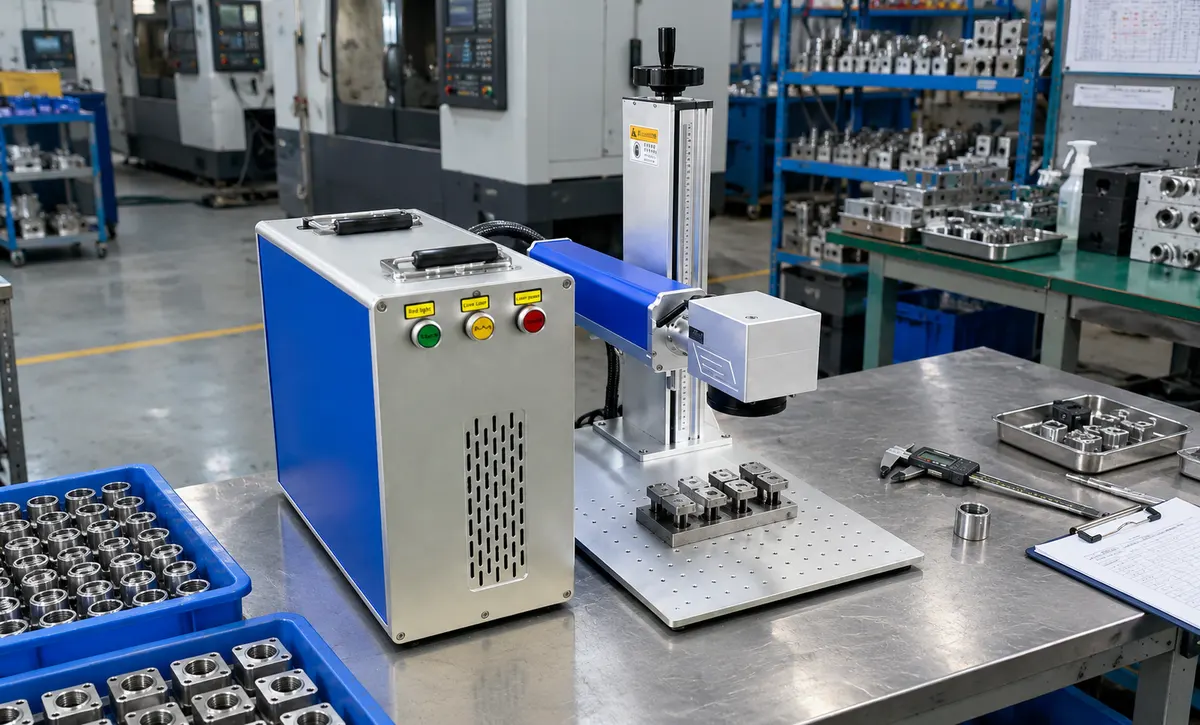 Machined parts are staged for batch identification at the marking station

Practical Marking for Production, Batch Identification and Traceability
The four scenes show the machine used for metal nameplate identification, hardware production traceability, machined-parts batch marking, and electrical component marking during a night shift. Each setup places suitable workpieces at the marking area within a practical production or traceability workstation.
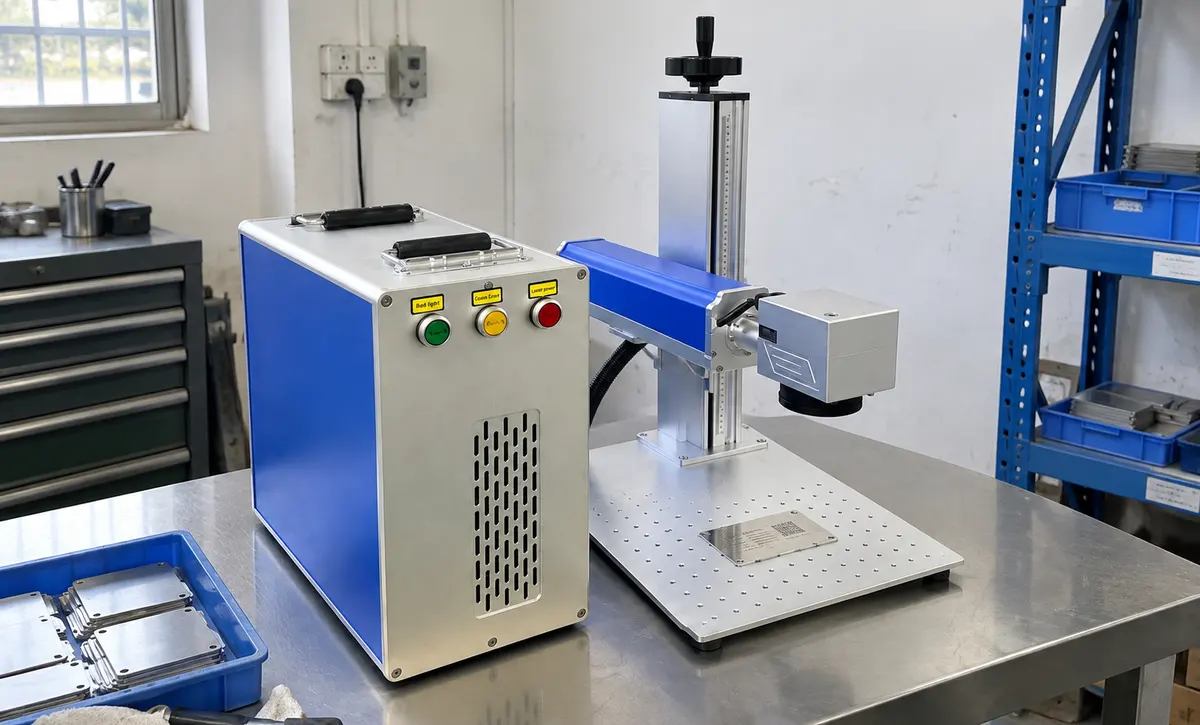 Metal nameplates are positioned for direct workstation identification marking
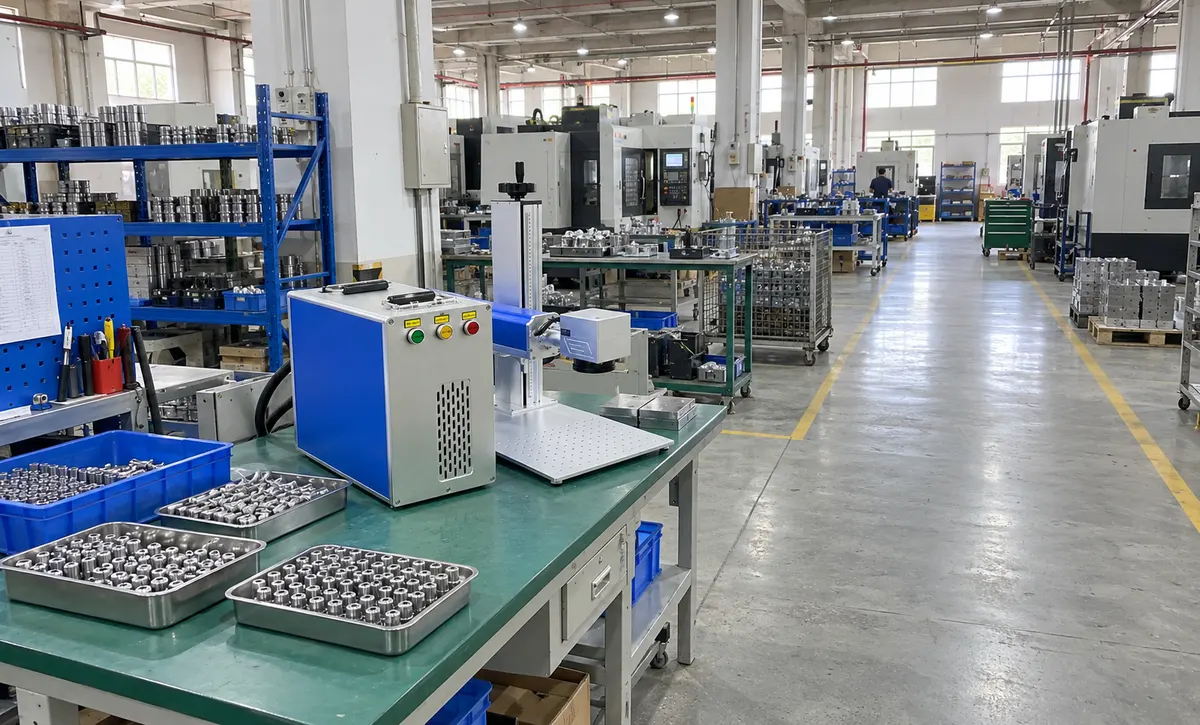 Hardware parts are organized for traceability marking in productionMachined parts are staged for batch identification at the marking station
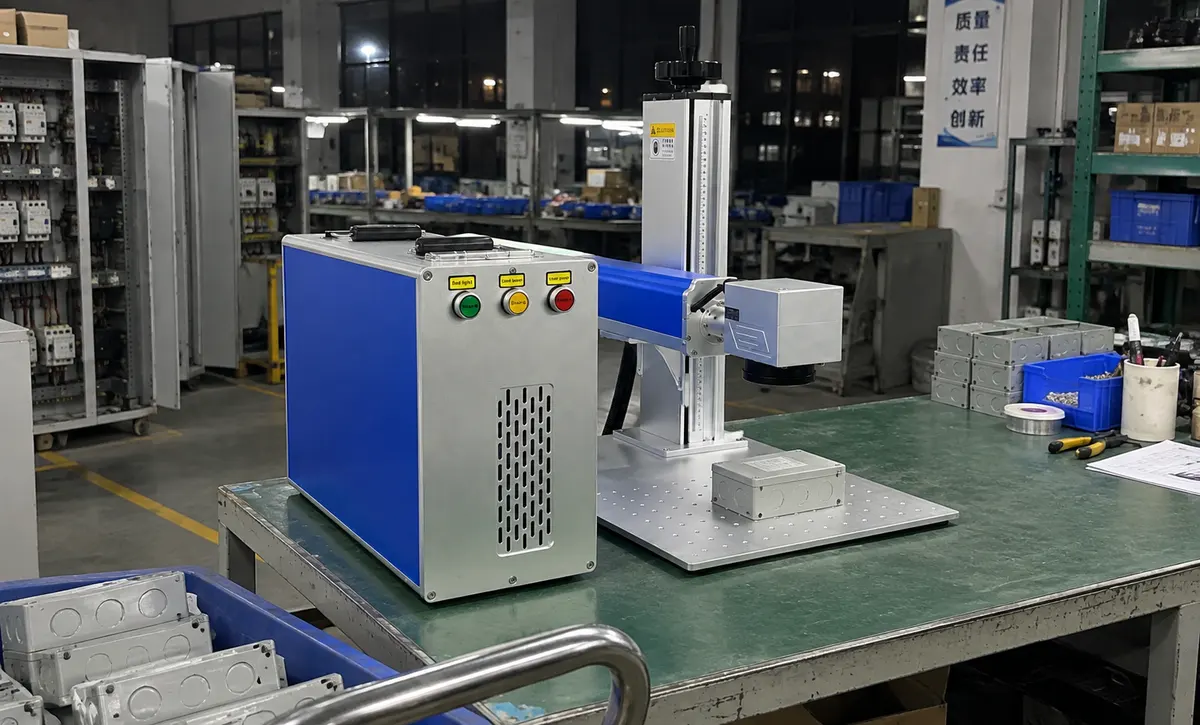 Electrical components are marked under practical night-shift conditionsMetal nameplates are positioned for direct workstation identification markingHardware parts are organized for traceability marking in production
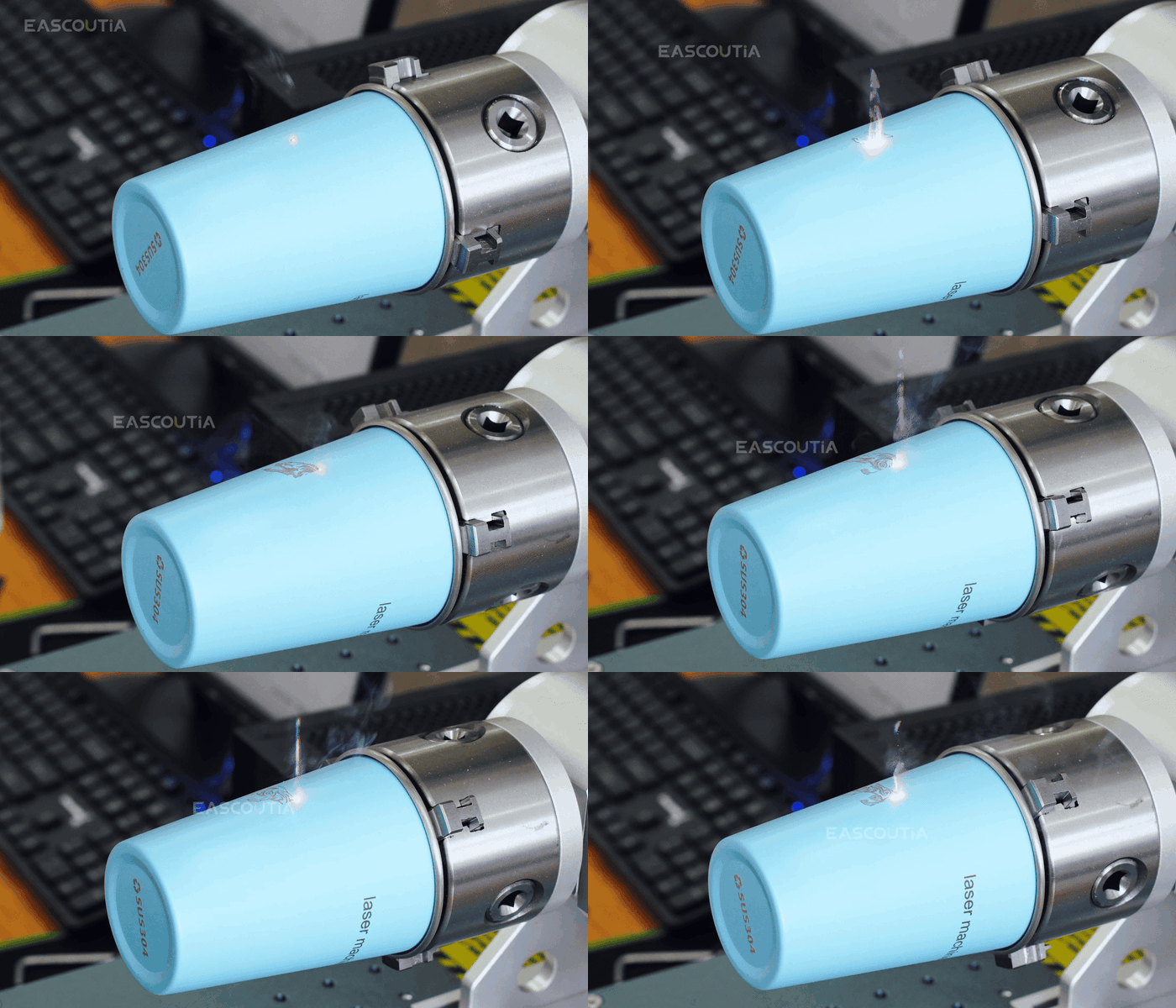
Full-wrap marking on tumblers and mugs in one rotary setup.
Main closed cabinet with front controls and carrying handles.
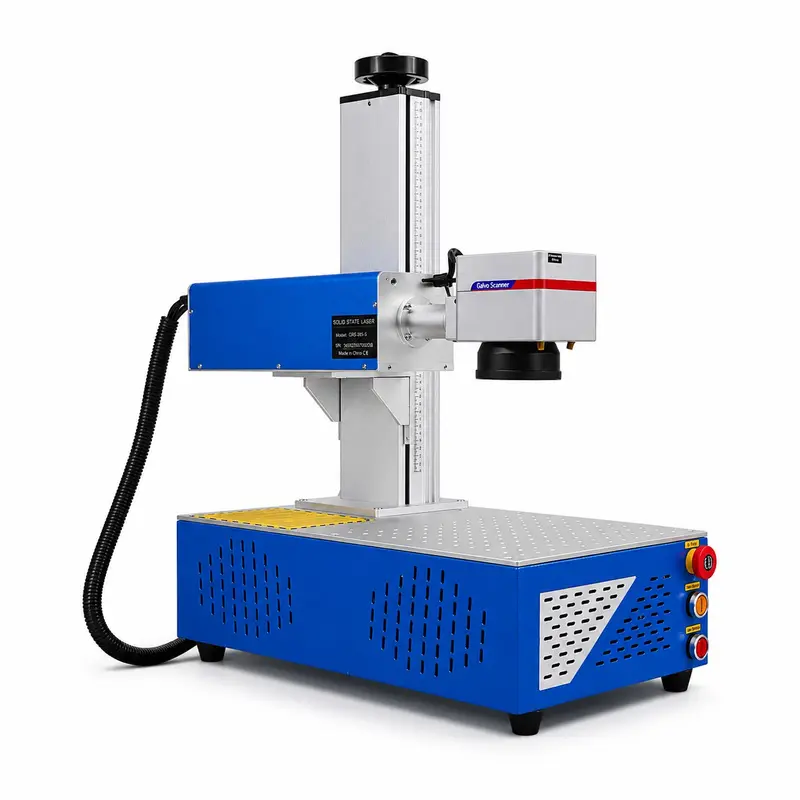
Front panel carrying the three colored operating buttons.
Silver fixture table for stable part placement.
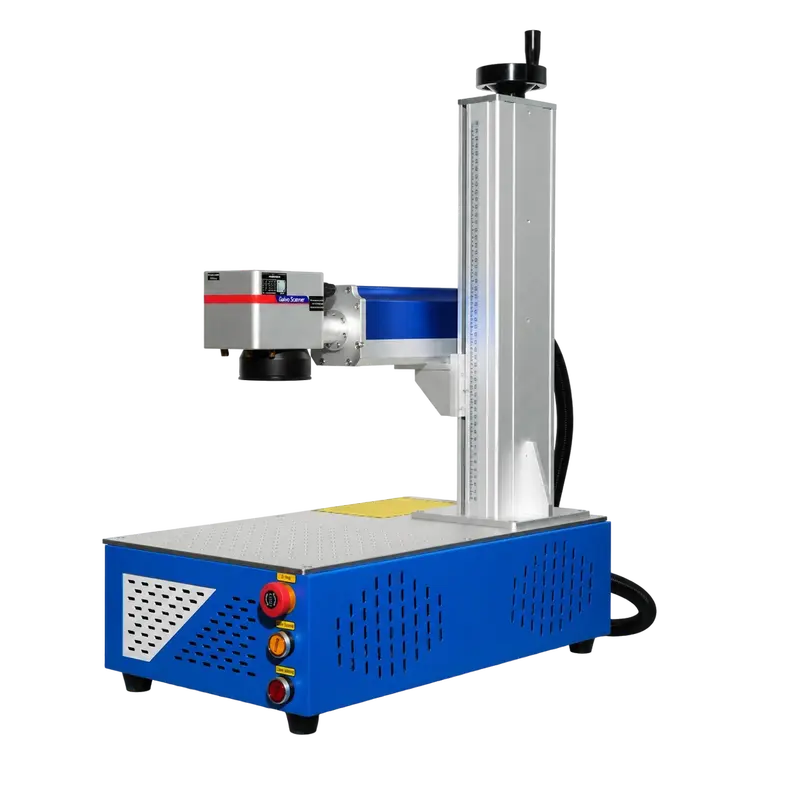
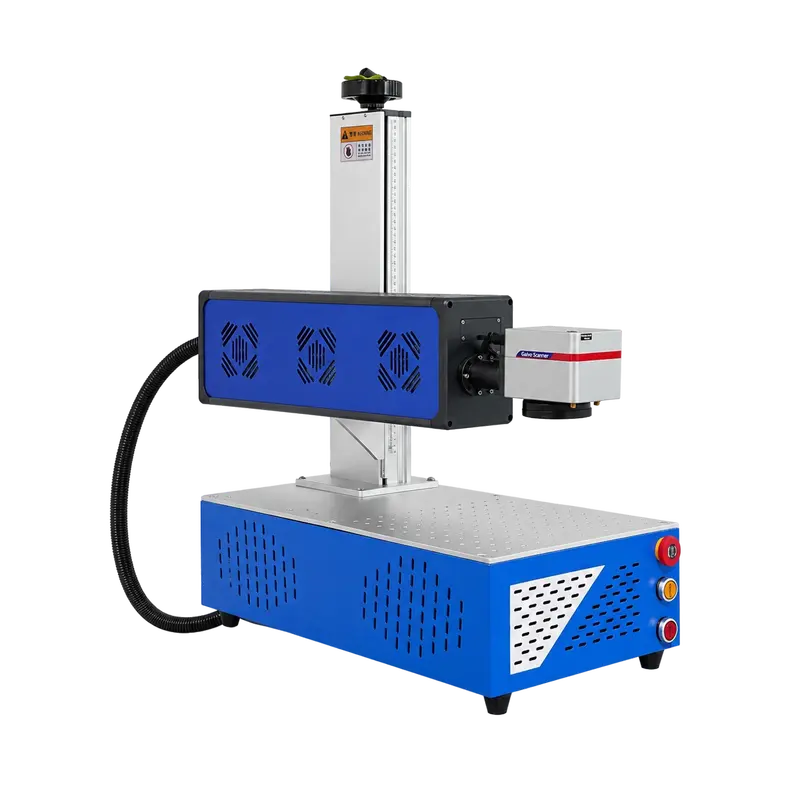
Blue arm carrying the marking head from the column.
White marking head aligned with the work surface.
Vertical column for height positioning.
Flexible hose and visible mounting bracket for cable routing.
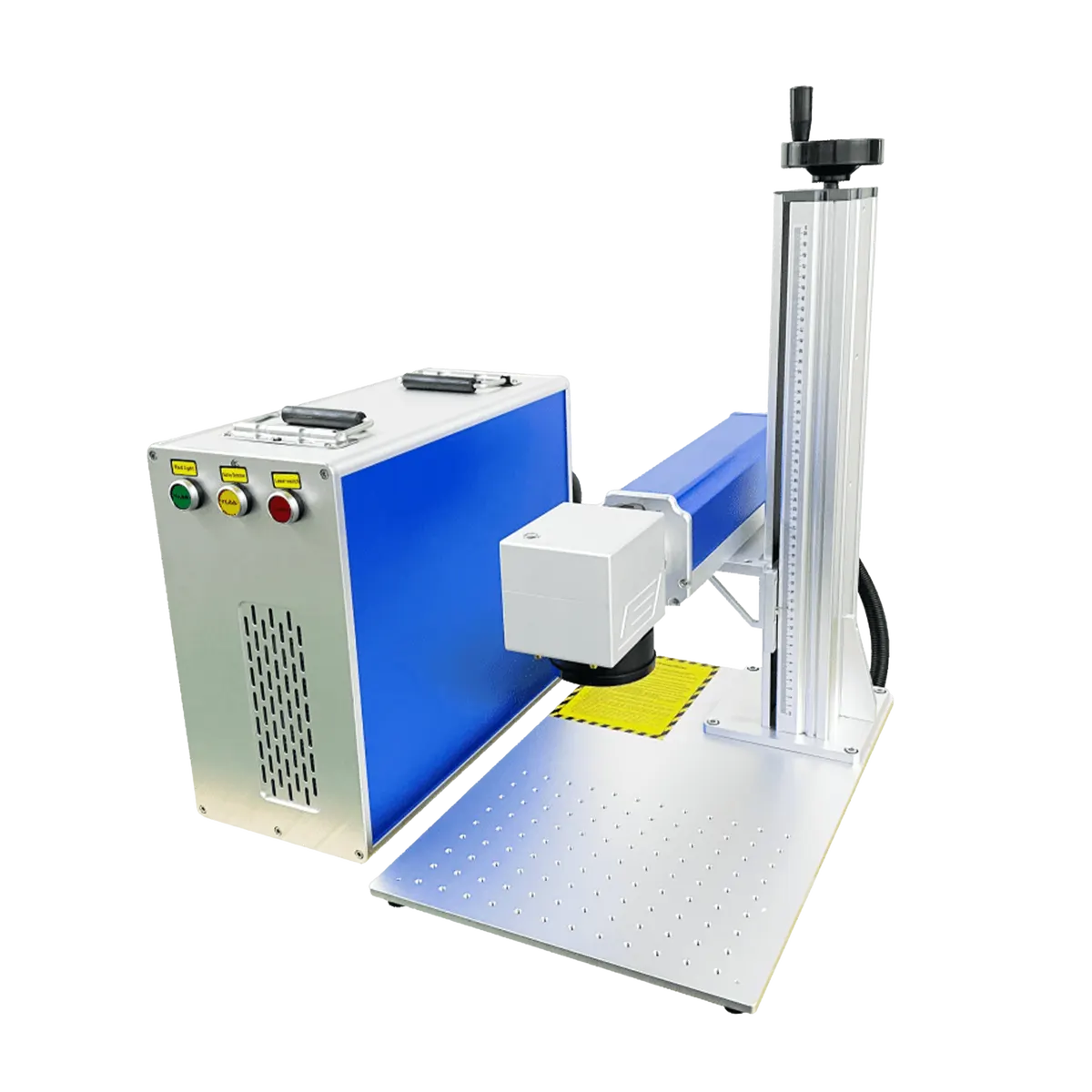
SF Series full machine appearance display. Robust structure and neat layout for easy installation and movement.
00:19SF Series full machine appearance display. Robust structure and neat layout for easy installation and movement.
00:38SF Series equipment usage video, intuitively showing the whole process of machine operation and material processing.
00:12Export packaging for SF series equipment. Reinforced wooden case protects machines from collision and moisture during long-distance shipping.
Real on-site records from our factory, offering a practical view of our production capability and delivery readiness.
We centrally purchase equipment, test the data and the machine, then publish the models that clear our review. You get a shorter path from "could work" to a quote your team can act on.
Our team is ready to advise you on the best product configuration and procurement plan.
info@eascoutia.com400 158 5899The provided applications include metal nameplates, hardware parts, machined parts, and electrical component identification and traceability marking.
Yes. The visible vertical column includes a handwheel and scale for adjusting the marking-head position relative to the work surface.
It provides a defined working area for positioning suitably sized workpieces beneath the marking head.
Machined-parts batch marking is one of the provided application scenarios. Actual workpiece size and marking requirements should be confirmed for the project.
Confirm the workpiece material, dimensions, marking content, production workflow, and any special application requirements before selecting the appropriate configuration.
 Simplified explanation