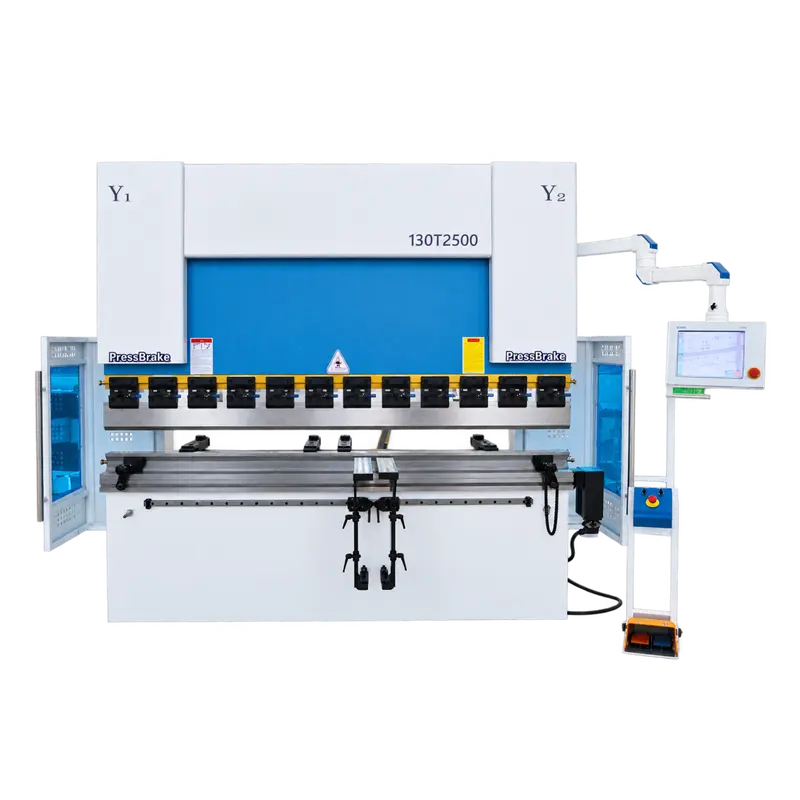
The welded frame supports the bed, ram, cylinders, tooling, and positioning assemblies.
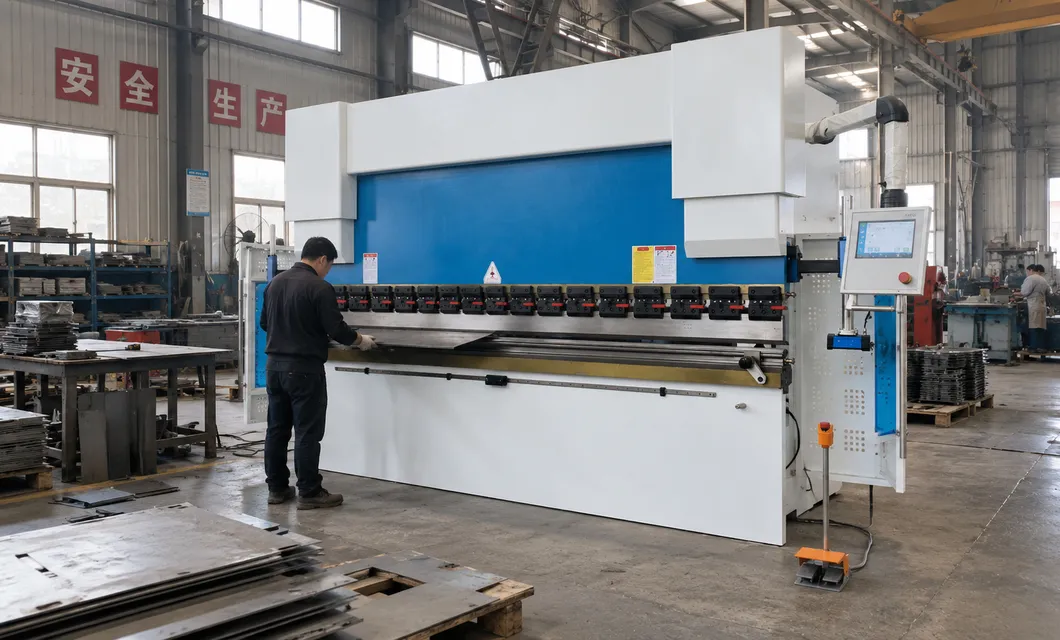 Profile Forming


Torsion Bar Servo CNC Press Brake
Used in general sheet-metal shops, cabinet and enclosure fabrication, machinery maintenance, equipment production, and contract bending, this press brake forms panels, brackets, channels, and profiles. It can be set up with the required segmented punch and lower-die opening, front supports, servo backgauge position, mechanical stop, and table crowning for repair work, mixed orders, or repeat batches.
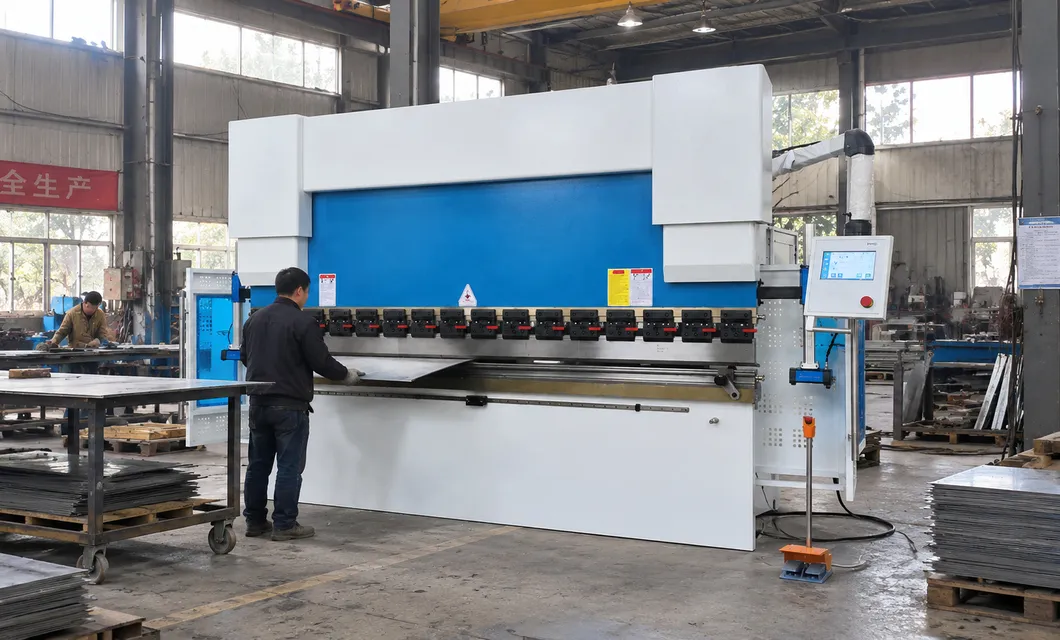 Bend Program Setup
 Sheet PositioningProfile Forming
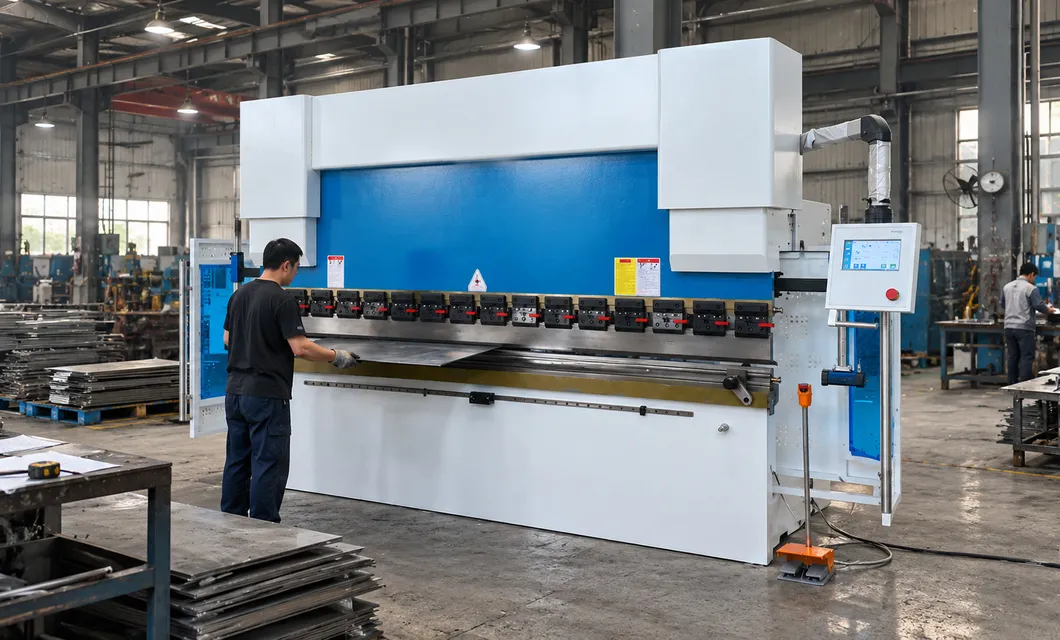 Workshop Batch WorkBend Program SetupSheet Positioning
The safety light curtain detects entry into the work area and provides a prompt control signal to reduce accidental approach risks.

The welded frame supports the bed, ram, cylinders, tooling, and positioning assemblies.
The ram carries the upper punch and transfers hydraulic cylinder motion through each bend.
Two hydraulic cylinders provide upper transmission for the ram during forming work.
The torsion shaft links both ram sides to support coordinated vertical movement.
Segmented upper tooling and the multi-V lower die form the selected bend profile.
The servo-positioned backgauge establishes the sheet reference for planned bend locations.
The mechanical stop adjustment controls the lower position of ram travel for each job.

TP10S Torsion Axis press brake on-site demonstration. Torsion axis synchronous transmission ensures stable bending and precise angles for metal sheets.
00:36TP10S Torsion Axis press brake on-site demonstration. Torsion axis synchronous transmission ensures stable bending and precise angles for metal sheets.
00:36TP10S Torsion Shaft press brake operation demo. Torsion shaft synchronization keeps balance on both sides, stable bending angle with easy foot pedal control.
Real on-site records from our factory, offering a practical view of our production capability and delivery readiness.
Each unit is checked before delivery against the following inspection items.
Our team is ready to advise you on the best product configuration and procurement plan.
info@eascoutia.com400 158 5899It is intended for panels, brackets, channels, and common formed profiles within the verified capacity and tooling range.
A torsion shaft links both sides of the ram while the dual hydraulic cylinders provide the upper transmission.
The supplied two-axis arrangement controls ram movement and backgauge positioning for routine programmed work.
Segmented upper tooling and mechanical quick clamps support practical changes between compatible bend profiles.
Share the material, thickness, part length, bend drawing, required profile, and expected production quantity.



 Simplified explanation
