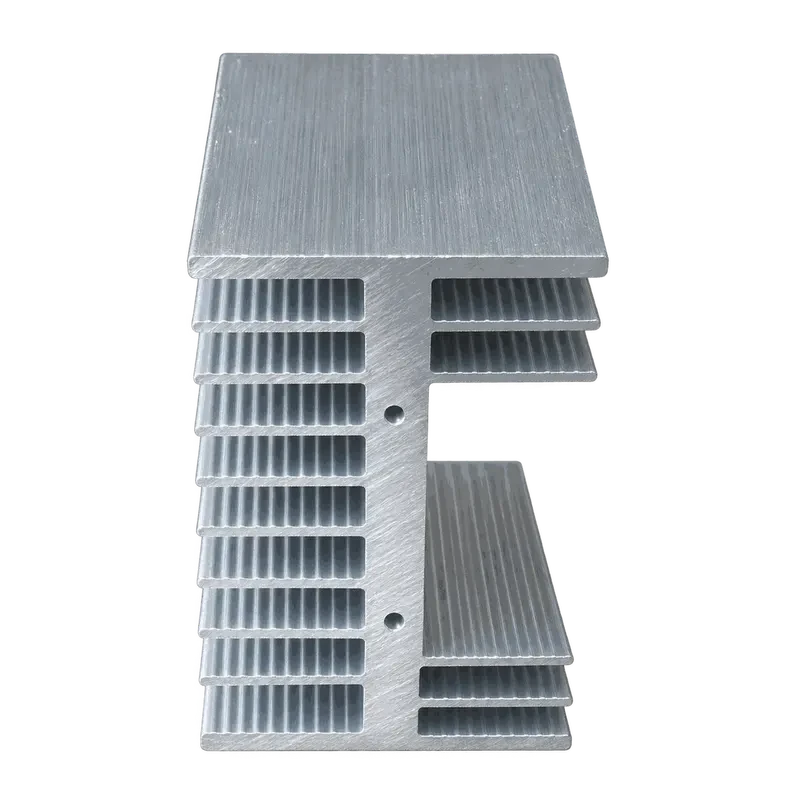
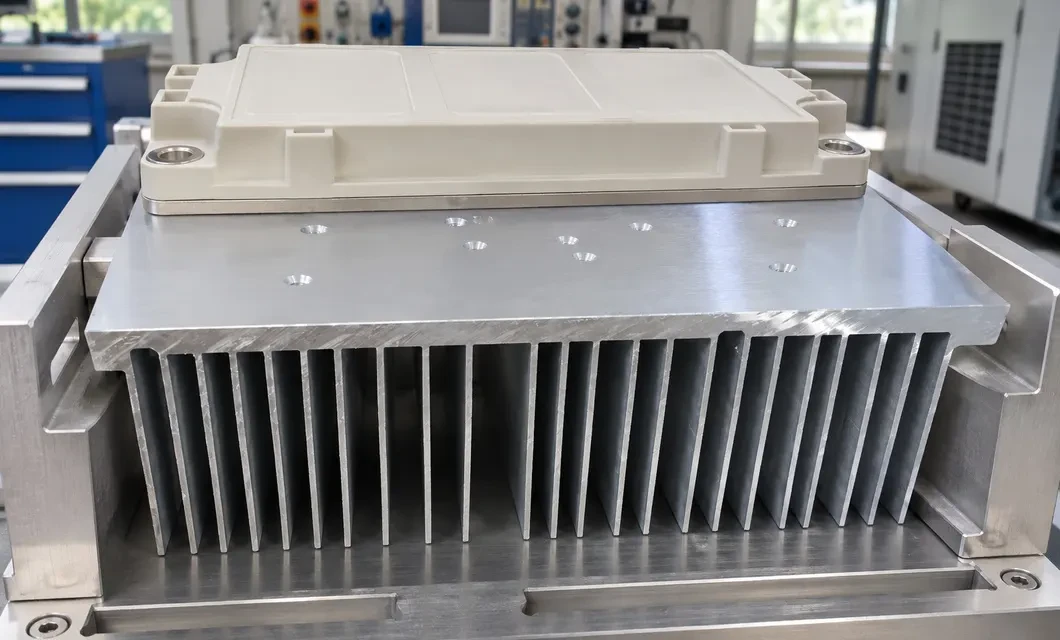
 Module Seated on a Test Fixture
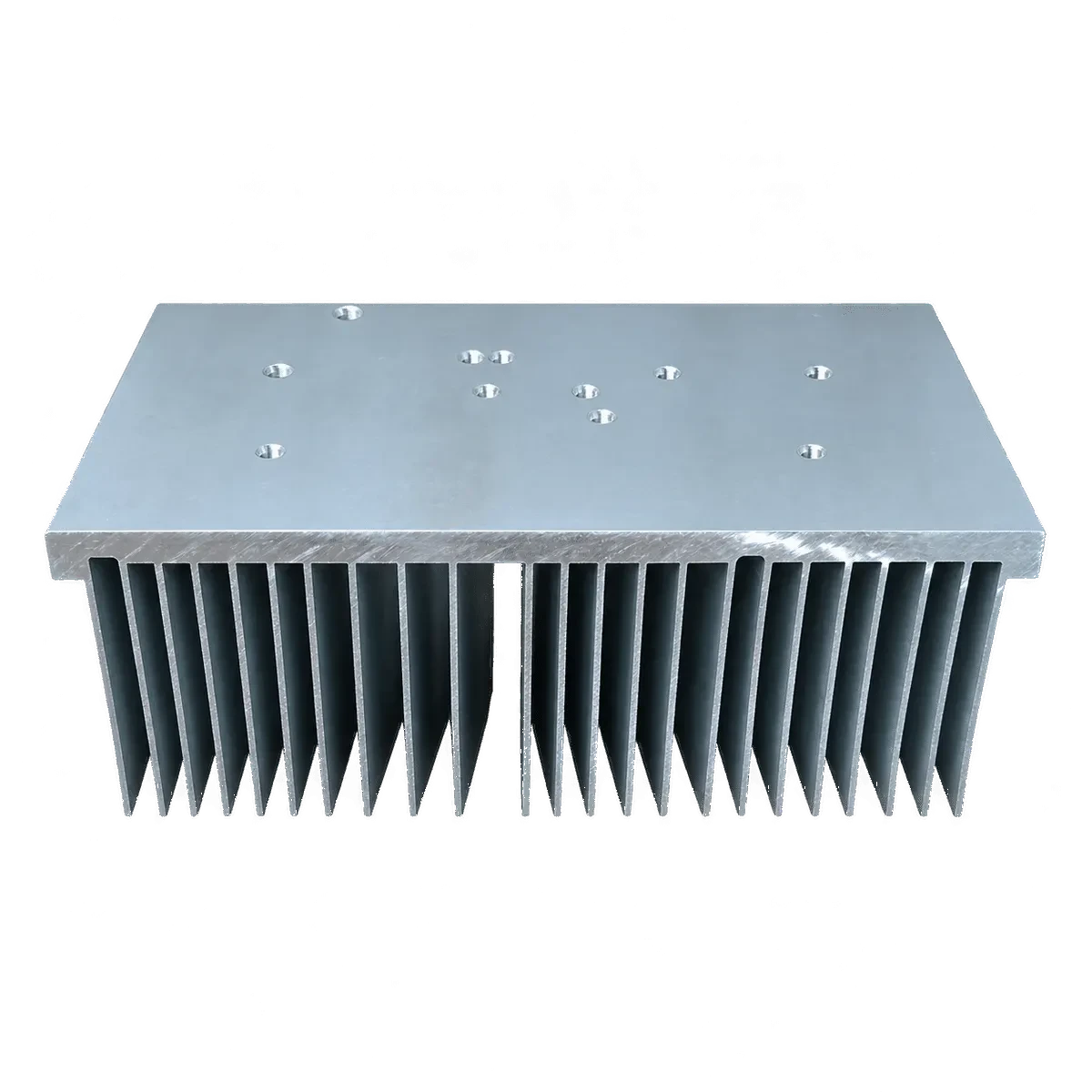
Ventilated Power Enclosures
The vented chassis view illustrates a power module seated on the flat base with the fins facing the ventilation openings. A bench fixture and an inverter placement check show contact during fit-up. The charger service view shows a replacement heat sink staged beside the opened unit.
- Power Supply Fit - Heat Sink Inside a Vented Chassis
- Fixture Contact Check - Module Seated on a Test Fixture
- Inverter Placement - Inverter Module Placement Check
- Charger Service Prep - Replacement Heat Sink at the Bench
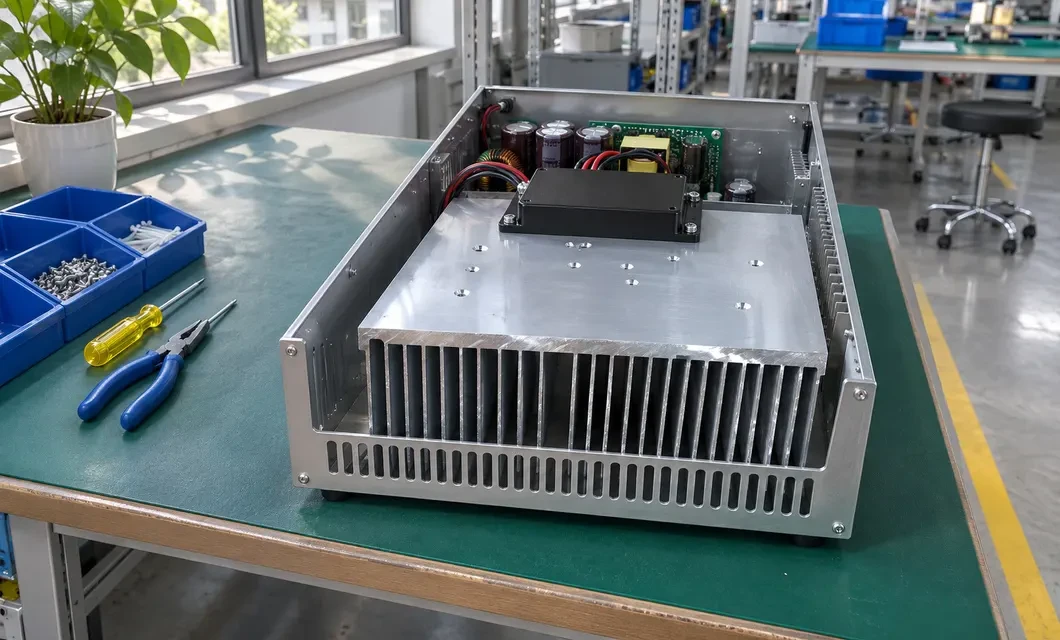 Heat Sink Inside a Vented Chassis
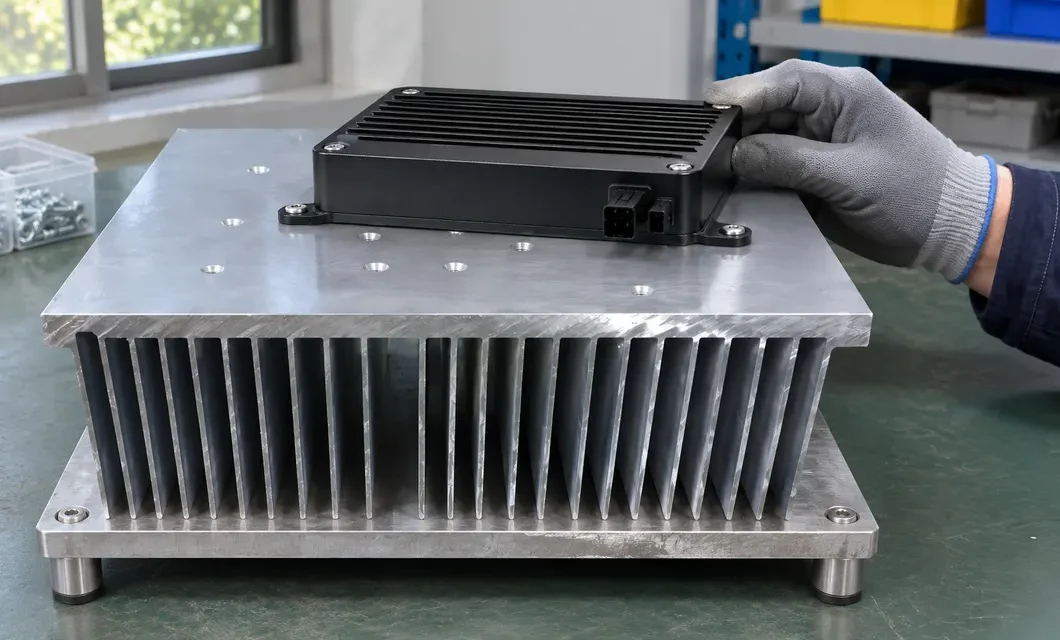 Inverter Module Placement CheckModule Seated on a Test Fixture
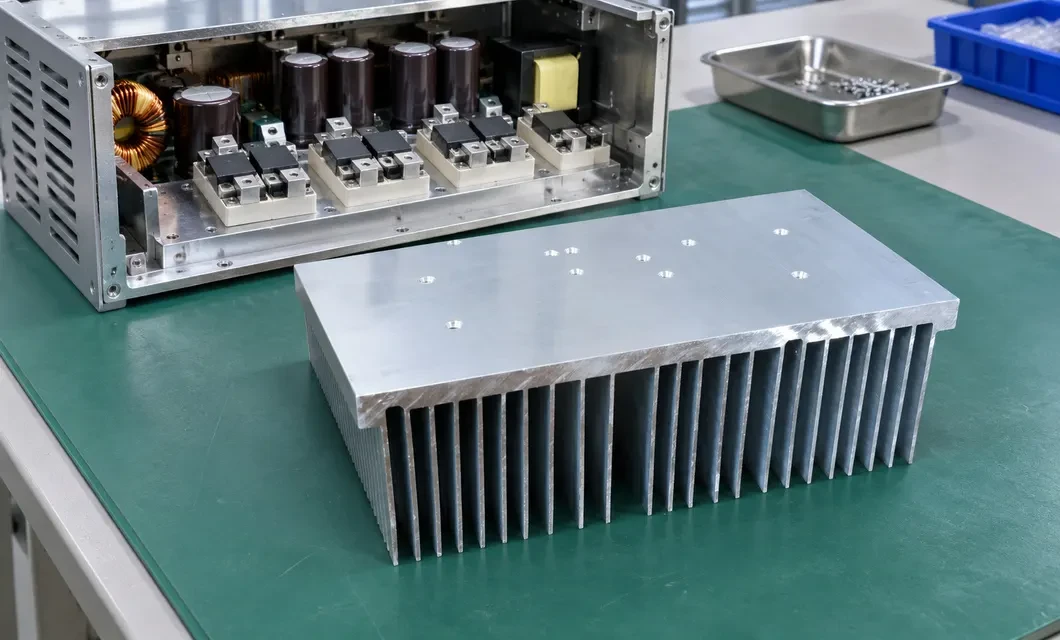 Replacement Heat Sink at the BenchHeat Sink Inside a Vented ChassisInverter Module Placement Check
Specifications & components
General information
- 材质可选项
- 6063/6061 Aluminum Alloy
- 导热系数
- ≥201 W/(m·K)
- 成型工艺
- One-piece Molding
- 表面处理
- Anodizing, Sandblasting
General instructions
 Brief description
Product Review
Product Inspection
We centrally purchase equipment, test the data and the machine, then publish the models that clear our review. You get a shorter path from "could work" to a quote your team can act on.
Core Component Details
We're here to help
Our team is ready to advise you on the best product configuration and procurement plan.
info@eascoutia.com400 158 5899Frequently Asked Questions (FAQ)
What is the mounting face?
The flat rectangular side with machined holes is the contact face. Check the hole pattern and available surface against the power module.
How are the fins arranged?
The fins run in parallel and are separated into two groups by a wider central gap. Keep the ends of the channels clear in the enclosure.
Can the hole pattern vary?
Machining to a customer drawing or sample is available. Specify the hole locations and the intended contact area with the request.
What surface finishes apply?
The listed options are anodizing and sandblasting. Confirm the required finish and any contact-surface requirements for the assembly.
How do I assess thermal fit?
Review the heat load, contact area, fin clearance, and enclosure airflow together. Confirm suitability under the intended conditions.
Related Products