Simplified explanation
ME18 Mini Excavator — Static Overview
Canopy, tracks and dozer blade all in place — a compact teal digger that looks solid all round.


Construction, Earthmoving and Site Operations with Excavators
Excavators is suited to construction sites, utility work, landscaping and earthmoving projects. It supports excavation, compaction, drilling or site preparation matched to access, ground and workload. Before deployment, confirm operating weight, working range, power, ground pressure, attachment needs and transport limits.
One joystick swings the boom to dig flush along walls and edges — no repositioning needed.
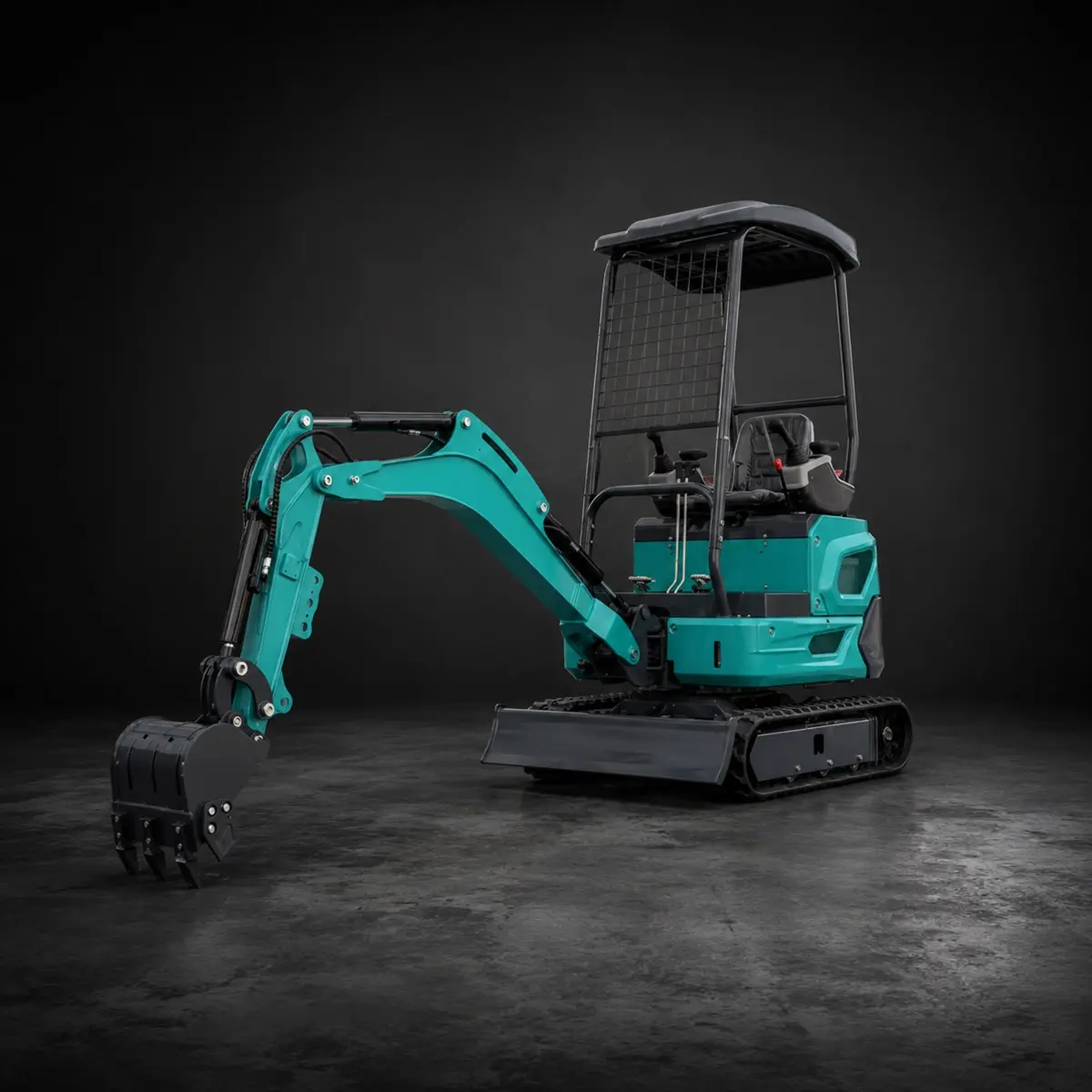
Canopy, tracks and dozer blade all in place — a compact teal digger that looks solid all round.
01:19Canopy, tracks and dozer blade all in place — a compact teal digger that looks solid all round.
00:21Thick steel boom and arm with reinforced pivots — steady digging even under full load.
00:39Tidy hose routing, even welds and quality steel — details that stand up to close inspection.
00:30Concentrated joystick layout with open visibility — new operators get the hang of it fast.
00:39Boom, arm and bucket move in sync — dig, swing and dump in one fluid cycle for small jobs.
01:03Digging, grading and backfilling all covered — one compact digger for yards, orchards and municipal work.
00:33Machines braced inside containers and shipped by road and sea — tracked all the way to your site.
Real on-site records from our factory, offering a practical view of our production capability and delivery readiness.
We centrally purchase equipment, test the data and the machine, then publish the models that clear our review. You get a shorter path from "could work" to a quote your team can act on.
Our team is ready to advise you on the best product configuration and procurement plan.
info@eascoutia.com400 158 58991. It is commonly used for construction sites, utility work, landscaping and earthmoving projects, subject to the selected model and site conditions.
2. Match operating weight, working range, power, ground pressure, attachment needs and transport limits to the actual workload and operating environment.
3. Confirm model, power, working attachment, cab or control type and spare parts, then verify the response time and any special requirements.
4. Prepare safe unloading space, stable ground, operator training and fluid, fastener and safety-device checks; follow the manual for operation, inspection and routine maintenance.