Located in the lower-right portion of the frame, it connects the slide sleeve to the load-bearing crossbeam and transmits the fork‑carrying load.
 Tractor forks transport palletized plants and growing supplies through the nursery.


Field Preparation and Farm Maintenance with Tray fork
Tray fork is suited to farms, orchards, nurseries and seasonal land-maintenance work. It supports field tasks such as tillage, mowing, spraying, handling or harvesting under local crop and terrain conditions. Before deployment, confirm working width, power, terrain, crop type, capacity, attachment interface and operator method.
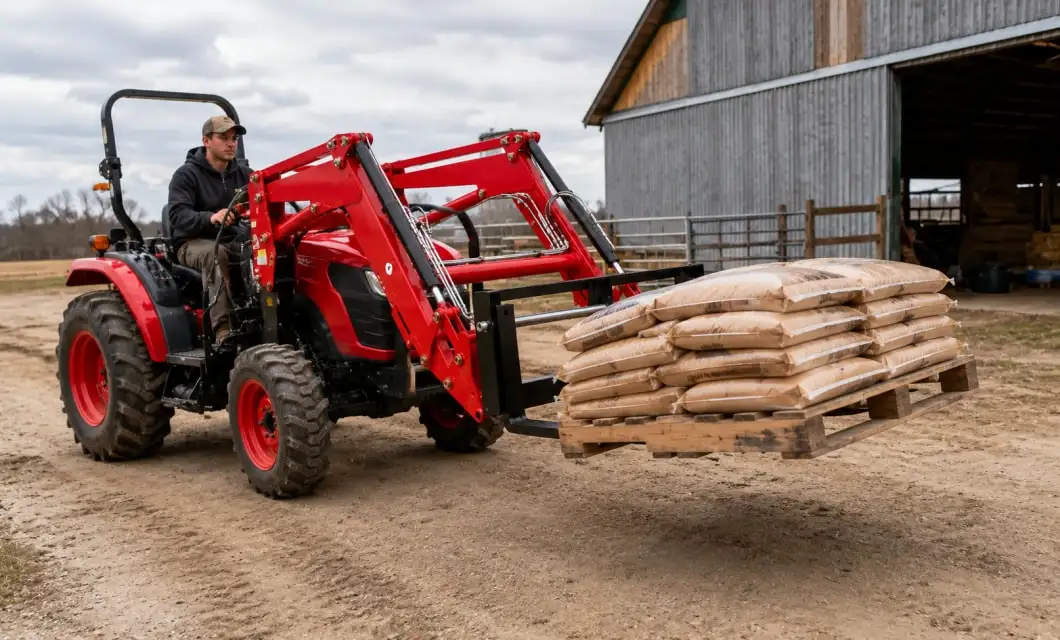 Tractor forks lift bagged farm supplies for organized yard transport and storage.
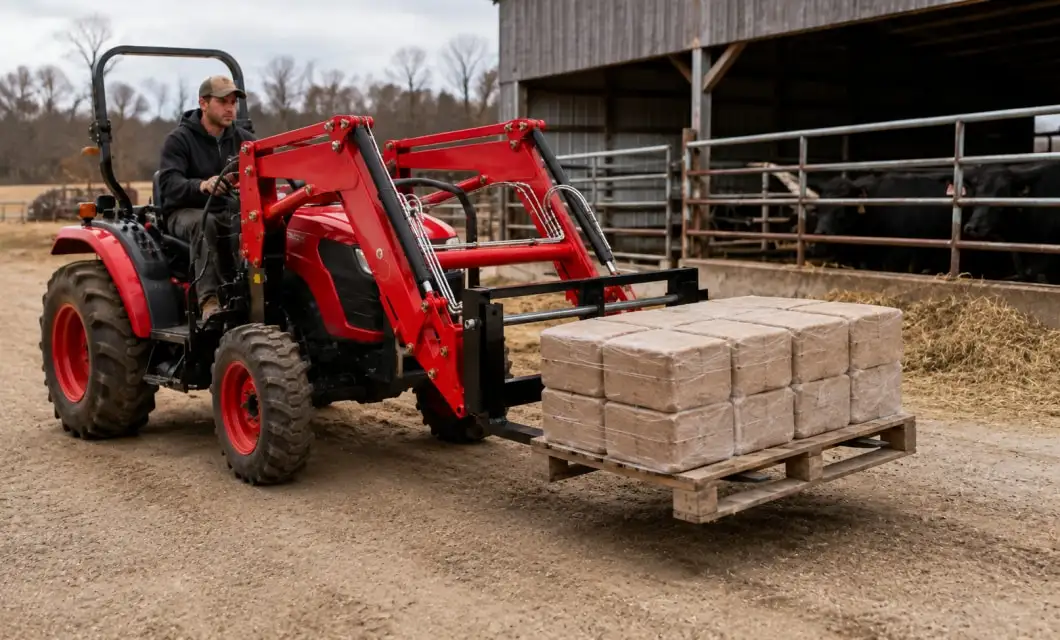 Pallet forks move livestock feed safely between storage buildings and animal areas.Tractor forks transport palletized plants and growing supplies through the nursery.
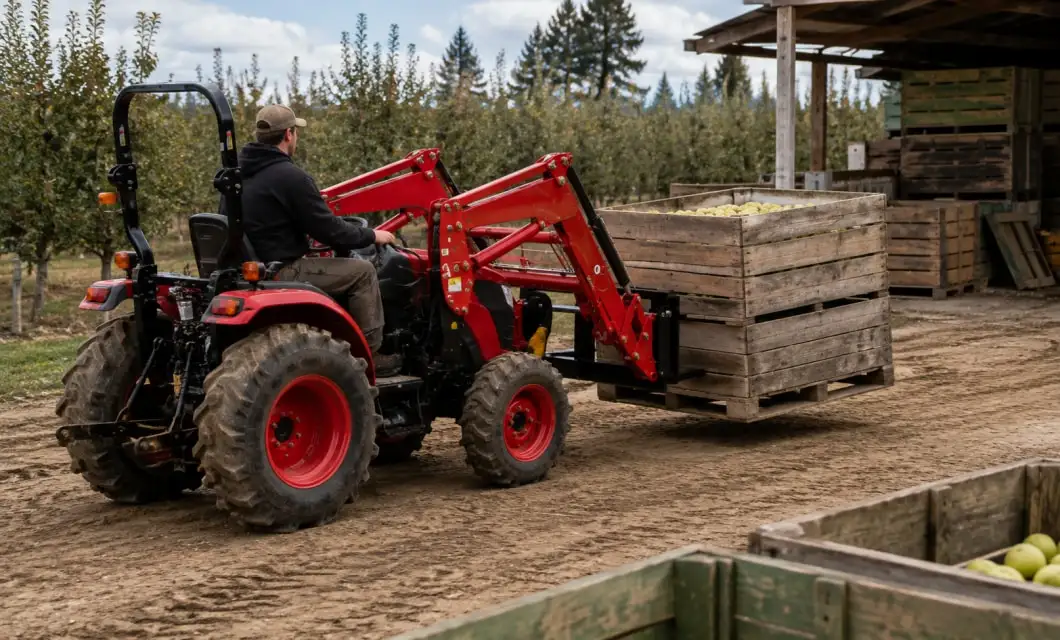 Front-loader forks move produce crates around the orchard during harvest operations.Tractor forks lift bagged farm supplies for organized yard transport and storage.Pallet forks move livestock feed safely between storage buildings and animal areas.
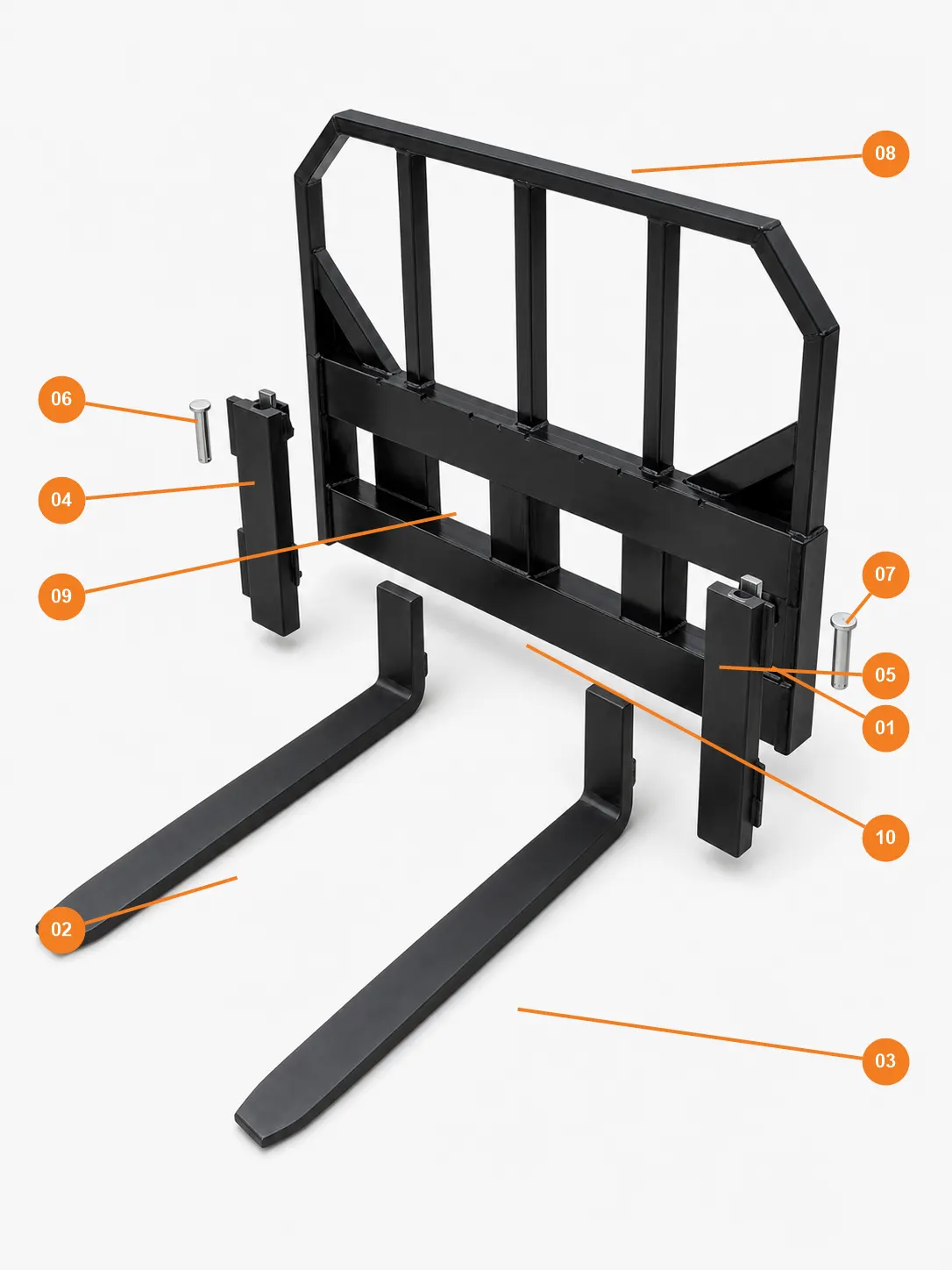
Located in the lower-right portion of the frame, it connects the slide sleeve to the load-bearing crossbeam and transmits the fork‑carrying load.
Insert it into the lower left side of the pallet to bear the primary load on the cargo-bearing side.
It works in parallel with the left fork tine, jointly supporting the pallet and the load.
It moves along the load-bearing beam and is used to adjust the lateral position of the left fork tine.
It moves along the load-bearing beam and is used to adjust the lateral position of the right fork tine.
Secure the left-hand slide at the designated position to prevent lateral movement during operation.
Fix the right slide sleeve at the designated position, and ensure it aligns with the left pin to maintain the fork spacing.

Pallet Fork Horizontal Operation Demonstration
Our team is ready to advise you on the best product configuration and procurement plan.
info@eascoutia.com400 158 58991. It is commonly used for farms, orchards, nurseries and seasonal land-maintenance work, subject to the selected model and site conditions.
2. Match working width, power, terrain, crop type, capacity, attachment interface and operator method to the actual workload and operating environment.
3. Confirm model, power, working attachment, tire or track type and optional implements, then verify the response time and any special requirements.
4. Prepare appropriate fuel or charging support, safe attachment setup and pre-work inspection on level ground; follow the manual for operation, inspection and routine maintenance.

 Simplified explanation