It is used to connect to the tractor’s drawbar and, in conjunction with the lower attachment point, ensures stable implement linkage, facilitating lifting, lowering, and towing operations.
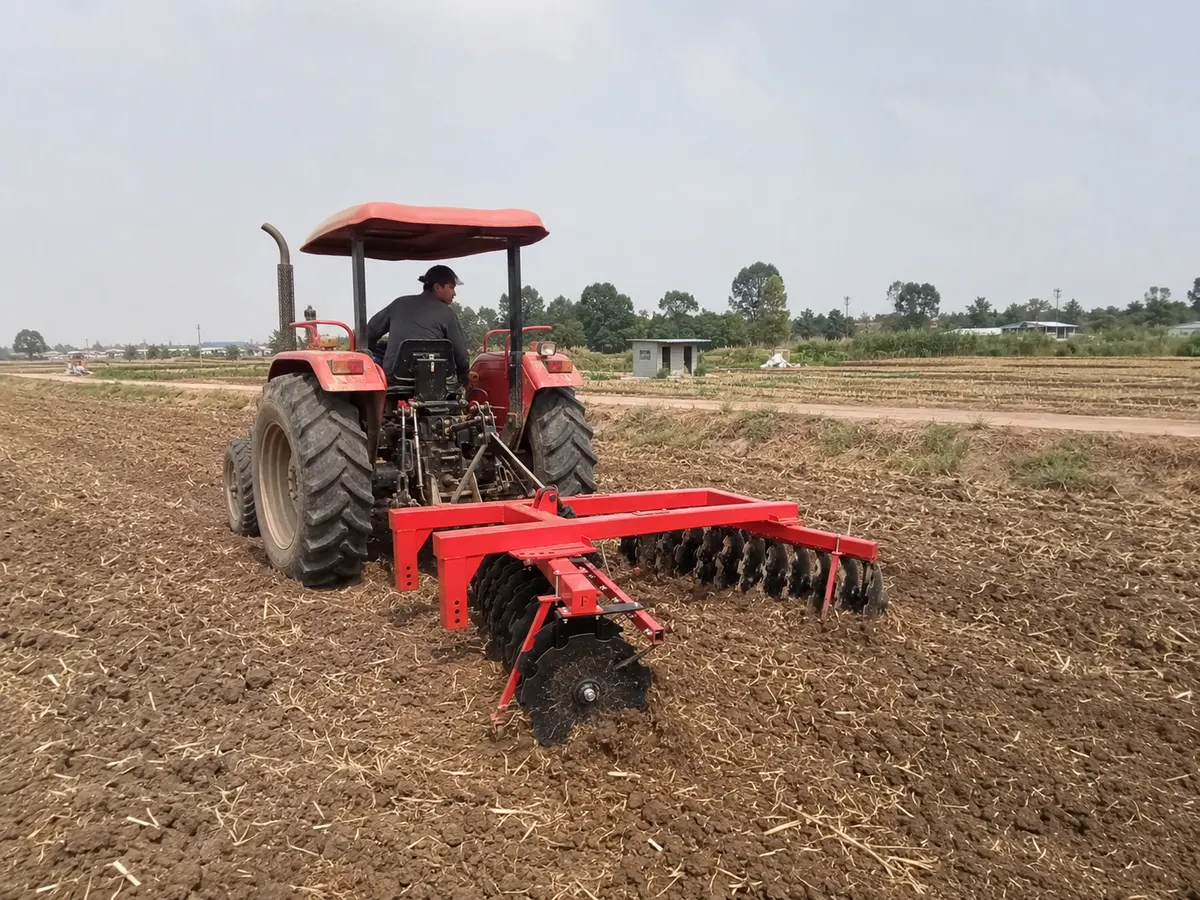 Loose tillage of dryland topsoil


Field Preparation and Farm Maintenance with Hanging on to the ravine
Hanging on to the ravine is suited to farms, orchards, nurseries and seasonal land-maintenance work. It supports field tasks such as tillage, mowing, spraying, handling or harvesting under local crop and terrain conditions. Before deployment, confirm working width, power, terrain, crop type, capacity, attachment interface and operator method.
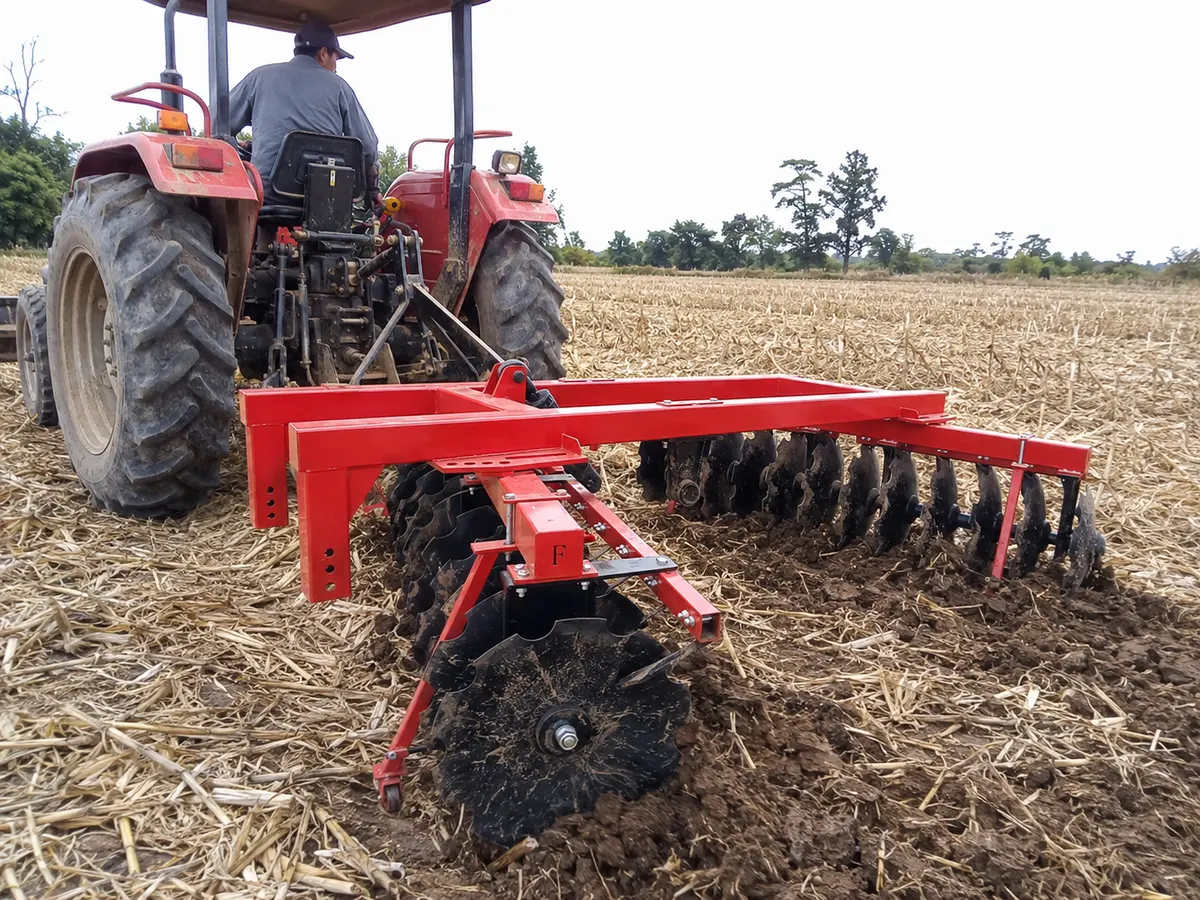 Stubble removal and land preparation on straw fields
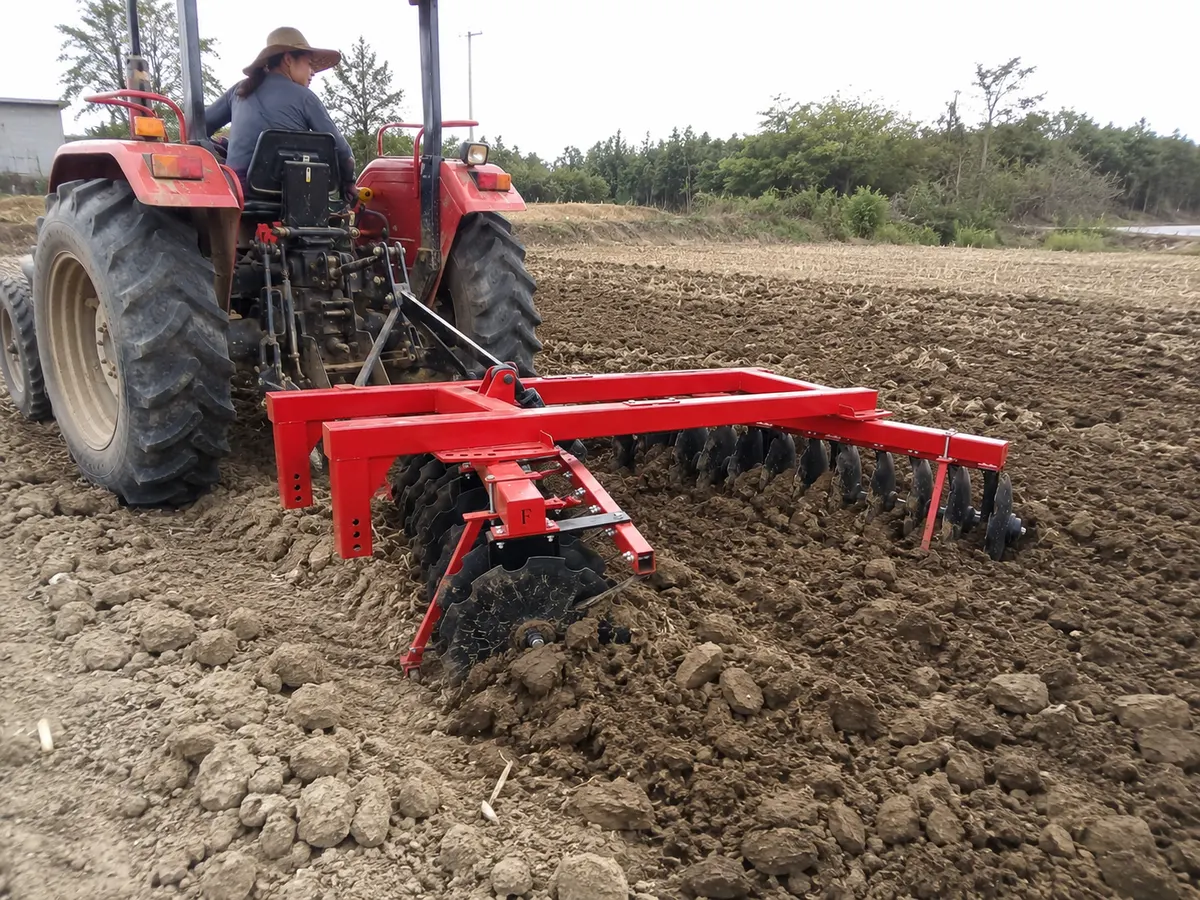 Crumble the soil and level it with a harrow after plowing.Loose tillage of dryland topsoil
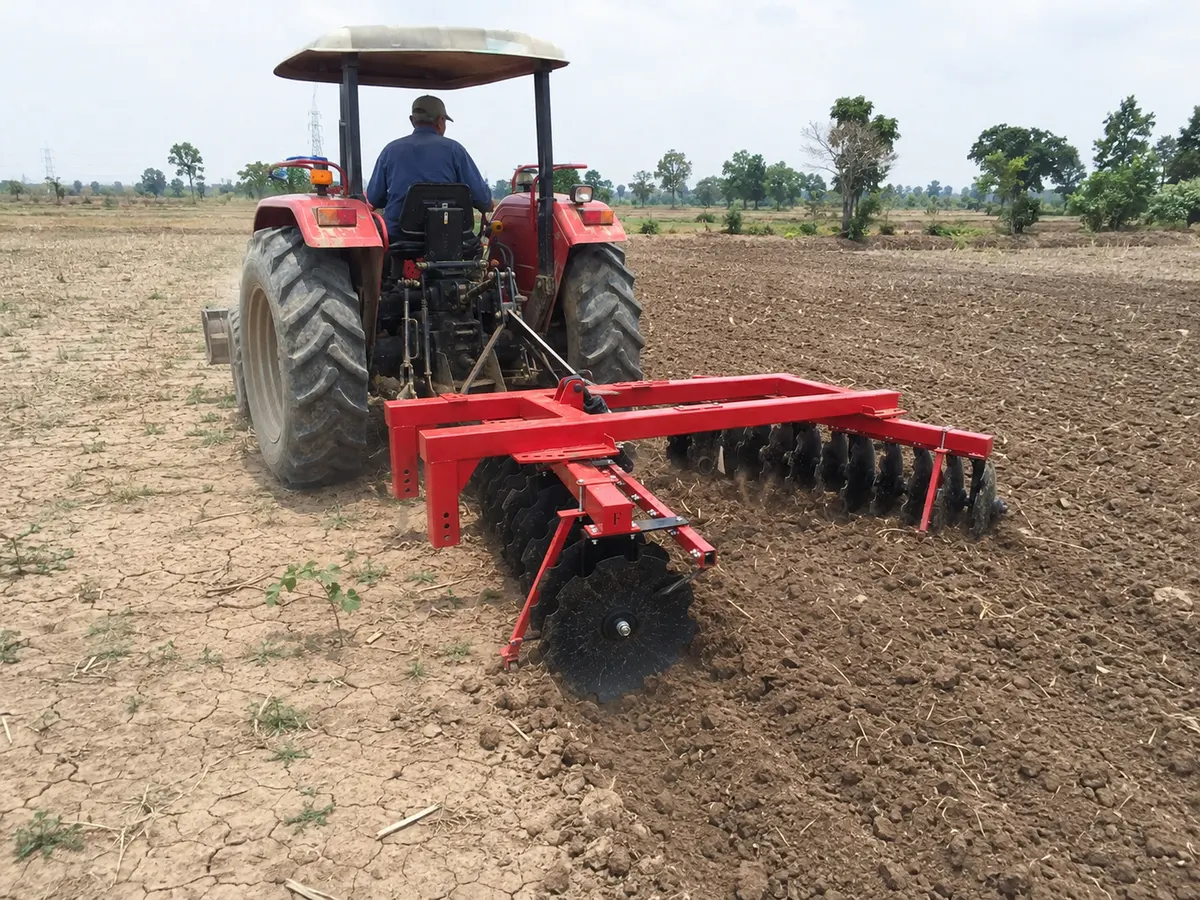 Pre-sowing soil preparation in paddy fieldsStubble removal and land preparation on straw fieldsCrumble the soil and level it with a harrow after plowing.
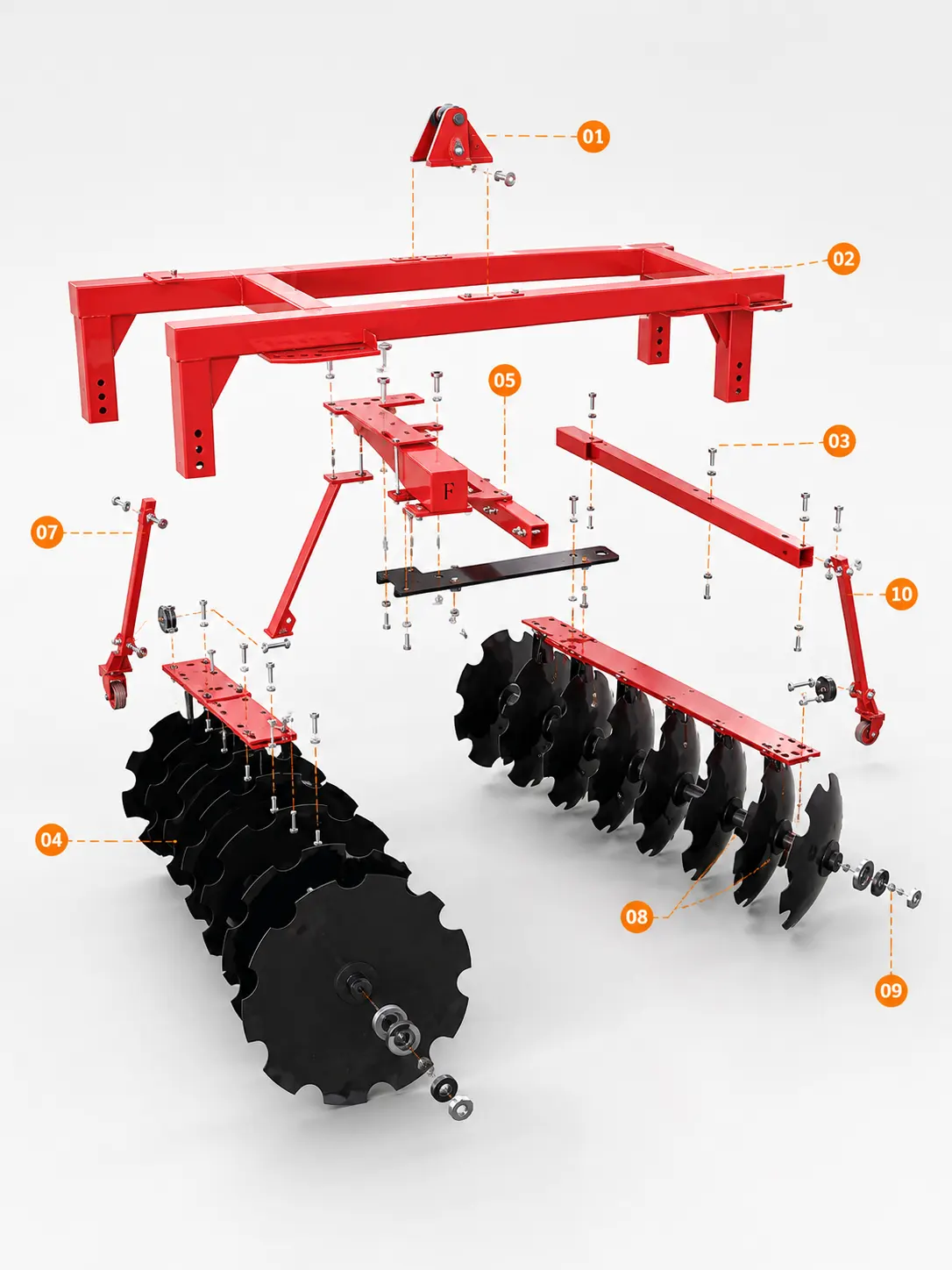
It is used to connect to the tractor’s drawbar and, in conjunction with the lower attachment point, ensures stable implement linkage, facilitating lifting, lowering, and towing operations.
The red, thickened main beam supports two sets of harrow tines, the connecting frame, and the adjustment components, serving as the core structural element for the machine’s assembly, support, and load-bearing functions.
It is used to connect the side harrow units to the main beam structure, enhancing the machine’s lateral stability and ensuring balanced, reliable force distribution during operation.
Multiple closely arranged black-toothed disc harrows can break up clods and loosen the surface soil, making them well suited for field preparation and soil crumbing operations.
It connects the main girder to the lower rake assembly, providing traction, support, and force transmission to ensure stable operational posture of the entire machine.
The black connection plate secures the central structure, enhances the connection strength between the main beam and the harrow assembly, and improves the overall machine’s durability.
The two side wheels provide auxiliary support and facilitate movement, making it easier to park, transport, and install or adjust agricultural implements, thereby enhancing operational convenience.

Video demonstration of disc harrow operation in cross‑field mode.
01:24Video demonstration of disc harrow operation in cross‑field mode.
01:24Video demonstration of disc harrow operation in cross‑field mode.
Our team is ready to advise you on the best product configuration and procurement plan.
info@eascoutia.com400 158 58991. It is commonly used for farms, orchards, nurseries and seasonal land-maintenance work, subject to the selected model and site conditions.
2. Match working width, power, terrain, crop type, capacity, attachment interface and operator method to the actual workload and operating environment.
3. Confirm model, power, working attachment, tire or track type and optional implements, then verify the response time and any special requirements.
4. Prepare appropriate fuel or charging support, safe attachment setup and pre-work inspection on level ground; follow the manual for operation, inspection and routine maintenance.

 Simplified explanation