The mounting frame supports the blade assembly and transfers pushing loads into the carrier.
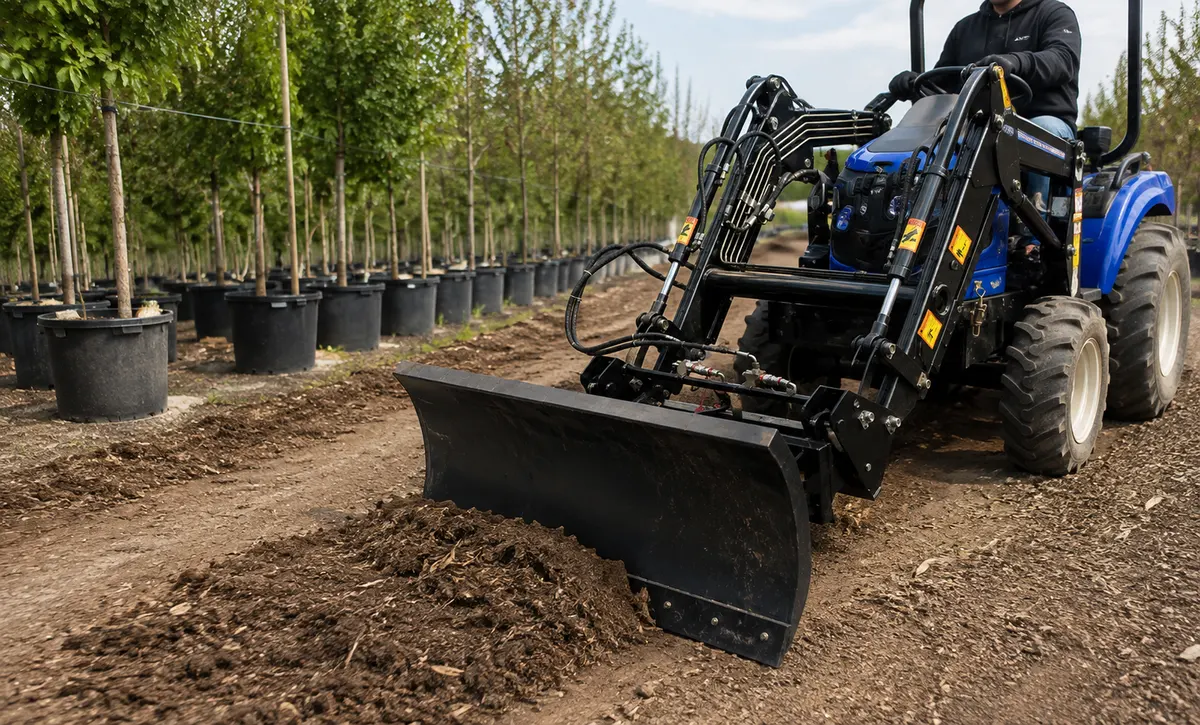 The tractor grades nursery paths and redistributes loose soil between planting rows.


Field Preparation and Farm Maintenance with Push the snow shovel
Push the snow shovel is suited to farms, orchards, nurseries and seasonal land-maintenance work. It supports field tasks such as tillage, mowing, spraying, handling or harvesting under local crop and terrain conditions. Before deployment, confirm working width, power, terrain, crop type, capacity, attachment interface and operator method.
 The tractor blade levels uneven gravel roads and improves access around farm buildings.
 The blade clears manure, soil, and loose bedding from livestock yard working areas.The tractor grades nursery paths and redistributes loose soil between planting rows.
 The front-mounted blade pushes snow away from farm roads, yards, and access areas.The tractor blade levels uneven gravel roads and improves access around farm buildings.The blade clears manure, soil, and loose bedding from livestock yard working areas.

The mounting frame supports the blade assembly and transfers pushing loads into the carrier.
The curved steel blade gathers and redirects snow efficiently during clearing and pushing work.
The upper reinforcement tube strengthens the blade structure and helps maintain stable alignment.
The lower wear edge contacts the ground and can be replaced after extended snow clearing service.
The left tension spring absorbs impact and helps the blade return smoothly after obstacle contact.
The right tension spring balances blade movement and cushions shocks during snow pushing work.
The central pivot shaft allows the blade frame to rotate and align with the selected working angle.

Snowplow horizontal operation demonstration
Our team is ready to advise you on the best product configuration and procurement plan.
info@eascoutia.com400 158 58991. It is commonly used for farms, orchards, nurseries and seasonal land-maintenance work, subject to the selected model and site conditions.
2. Match working width, power, terrain, crop type, capacity, attachment interface and operator method to the actual workload and operating environment.
3. Confirm model, power, working attachment, tire or track type and optional implements, then verify the response time and any special requirements.
4. Prepare appropriate fuel or charging support, safe attachment setup and pre-work inspection on level ground; follow the manual for operation, inspection and routine maintenance.

 Simplified explanation