The main cutter bar frame supports the mower structure and connects key cutting components.
 Tractor efficiently mows large grass areas during routine field maintenance.


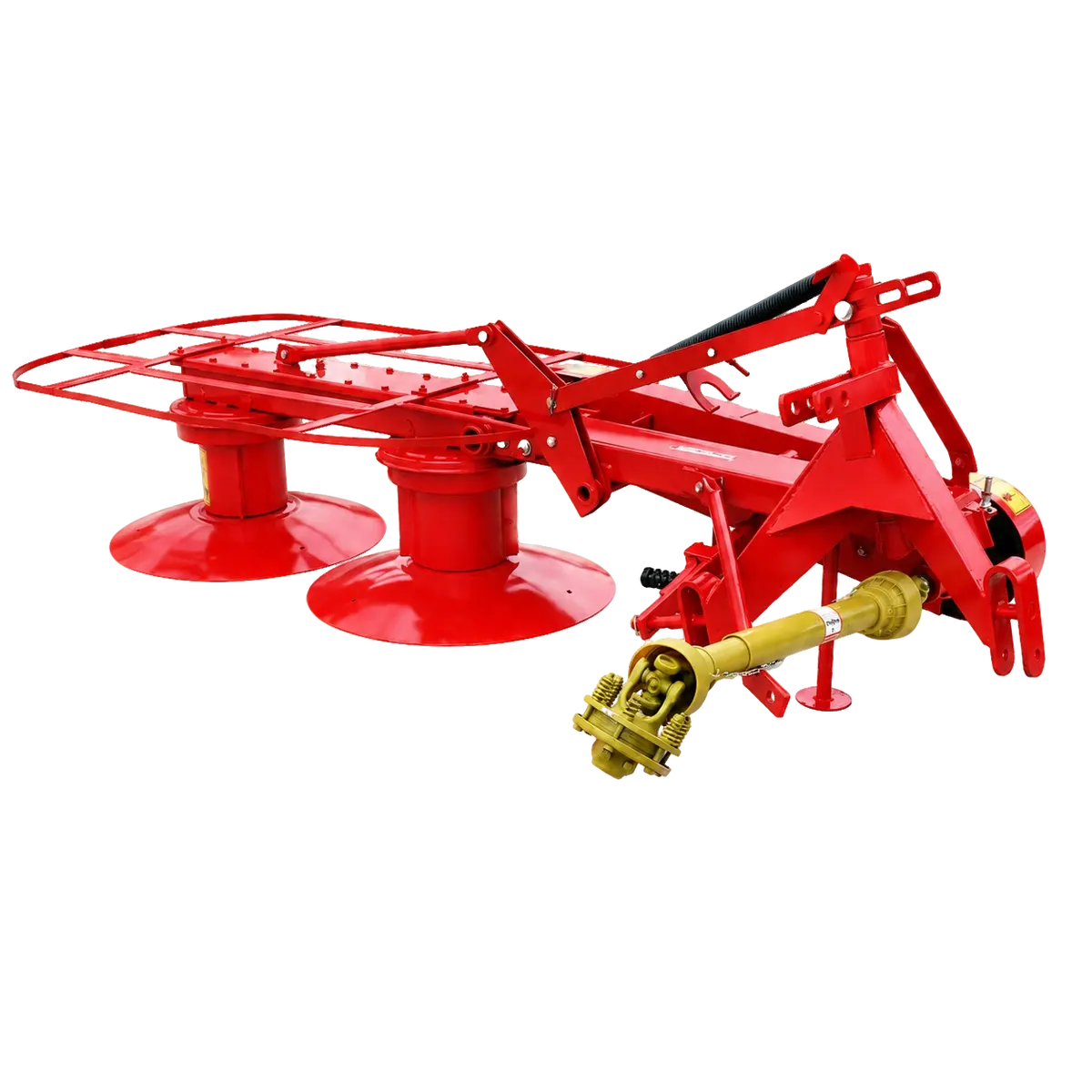
Field Preparation and Farm Maintenance with Double-drive lawn mower
Double-drive lawn mower is suited to farms, orchards, nurseries and seasonal land-maintenance work. It supports field tasks such as tillage, mowing, spraying, handling or harvesting under local crop and terrain conditions. Before deployment, confirm working width, power, terrain, crop type, capacity, attachment interface and operator method.
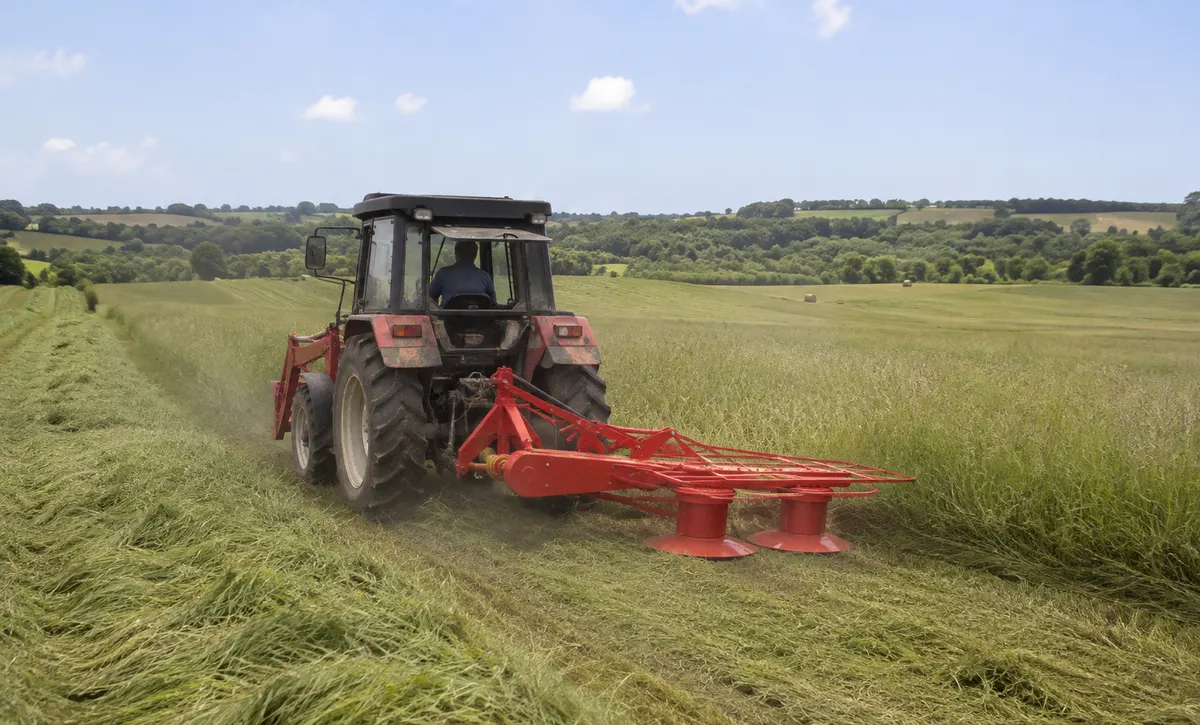 Tractor-mounted mower cuts mature grass across open agricultural fields.
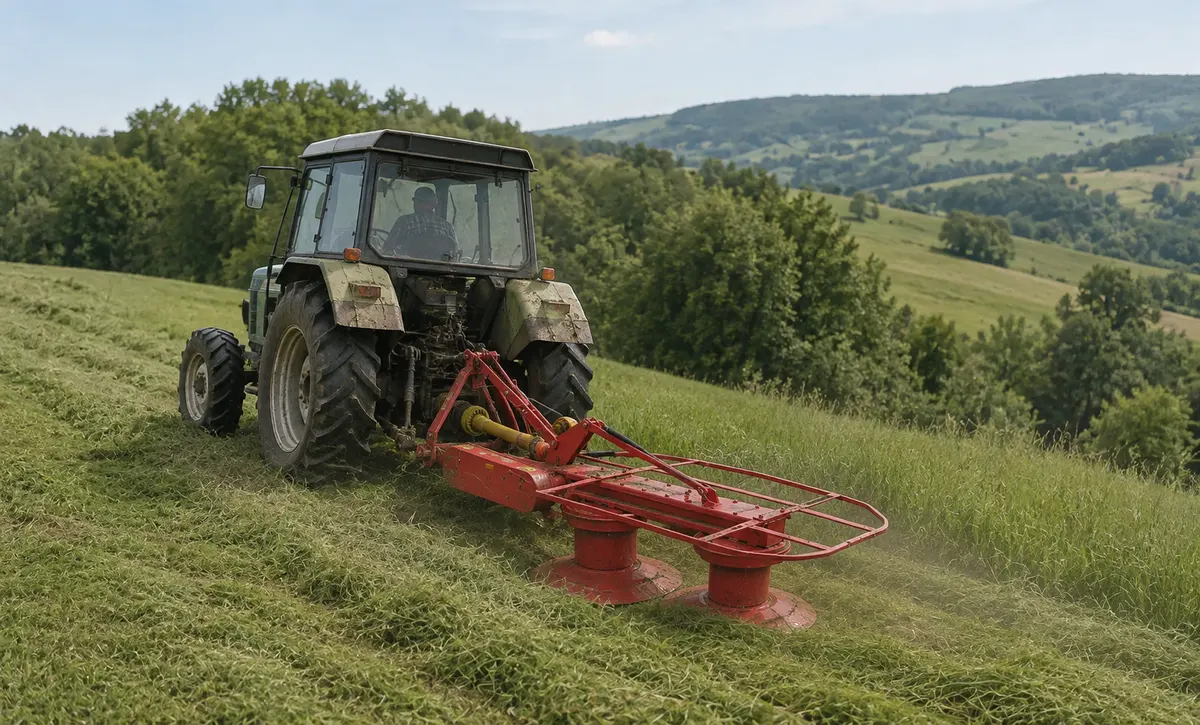 Rotary mower maintains grass on sloped pasture and uneven terrain.Tractor efficiently mows large grass areas during routine field maintenance.
 Mower cuts grass between orchard rows while protecting nearby trees.Tractor-mounted mower cuts mature grass across open agricultural fields.Rotary mower maintains grass on sloped pasture and uneven terrain.
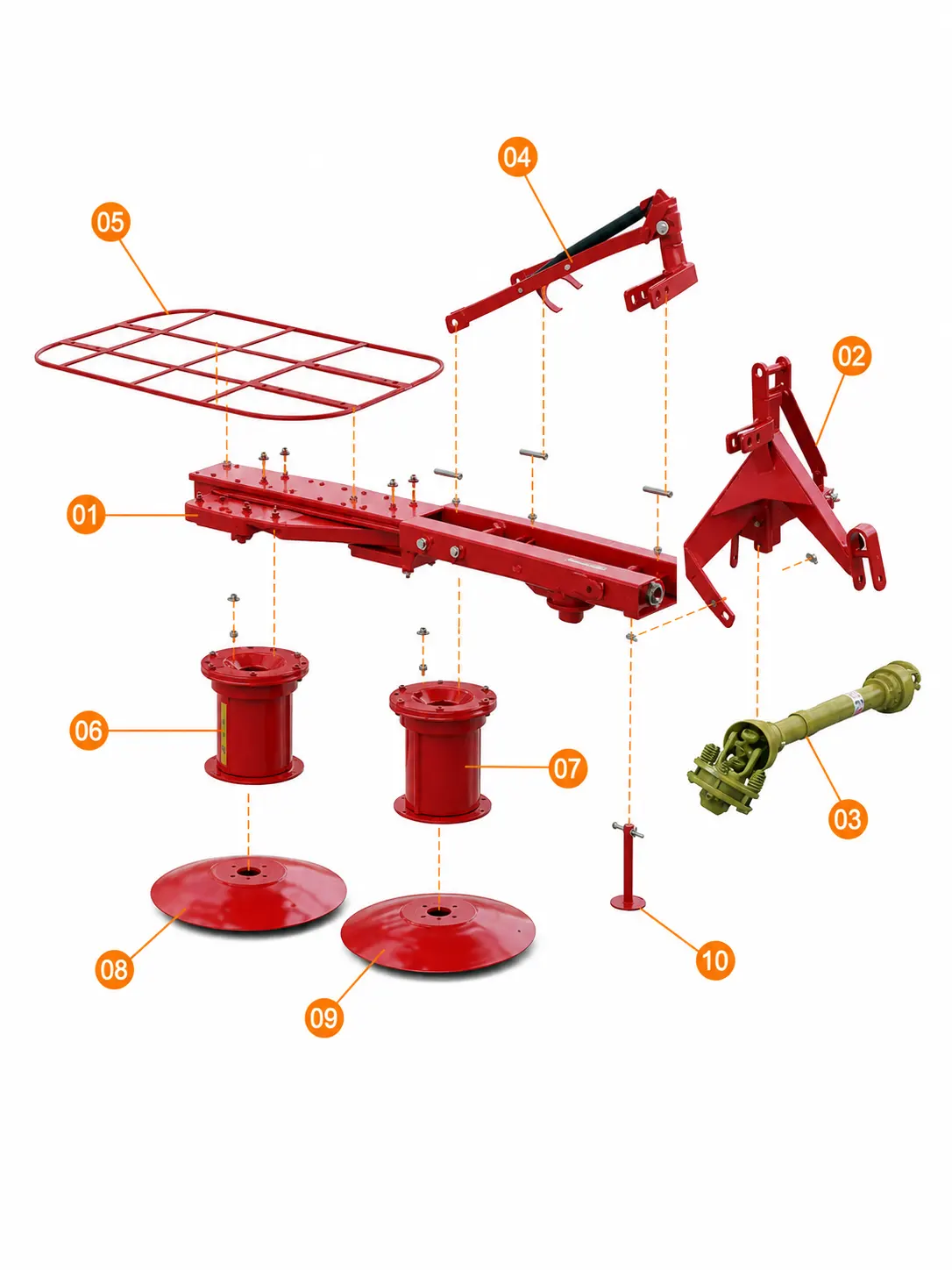
The main cutter bar frame supports the mower structure and connects key cutting components.
The hitch frame links the mower to the tractor and provides stable mounted field operation.
The PTO shaft transfers tractor power to the mower for reliable rotary cutting performance.
The lift linkage assembly helps raise, lower, and position the mower during field operation.
The top guard helps shield the upper area and adds safety protection during mower use.
The left cutter gear housing supports internal drive parts and powers the cutting disc below.
The right cutter gear housing transmits power to the opposite cutting disc for smooth mowing.
Our team is ready to advise you on the best product configuration and procurement plan.
info@eascoutia.com400 158 58991. It is commonly used for farms, orchards, nurseries and seasonal land-maintenance work, subject to the selected model and site conditions.
2. Match working width, power, terrain, crop type, capacity, attachment interface and operator method to the actual workload and operating environment.
3. Confirm model, power, working attachment, tire or track type and optional implements, then verify the response time and any special requirements.
4. Prepare appropriate fuel or charging support, safe attachment setup and pre-work inspection on level ground; follow the manual for operation, inspection and routine maintenance.

 Simplified explanation