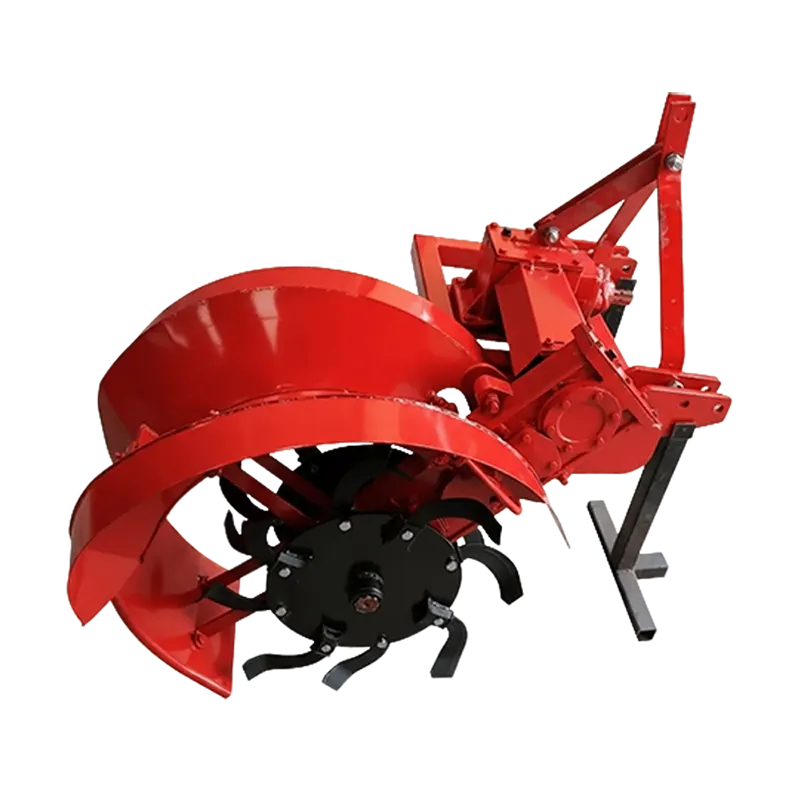
The red A-frame provides upper and lower hitch interfaces used to mount the ditcher to a tractor.
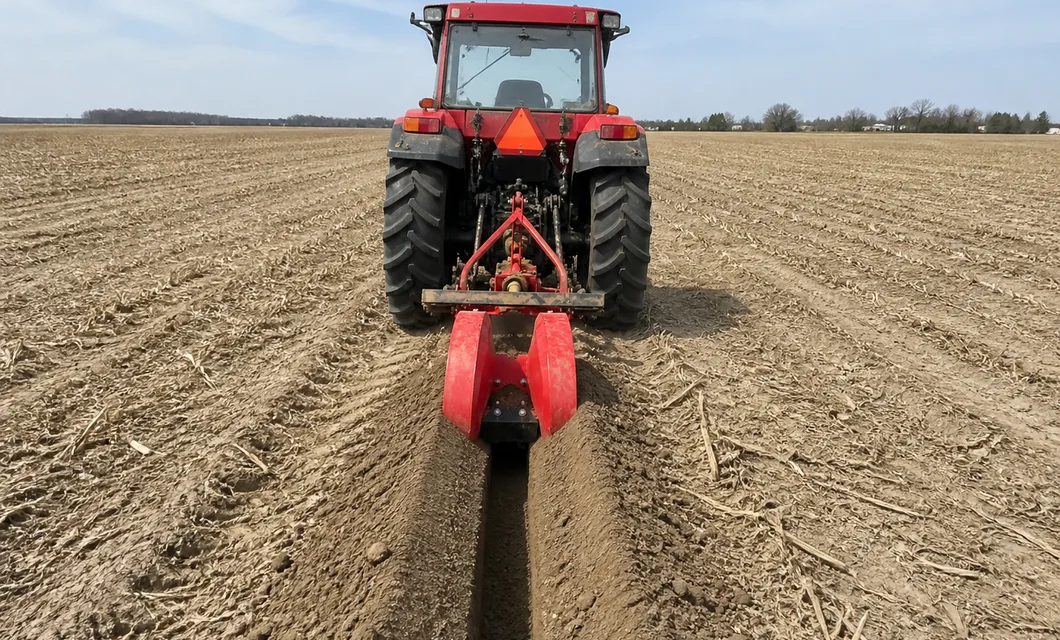 Creating uniform field ditches for improved water management.


Practical Agricultural Ditching
Used behind a tractor, the rotary ditcher follows a planned line while its vertical curved-blade disc cuts into agricultural soil. The four scenes show open farmland, orchard rows, field edges, and irrigation-line routes, linking the same rear-mounted PTO-driven working method to different farm layouts.
 Cutting clean drainage trenches along field boundaries.
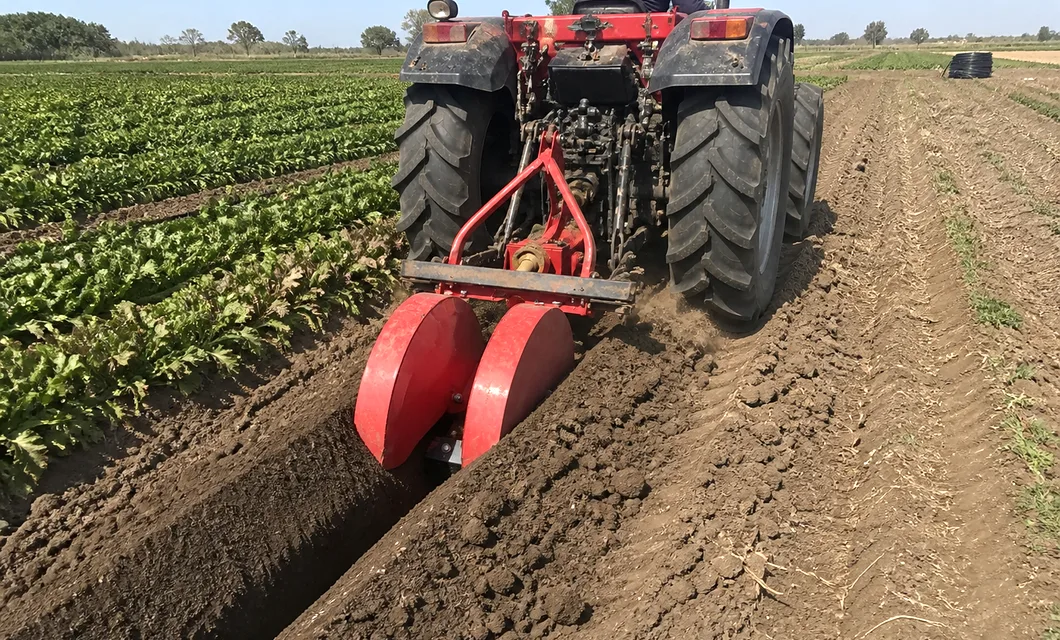 Preparing straight trenches for efficient irrigation lines.Creating uniform field ditches for improved water management.
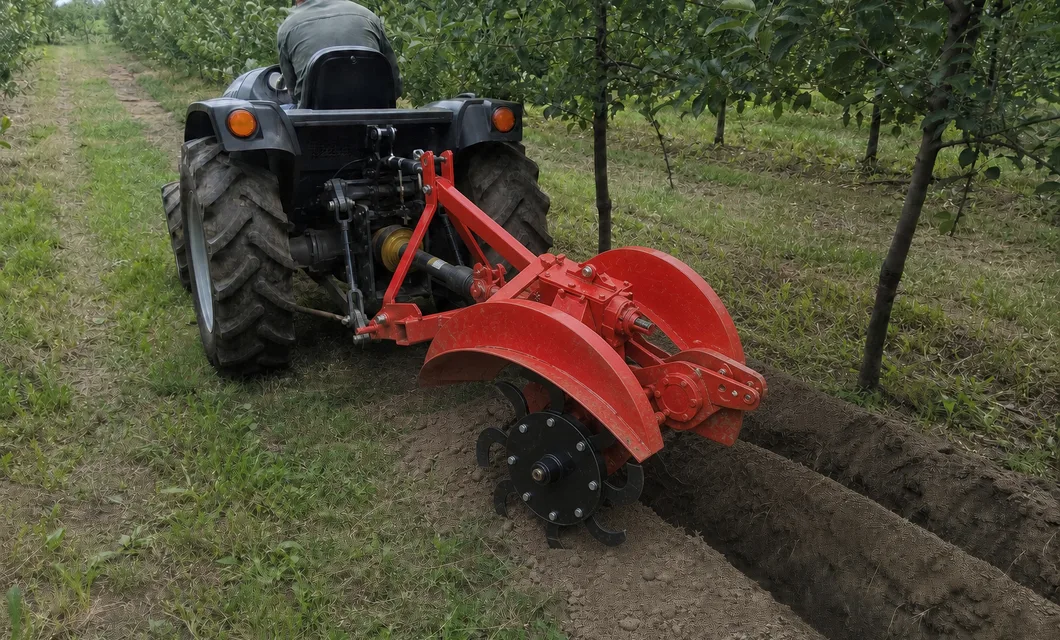 Digging drainage channels between orchard rows with precision.Cutting clean drainage trenches along field boundaries.Preparing straight trenches for efficient irrigation lines.
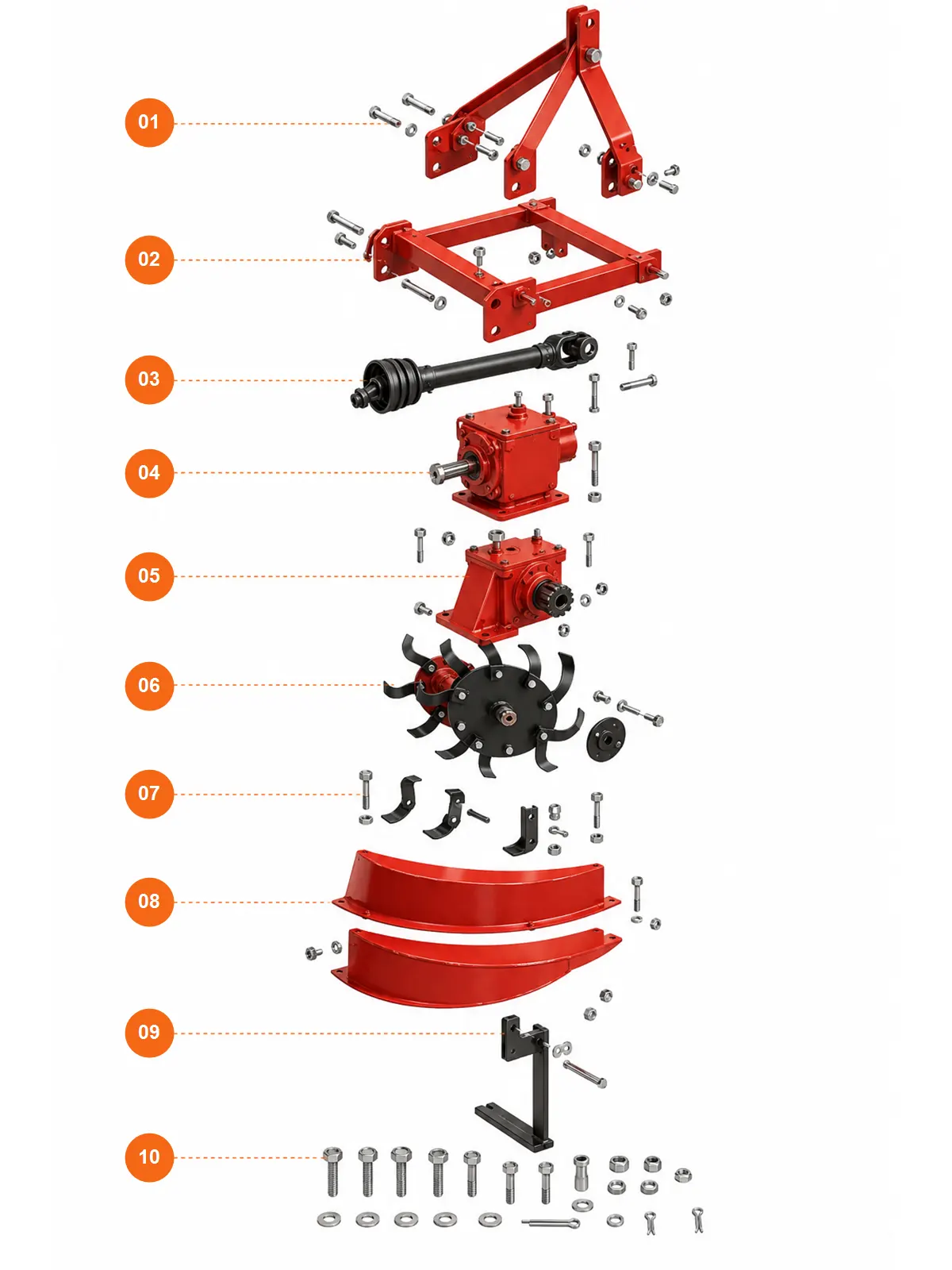
The red A-frame provides upper and lower hitch interfaces used to mount the ditcher to a tractor.
The rectangular red frame links the hitch assembly with the gearboxes and rotary working section.
The shaft connects the tractor PTO interface to the primary gearbox for rotary power transfer.
The upper red gearbox receives PTO input and redirects the drive toward the side transmission.
The side-drive gearbox carries rotary input from the primary gearbox to the cutter shaft.
The black vertical disc holds the curved blades that engage soil along the planned trench route.
Curved blades fasten around the disc to provide the visible soil-cutting edges of the assembly.
Video demonstration of the trencher operating in lateral mode.
01:24Video demonstration of the trencher operating in lateral mode.
01:24Video demonstration of the trencher operating in lateral mode.
Our team is ready to advise you on the best product configuration and procurement plan.
info@eascoutia.com400 158 5899It is commonly used for farms, orchards, nurseries and seasonal land-maintenance work, subject to the selected model and site conditions.
Match working width, power, terrain, crop type, capacity, attachment interface and operator method to the actual workload and operating environment.
Confirm model, power, working attachment, tire or track type and optional implements, then verify the response time and any special requirements.
Prepare appropriate fuel or charging support, safe attachment setup and pre-work inspection on level ground; follow the manual for operation, inspection and routine maintenance.

 Simplified explanation