The blue metal cover seals the processing area, minimizing the escape of laser light, fumes, and debris and enhancing the safety of equipment.
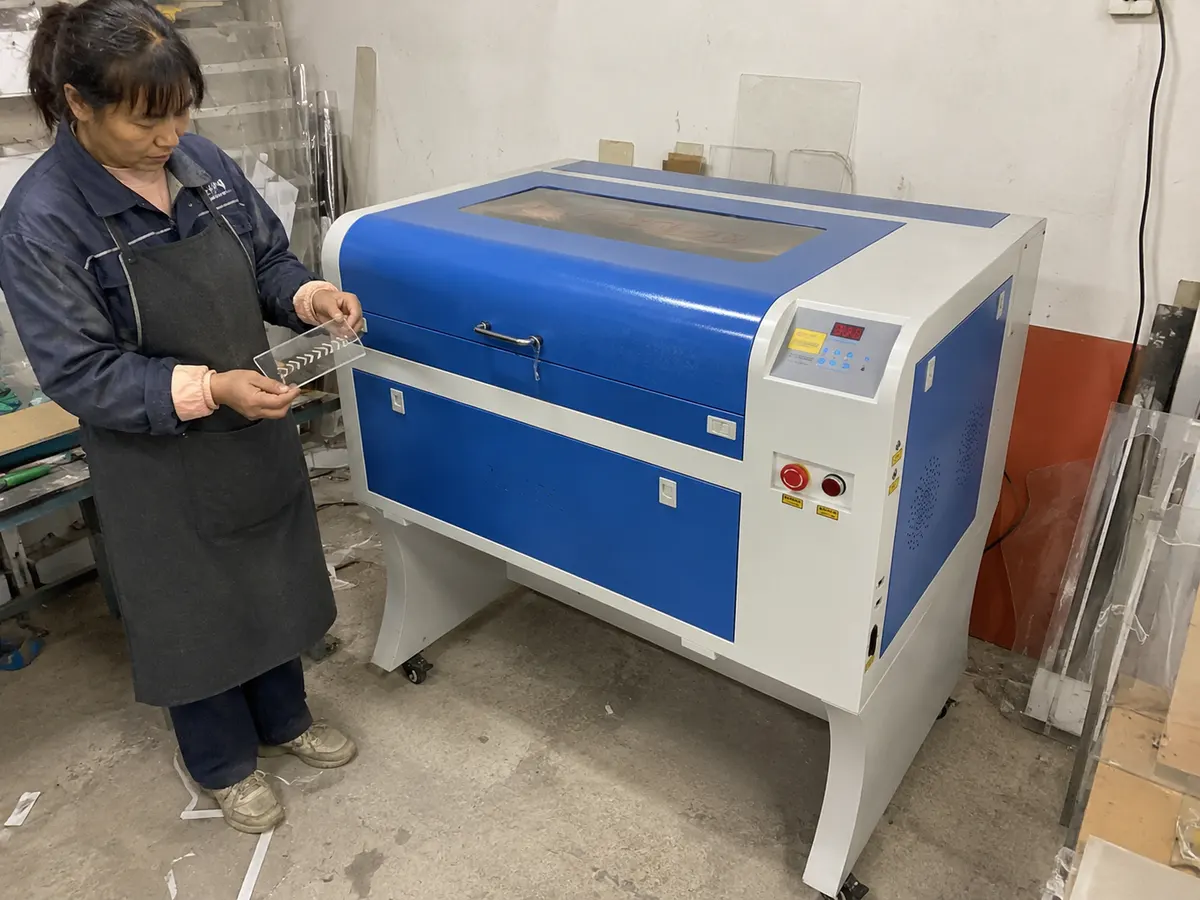 Leather pattern engraving


Workshop Processing and Production-Line Use with 4060 laser engraving machine allocation
4060 laser engraving machine allocation is suited to factories, fabrication shops, production cells and custom-processing workshops. It supports repeatable cutting, forming, marking, sealing, conveying or processing with defined materials and throughput. Before deployment, confirm material type, work size, capacity, accuracy, speed, control method, power and extraction needs.
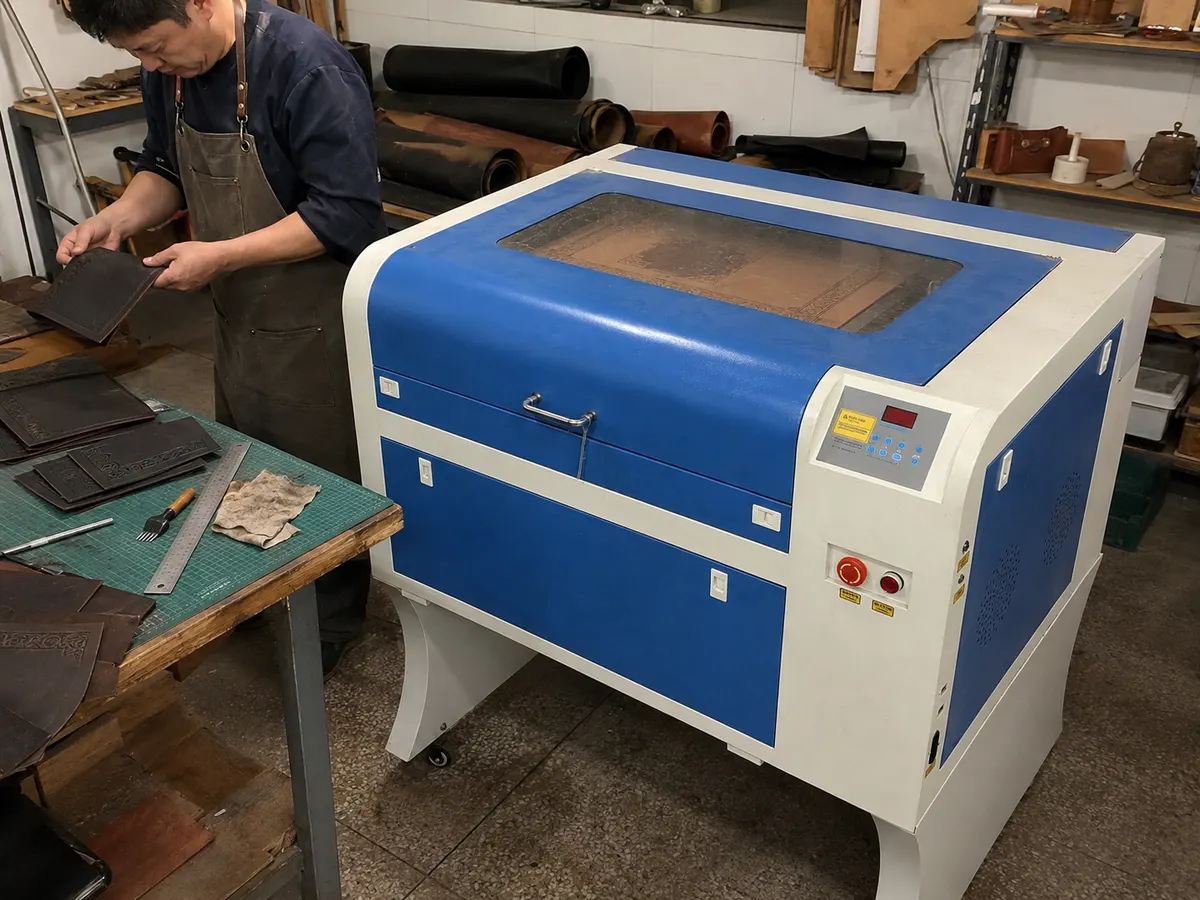 Wooden craft carving
 Acrylic sign fabricationLeather pattern engraving
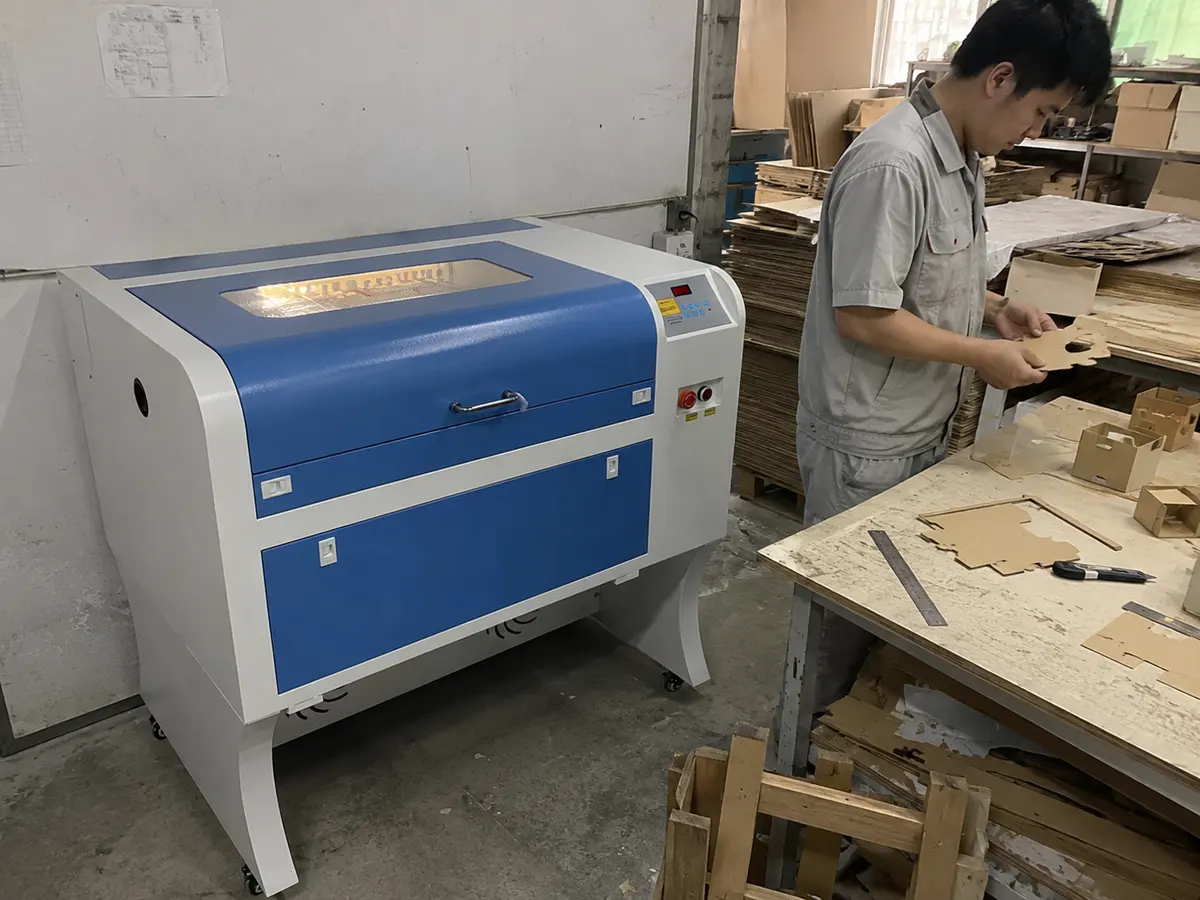 Packaging material samplingWooden craft carvingAcrylic sign fabrication
Floor-standing white-blue body with open-lid view - real workshop scenes build buyer trust.
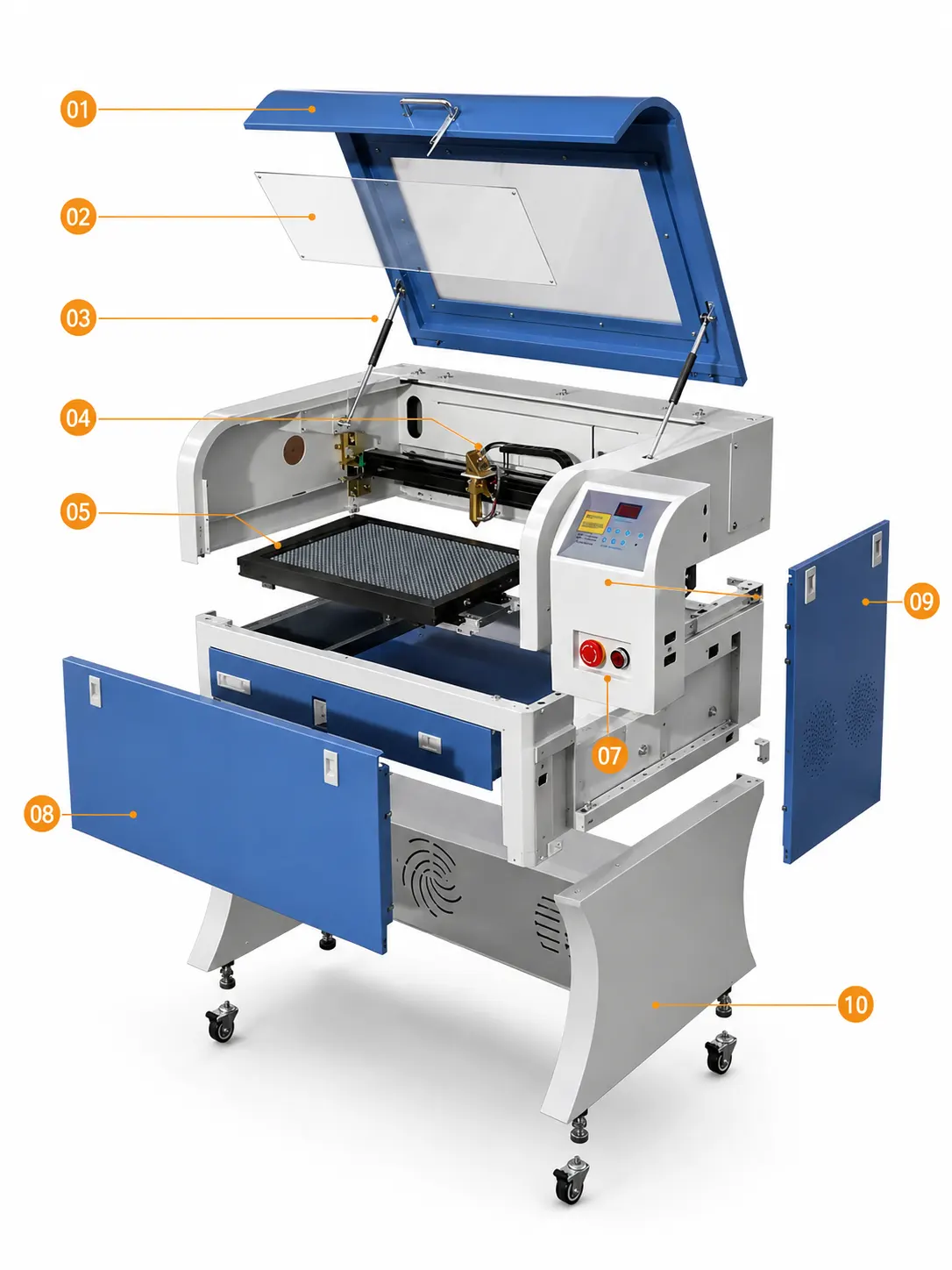
The blue metal cover seals the processing area, minimizing the escape of laser light, fumes, and debris and enhancing the safety of equipment.
The transparent protective window allows operators to monitor the internal engraving or cutting process, enabling them to keep track of the machining.
Two side gas springs provide support and cushioning for the hood’s opening, ensuring smoother lifting and lowering and reducing the risk of.
The laser head is mounted on a lateral guide mechanism, enabling precise movement along a predefined path and ensuring accurate positioning for.
The honeycomb worktable supports the workpiece, reducing laser reflection and back-side scorch while facilitating downward exhaust of fumes.
It integrates a display screen and parameter control buttons for setting the processing speed, power, and operating mode, offering centralized and.
The red emergency stop button and control switch are used to start, stop, and perform emergency power-off of the equipment, enabling convenient and.

A still tour of the body—every detail on show.
00:19A still tour of the body—every detail on show.
00:12Reinforced wooden crate with foam corner guards, engine dust-wrapped, body palletized with cross steel strapping—zero shift on long hauls
Real on-site records from our factory, offering a practical view of our production capability and delivery readiness.
Our team is ready to advise you on the best product configuration and procurement plan.
info@eascoutia.com400 158 58991. It is commonly used for factories, fabrication shops, production cells and custom-processing workshops, subject to the selected model and site conditions.
2. Match material type, work size, capacity, accuracy, speed, control method, power and extraction needs to the actual workload and operating environment.
3. Confirm model, working area, power, tooling, control system and optional fixtures, then verify the response time and any special requirements.
4. Prepare rated utilities, safe operating clearance, ventilation or dust extraction and operator training; follow the manual for operation, inspection and routine maintenance.
 Simplified explanation