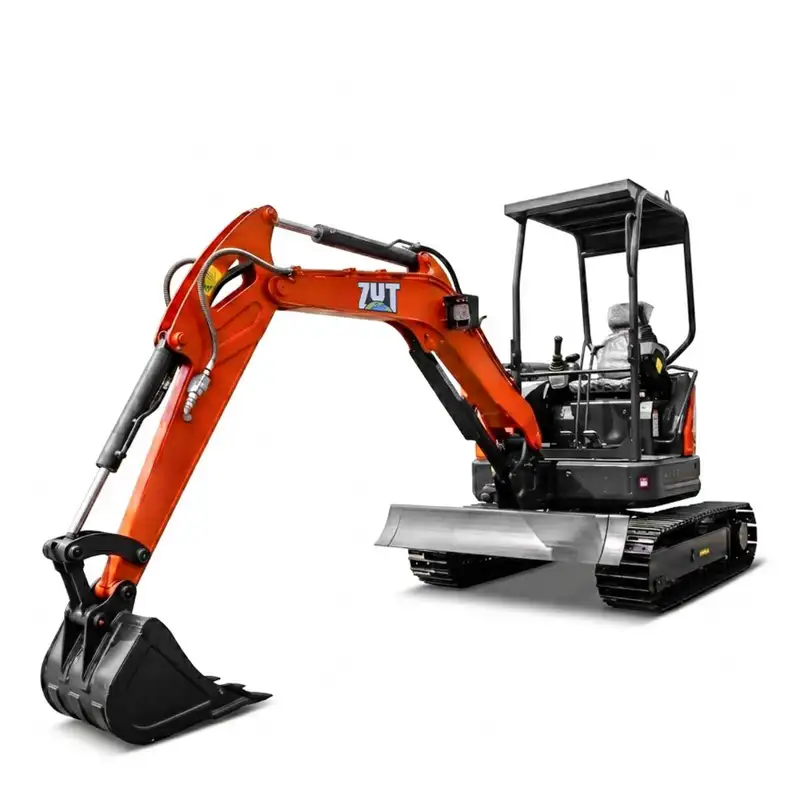
The canopy roof and support frame form one verified overhead protection assembly above the operator position.
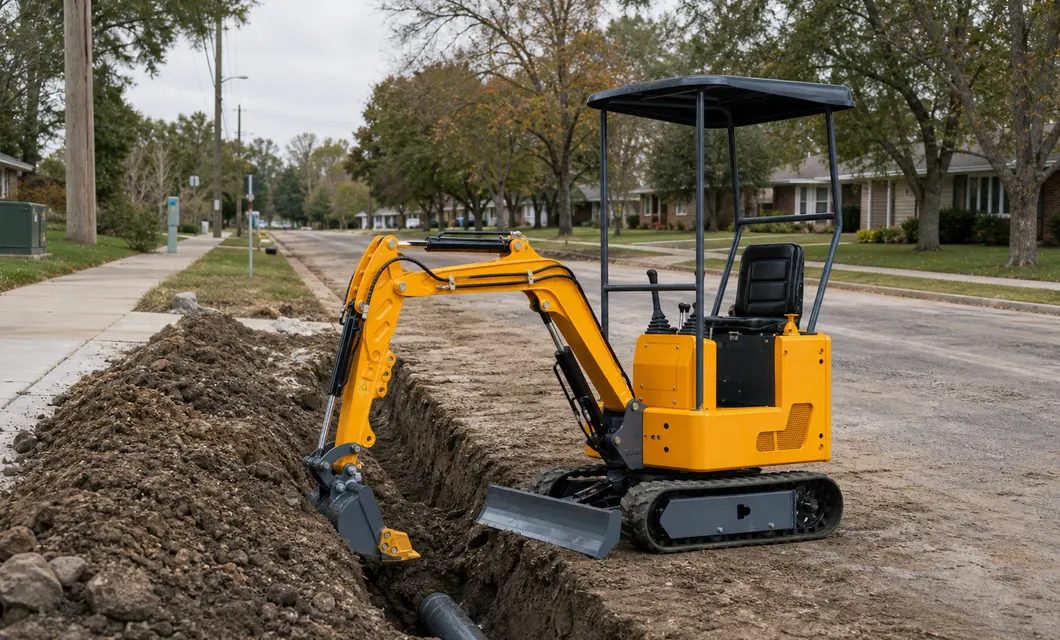 Utility Route Work - Municipal Utility Trench Excavation


Compact excavation for narrow work zones
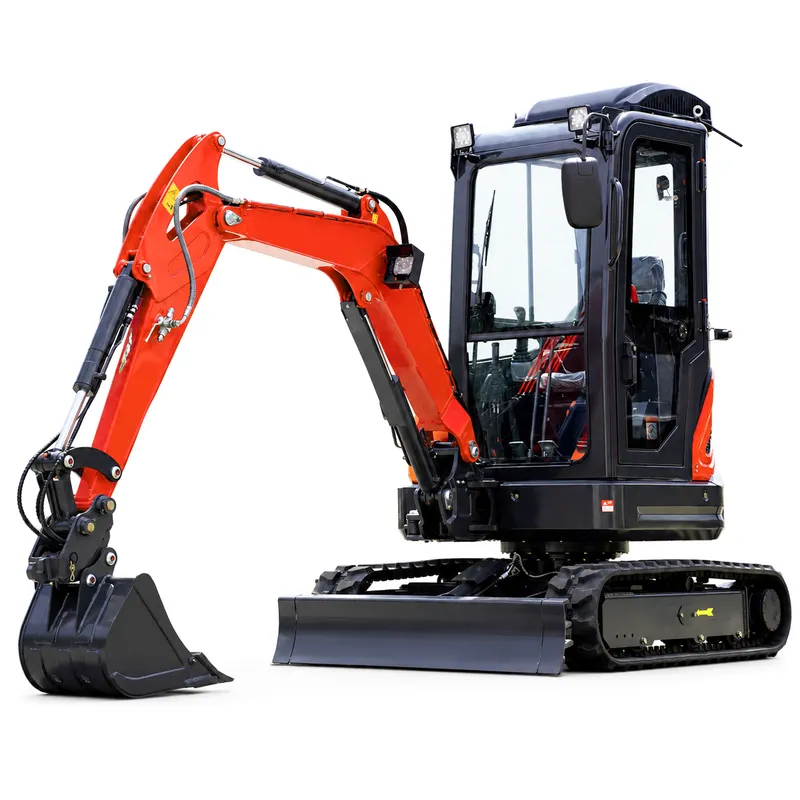
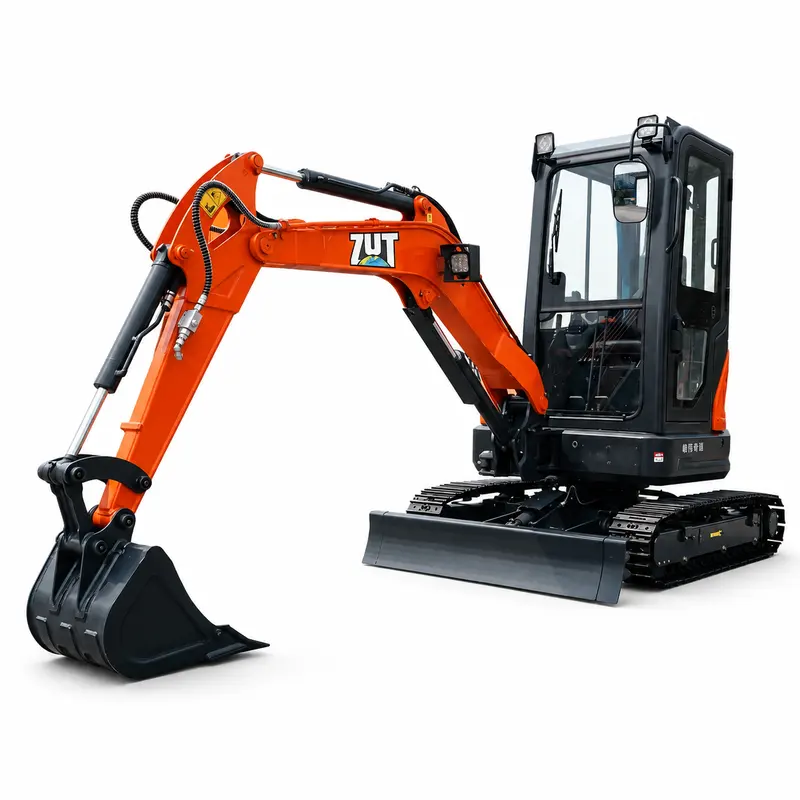
The scenes show the excavator working along field drainage rows, foundation perimeters, municipal utility trenches and landscape beds. Its tracked undercarriage, dozer blade and articulated digging equipment provide a practical layout for controlled soil removal where routes and work boundaries are clearly defined.
 Field Drainage Work - Field Drainage Trenching in Narrow Rows
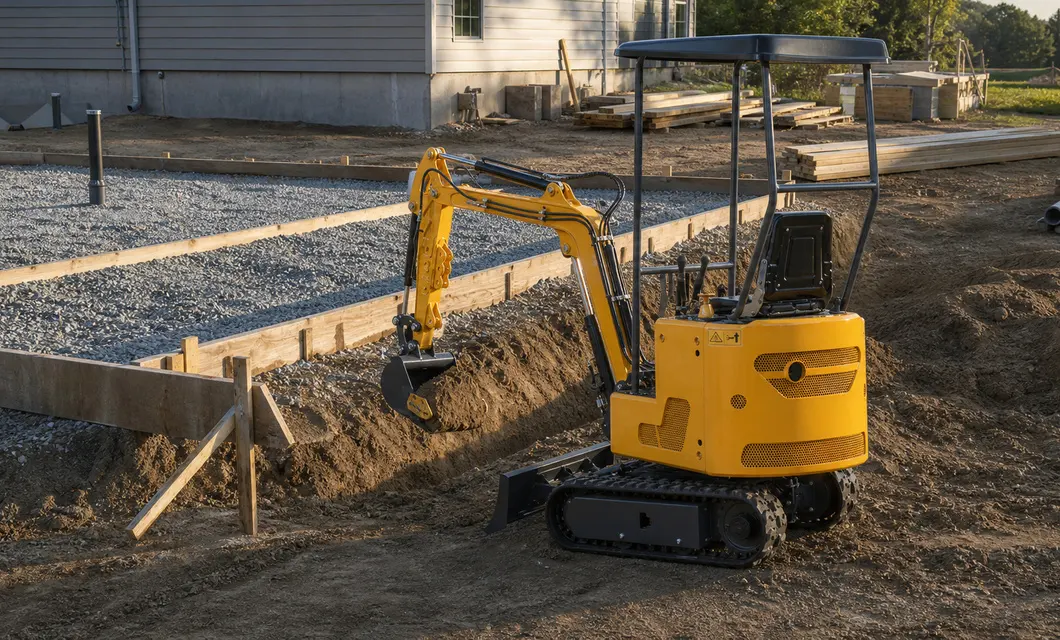 Foundation Edge Work - Foundation Perimeter ExcavationUtility Route Work - Municipal Utility Trench Excavation
 Landscape Bed Work - Landscape Bed Excavation ControlField Drainage Work - Field Drainage Trenching in Narrow RowsFoundation Edge Work - Foundation Perimeter Excavation
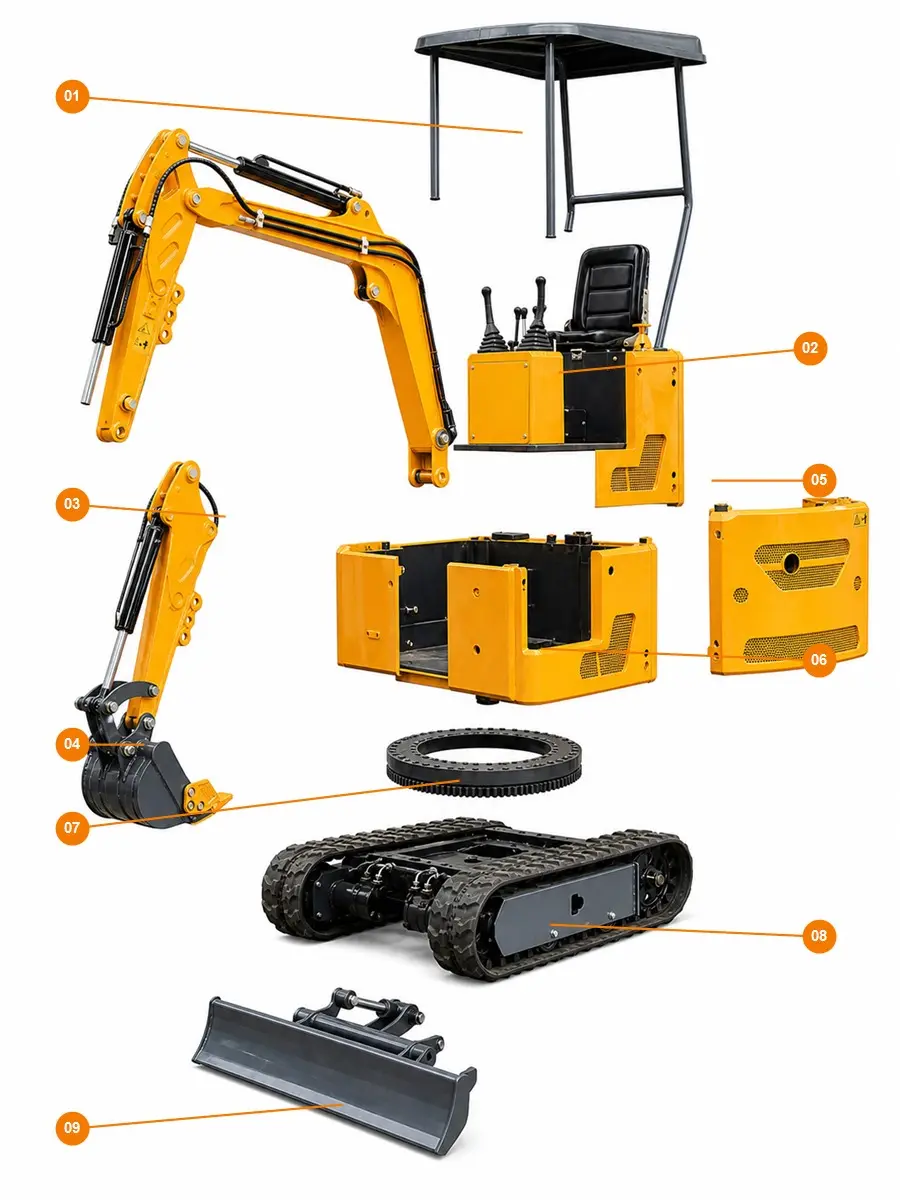
The canopy roof and support frame form one verified overhead protection assembly above the operator position.
The seat, control levers and console remain one mounted operating assembly for direct machine control.
The boom carries its verified hydraulic cylinder and hose routing from the upper-body pivot to the wrist joint.
The dipper arm, linkage and digging bucket work as one connected assembly at the boom outer pivot.
The rear cover encloses the cooling and engine service area and keeps the exterior body profile complete.
This housing forms the upper mounting structure and supports the operator station and working equipment.
The slewing ring joins the upper structure to the travel frame and enables controlled horizontal rotation.


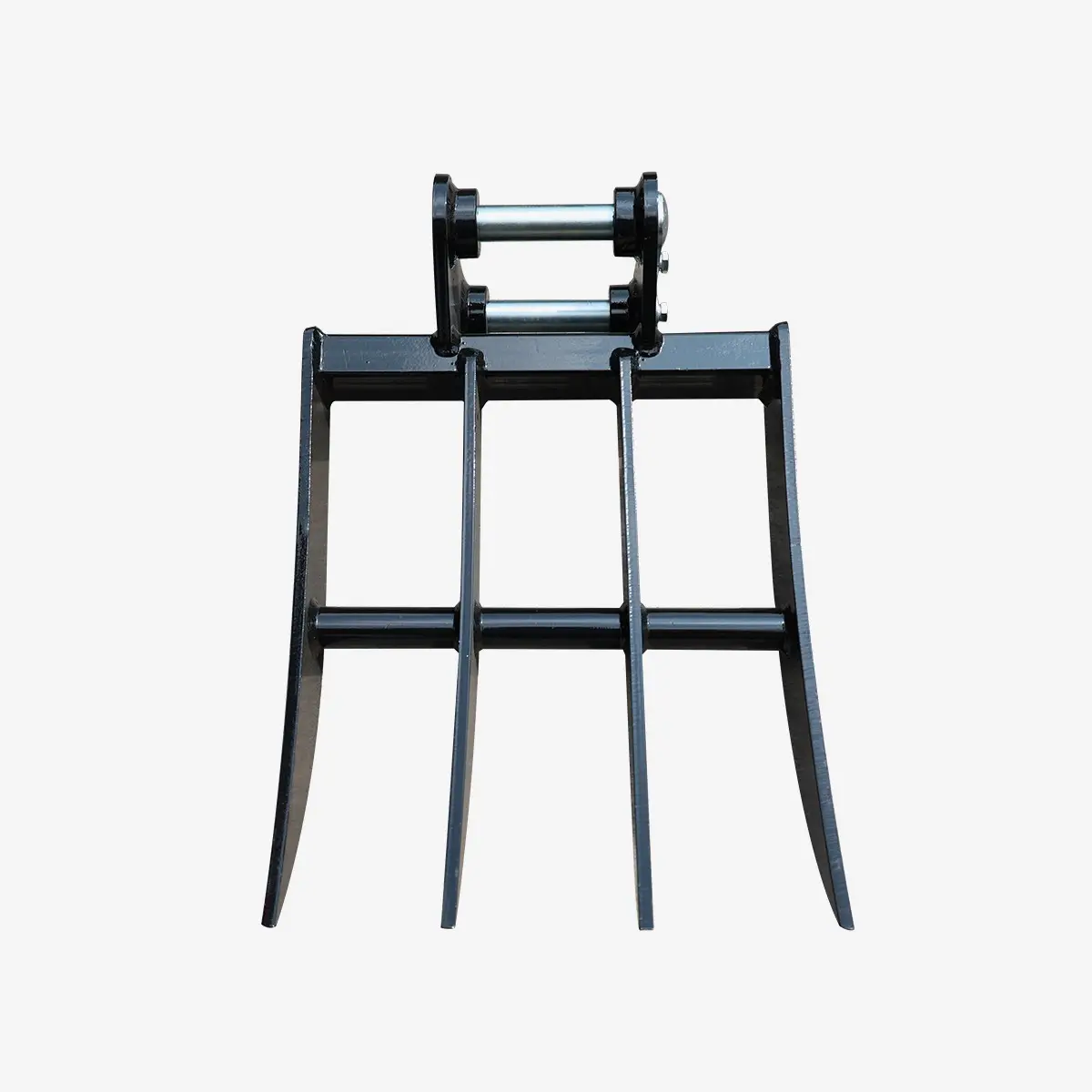

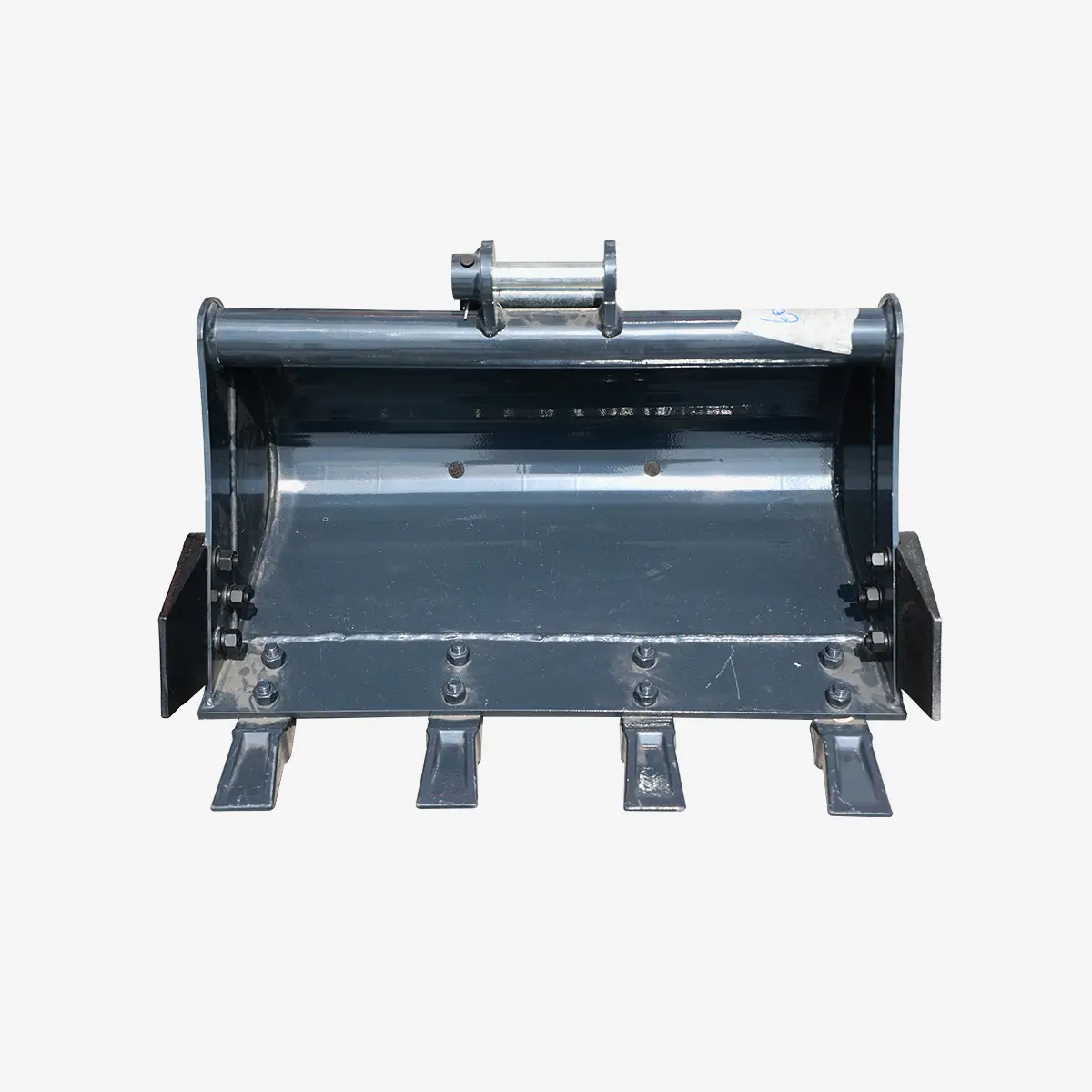

An operation demo of the EXC004-08 excavator. Watch power-on, travel, swing, and bucket work in action—covering the full everyday workflow so you can quickly see how to operate it and how it performs. Model: EXC004-08.
01:15An operation demo of the EXC004-08 excavator. Watch power-on, travel, swing, and bucket work in action—covering the full everyday workflow so you can quickly see how to operate it and how it performs. Model: EXC004-08.
00:39A full walkthrough of excavator packaging and delivery. From protective packing and securing for transport to outbound shipping, this video clearly shows how the machine is packed and safely handed off for delivery.
Qualification Documents
Our team is ready to advise you on the best product configuration and procurement plan.
info@eascoutia.com400 158 5899The compact layout is shown working beside field rows, residential edges, utility routes and landscape beds where the intended excavation boundary is easy to identify.
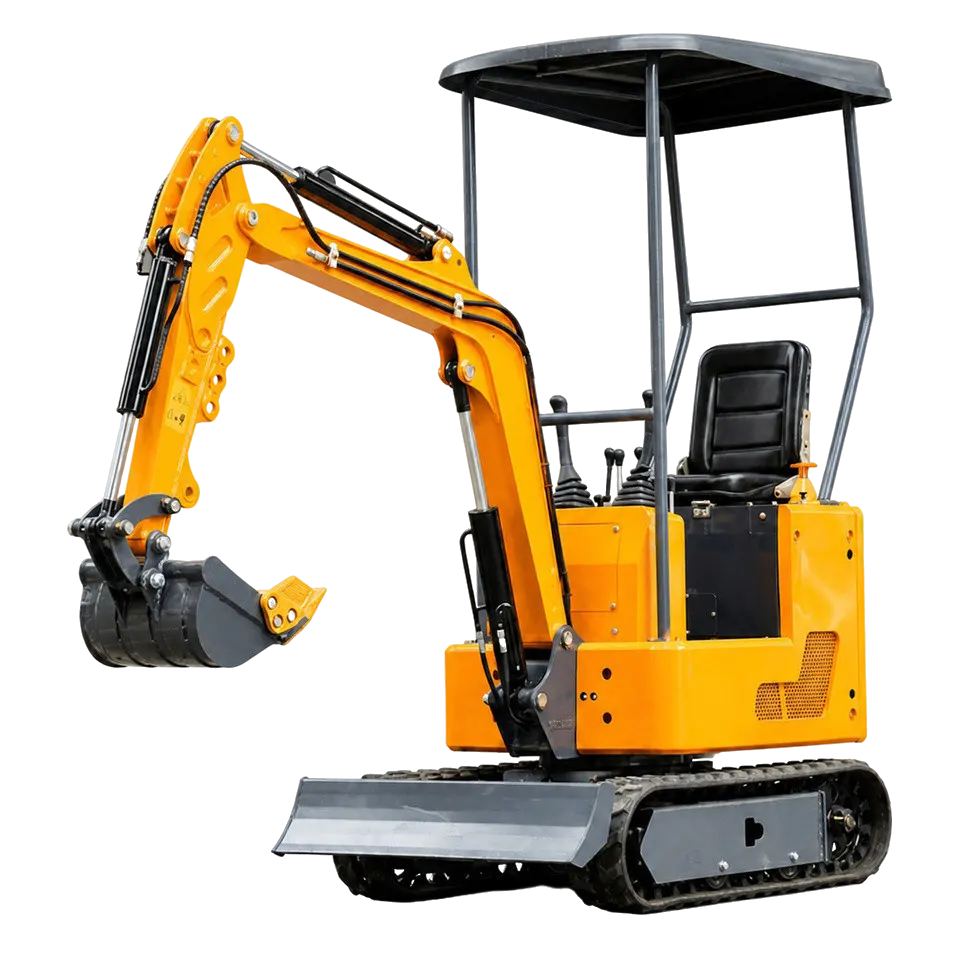
The crawler tracks and front dozer blade provide the visible grounded support arrangement while the boom, dipper and bucket are positioned beside the work line.
The boom, dipper, hydraulic cylinders and bucket pivots form the visible digging linkage that guides the cutting edge through localized soil removal tasks.
The supplied material shows an open canopy, seat and several control levers, giving a clear view of the basic operator position and working interface.
Mark the intended boundary, check ground conditions and keep the immediate operating area clear before starting a trenching or soil-shaping operation.
 Simplified explanation