Main weatherproof fabric forming the shade cover.
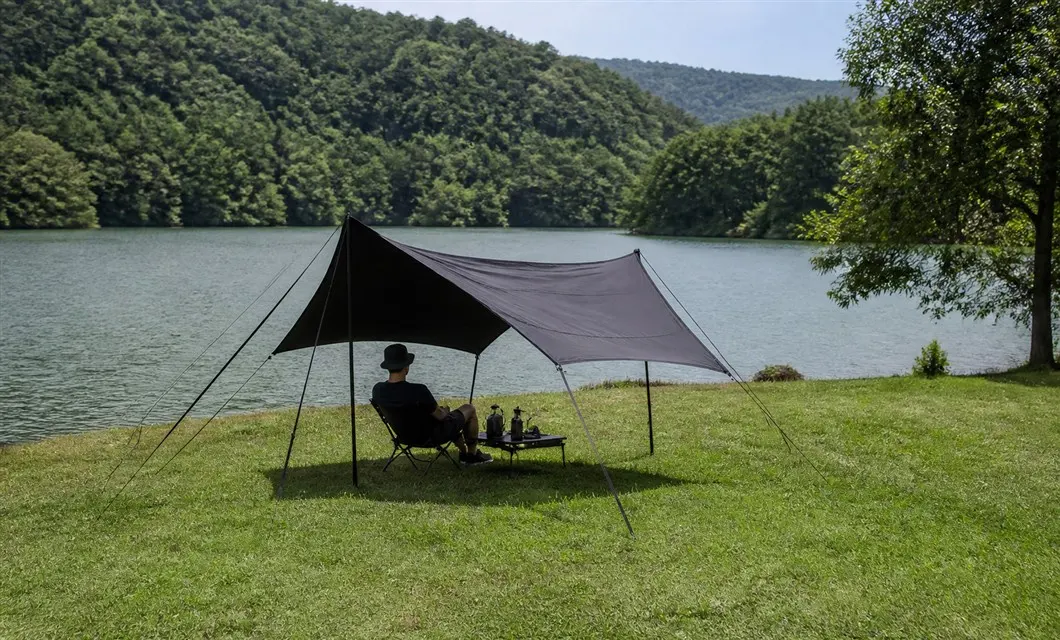 Open beach shade beside the shoreline while preserving airflow and clear views.


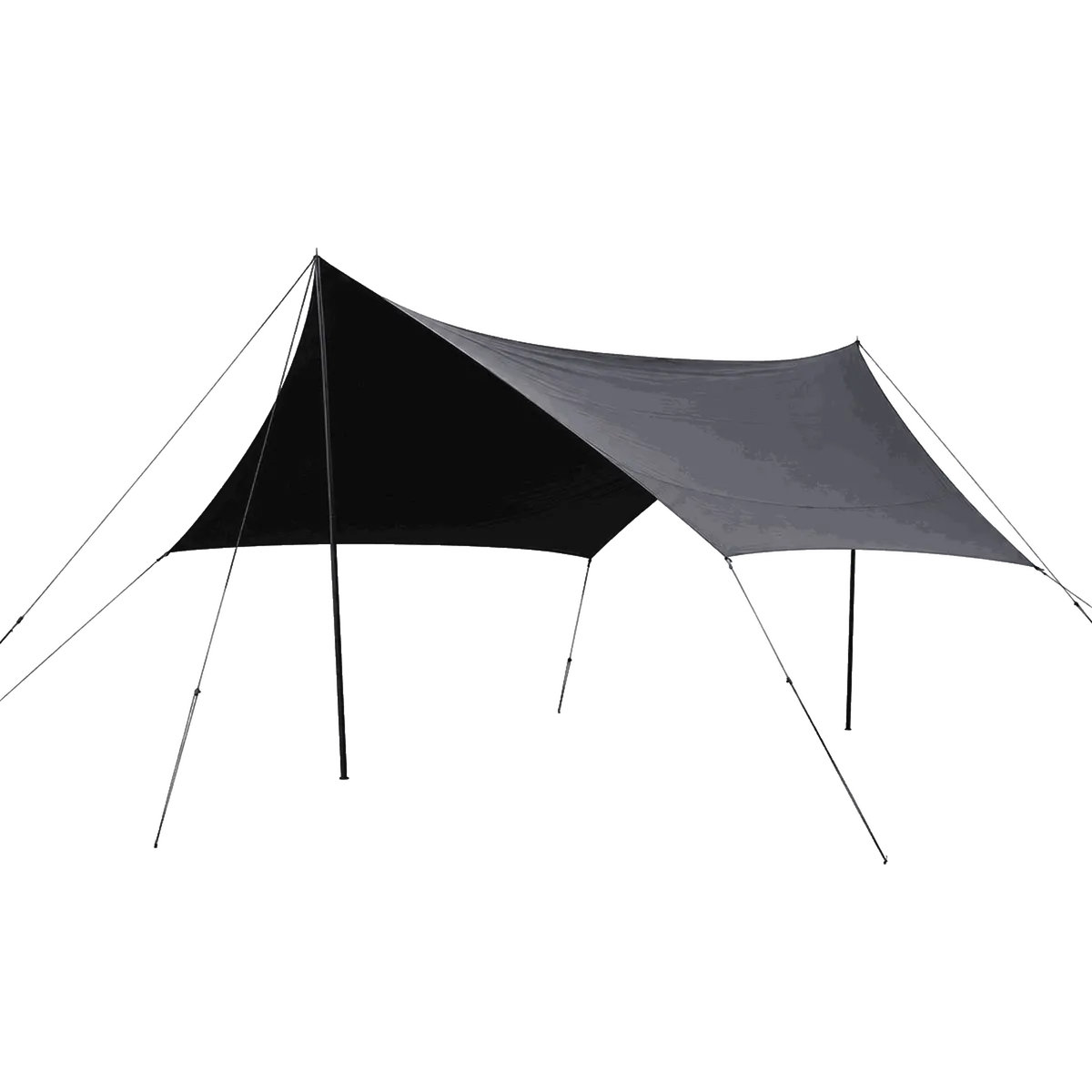
Flexible Shade for Open Air Activities
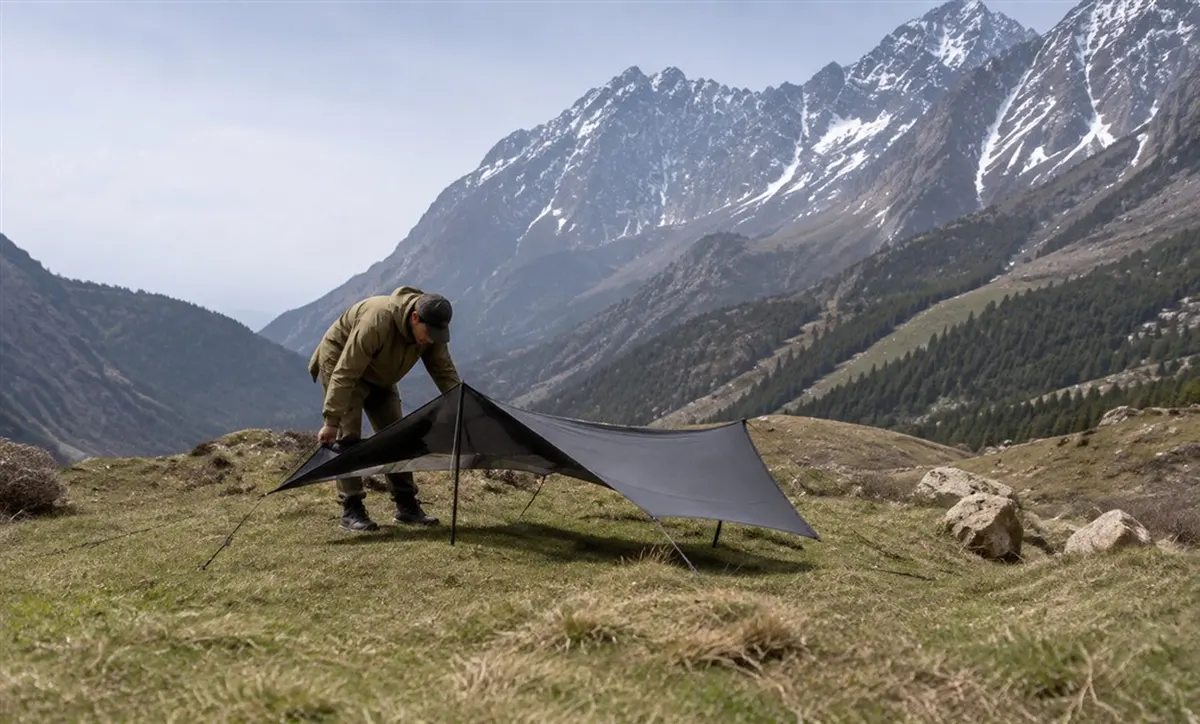
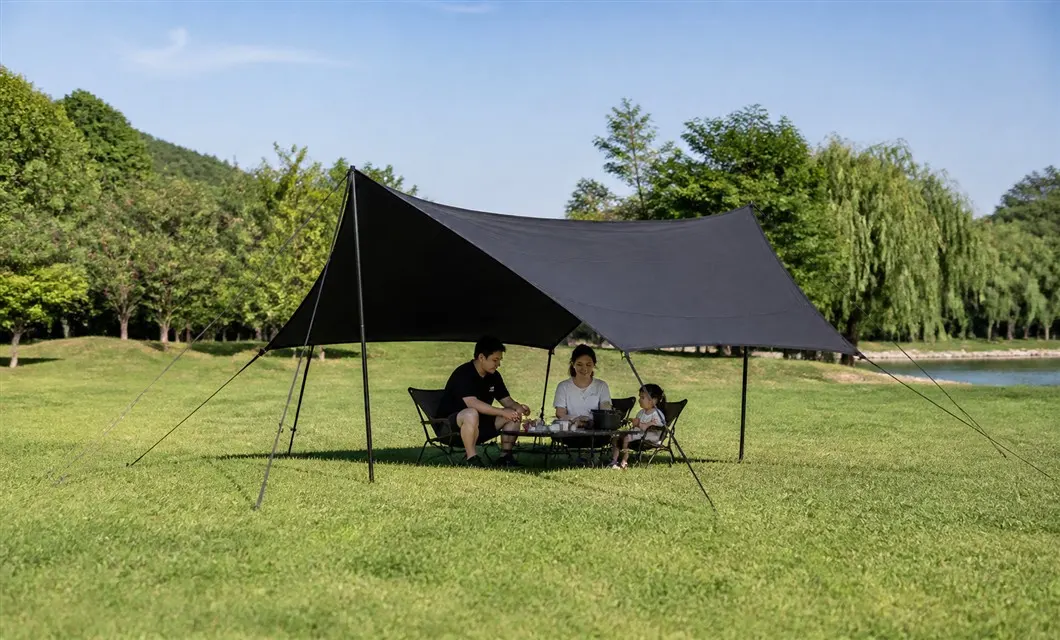
At a lakeside campsite, the canopy creates a broad shaded area for tables, chairs, and shared meals. In a mountain camp, its tensioned fabric provides open shelter while preserving airflow. On a beach, it covers a rest area without enclosing the view. Beside a recreational vehicle, it extends the outdoor living zone for dining, relaxing, and equipment storage.
 Lakeside shade for tables, chairs, family meals, and shared outdoor rest.
 Mountain canopy cover with open airflow for sheltered campsite relaxation.Open beach shade beside the shoreline while preserving airflow and clear views.
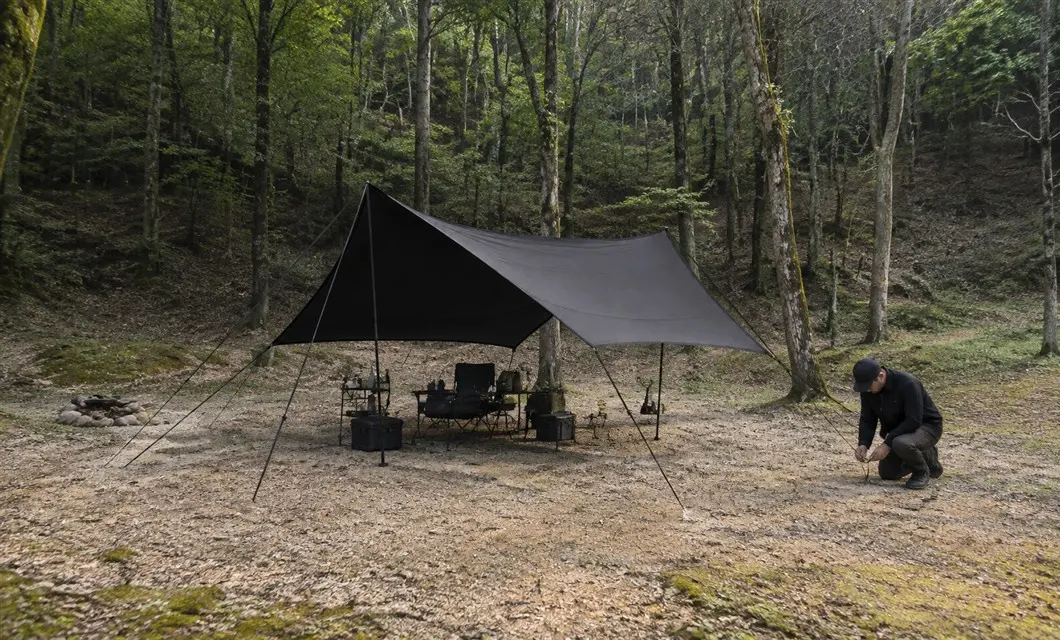 Vehicle-side canopy extending outdoor space for dining, relaxing, and gear.Lakeside shade for tables, chairs, family meals, and shared outdoor rest.Mountain canopy cover with open airflow for sheltered campsite relaxation.
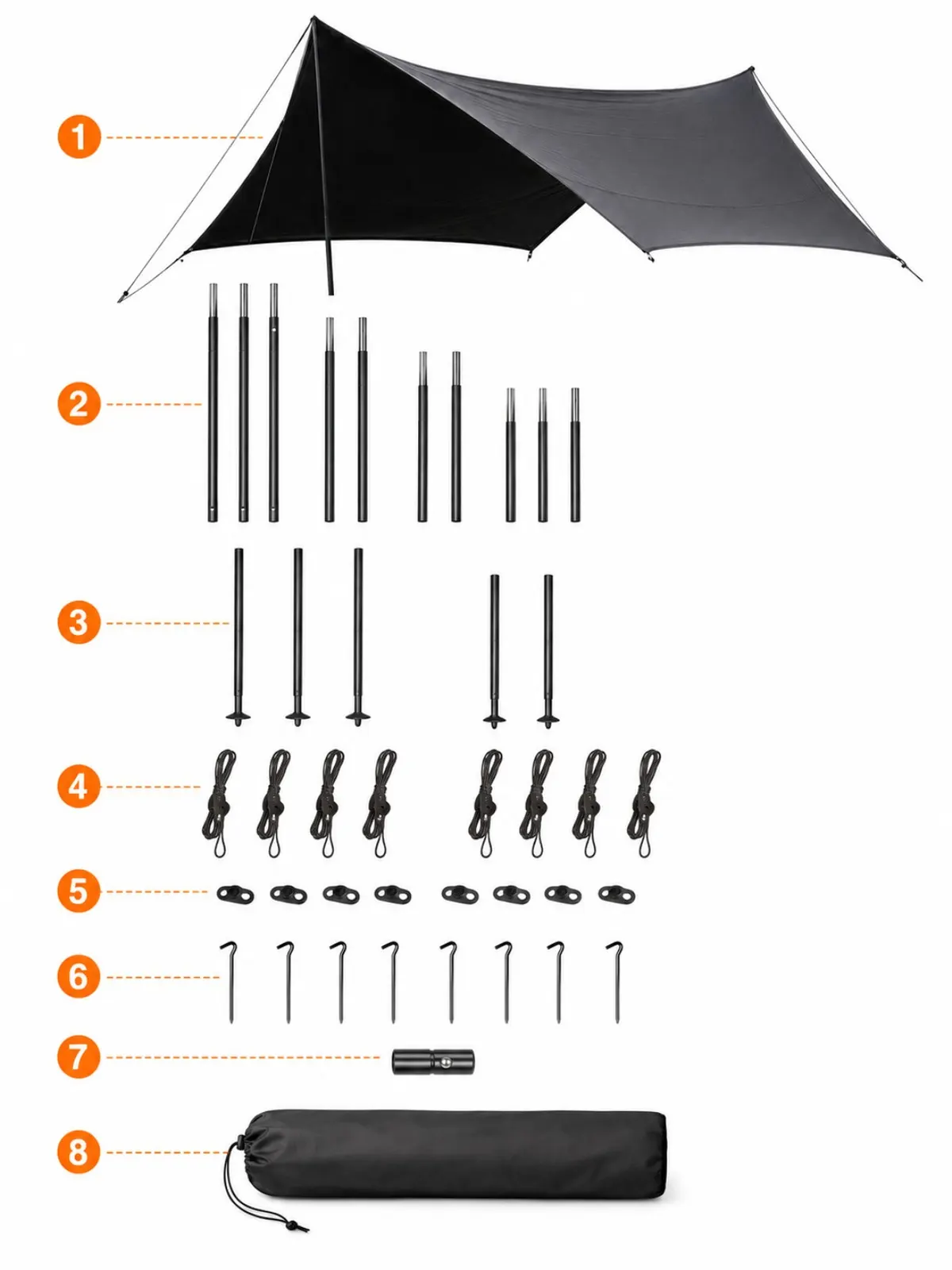
Main weatherproof fabric forming the shade cover.
Black pole sections supporting the canopy.
Connector joining the visible pole sections.
Tension lines stabilizing the canopy.
Metal pins anchoring the canopy lines.
Preassembled ropes with tension hardware.
Black adjusters regulating rope tension.
Our team is ready to advise you on the best product configuration and procurement plan.
info@eascoutia.com400 158 5899It is designed to create open shade and light weather cover for camping, outdoor rest, meals, equipment, and social activities.
No. It is an open-sided canopy, so it provides shade and cover while retaining outdoor airflow and visibility.
Support poles, guy ropes, rope adjusters, and metal ground stakes form the anchoring and tension system.
The canopy fabric is described as weatherproof and suitable for light rain cover; it is not a substitute for an enclosed storm shelter.
Dry the fabric before packing, release the tension, separate the poles and ropes, and store all components in their designated bags.
 Simplified explanation