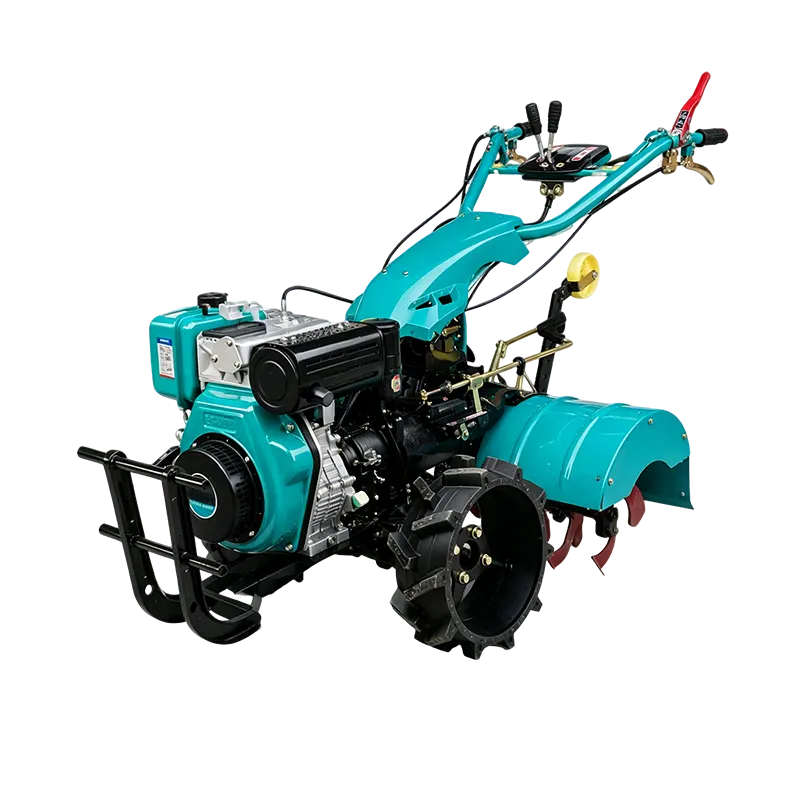
The paired handles, grips, levers and cables form the operator control point for guided walk-behind work.
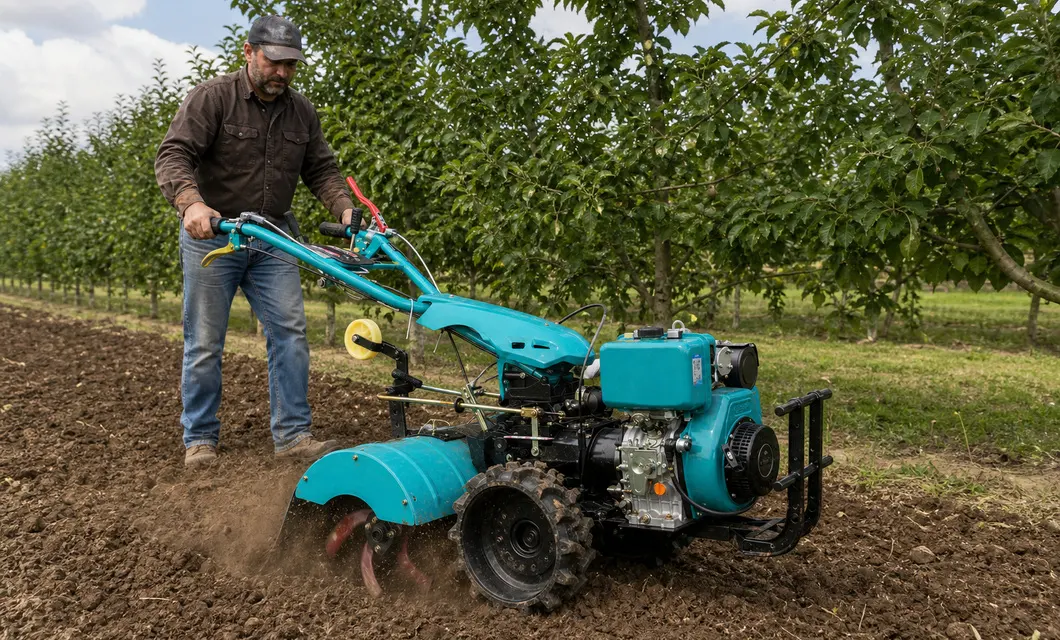 Orchard Row Work - Orchard Row Direct Tilling


Guided Tillage Across Working Fields
The four scenes show the same turquoise walk-behind direct-drive cultivator being guided by an operator through dry fields, terraced ground, orchard rows and a canal-side strip. The red curved blades meet the soil in each view, while the diesel engine, twin handles, lugged wheels, support elements and front guard remain visible. Natural dirt, crop residue and light dust show ordinary working use without changing the machine structure.
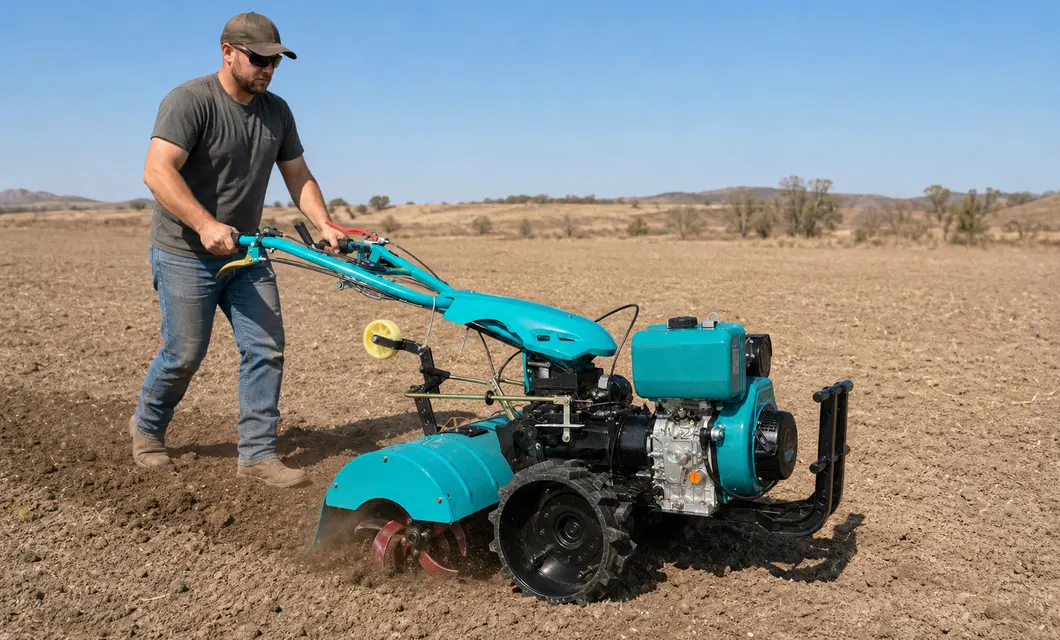 Dry Field Work - Dry Field Soil Cultivation
 Terraced Ground Work - Terraced Field Rotary WorkOrchard Row Work - Orchard Row Direct Tilling
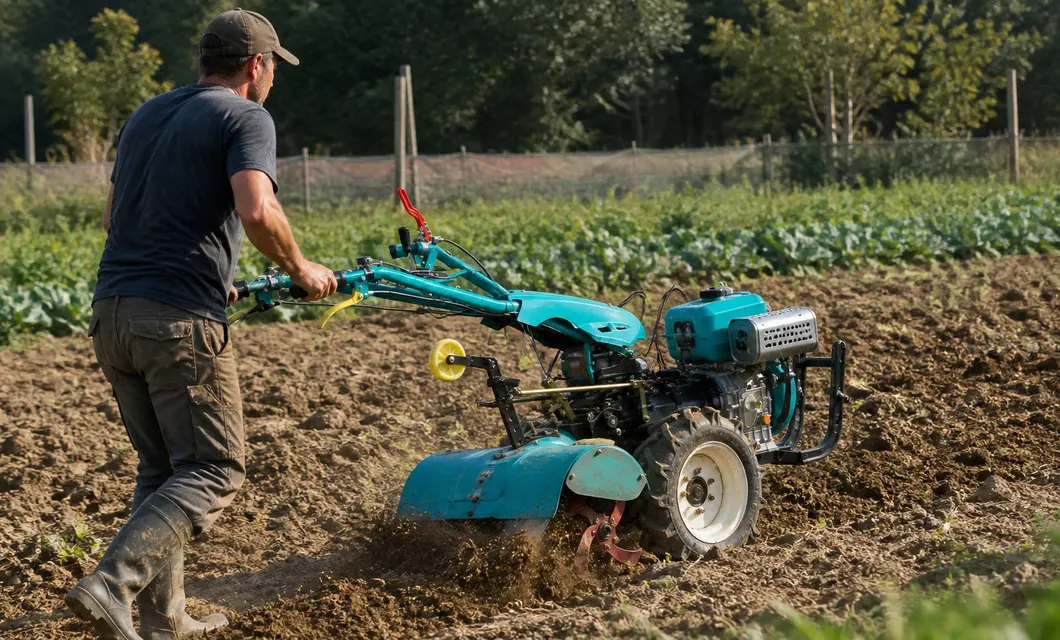 Vegetable Bed Work - Vegetable Bed Soil WorkDry Field Work - Dry Field Soil CultivationTerraced Ground Work - Terraced Field Rotary Work
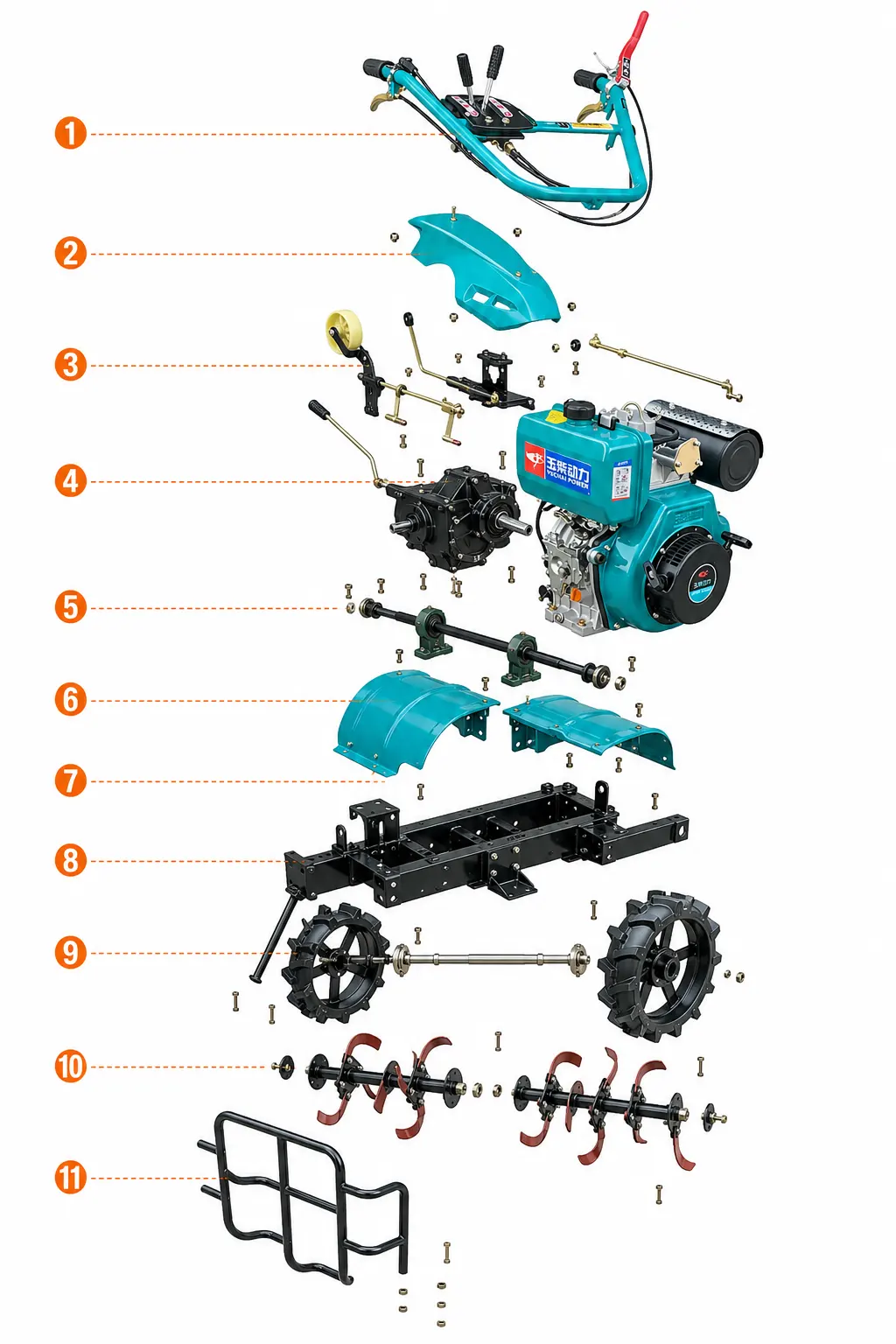
The paired handles, grips, levers and cables form the operator control point for guided walk-behind work.
The upper turquoise cover encloses the visible control and drive area while shielding it during field use.
The central frame and bracket support the engine, controls and working train, keeping their mounting positions aligned.
The diesel engine and adjacent drive housing provide the visible power unit that carries rotation to the implement.
The transverse shaft spans the central drive area and transfers motion between the connected assemblies.
The curved hood surrounds the red rotary blades and keeps the visible cutting zone directed toward the soil.
The black tubular guard projects at the front of the machine to shield the engine-side working area during handling.
Our team is ready to advise you on the best product configuration and procurement plan.
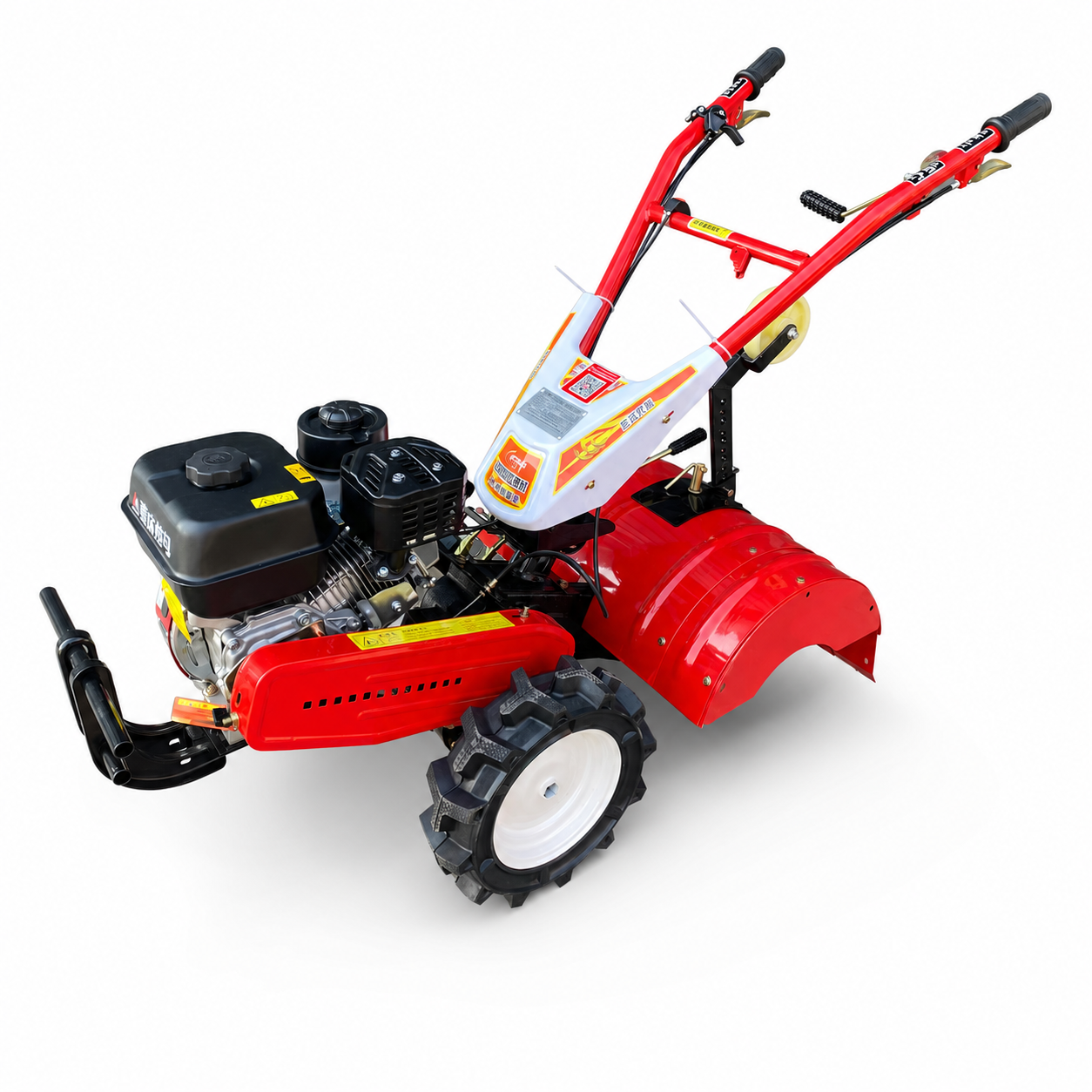
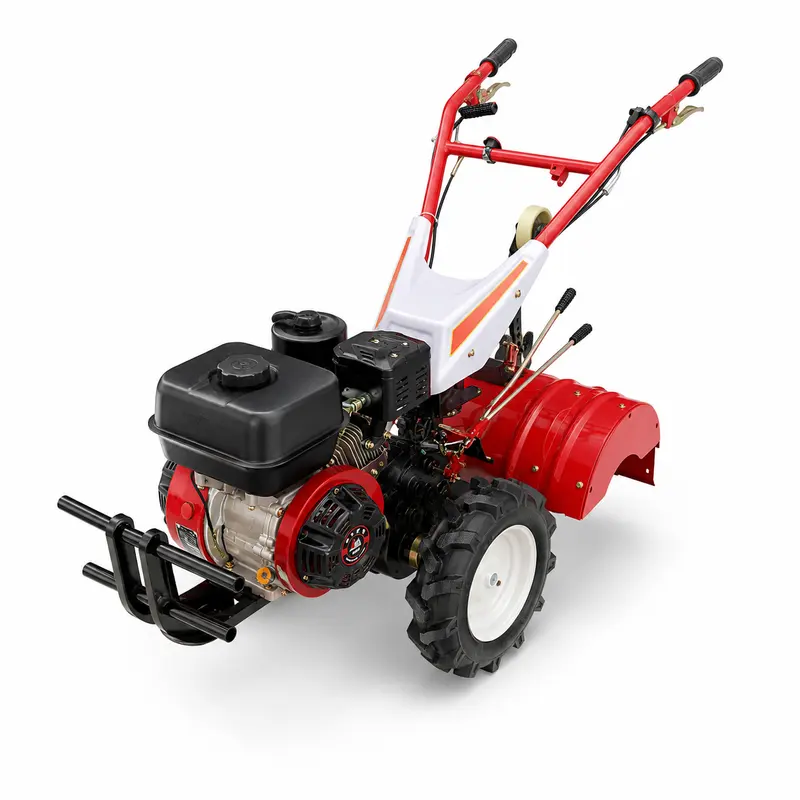
info@eascoutia.com400 158 5899Every image shows the same walk-behind direct-drive rotary cultivator with its diesel engine, handles, hood, wheels and curved blades.
Check the handles, control levers, cables, engine, drive housing, blade hood, wheels, guard and support parts before use.
The scenes represent dry fields, terraced ground, orchard rows and a canal-side cultivated strip.
Keep both hands on the handles and guide the machine so the curved blades remain engaged with the intended soil.
Use the procurement plan to communicate special requirements based on the actual configuration needed.
 Simplified explanation