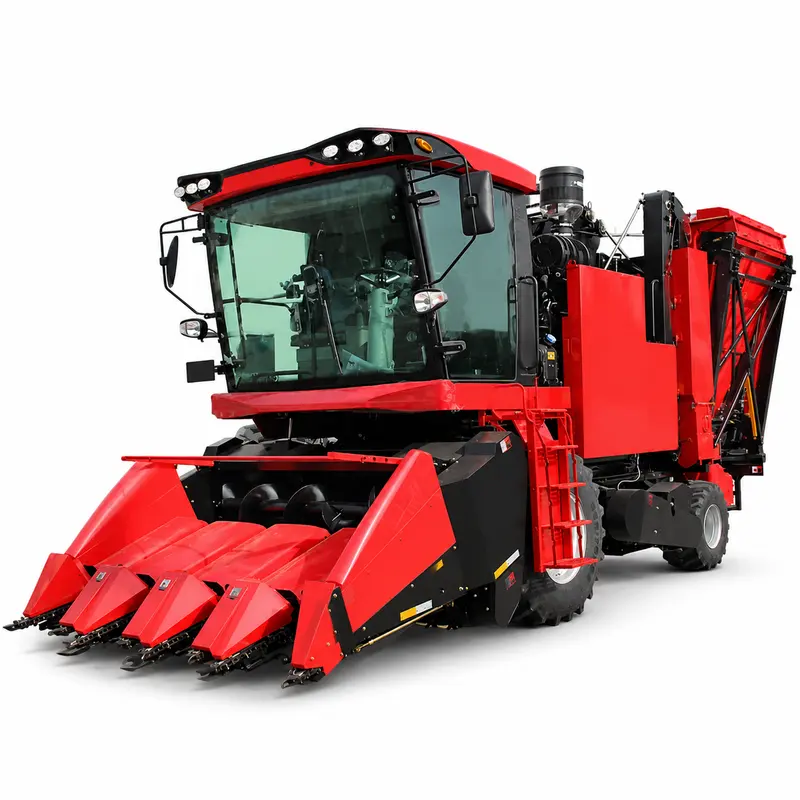
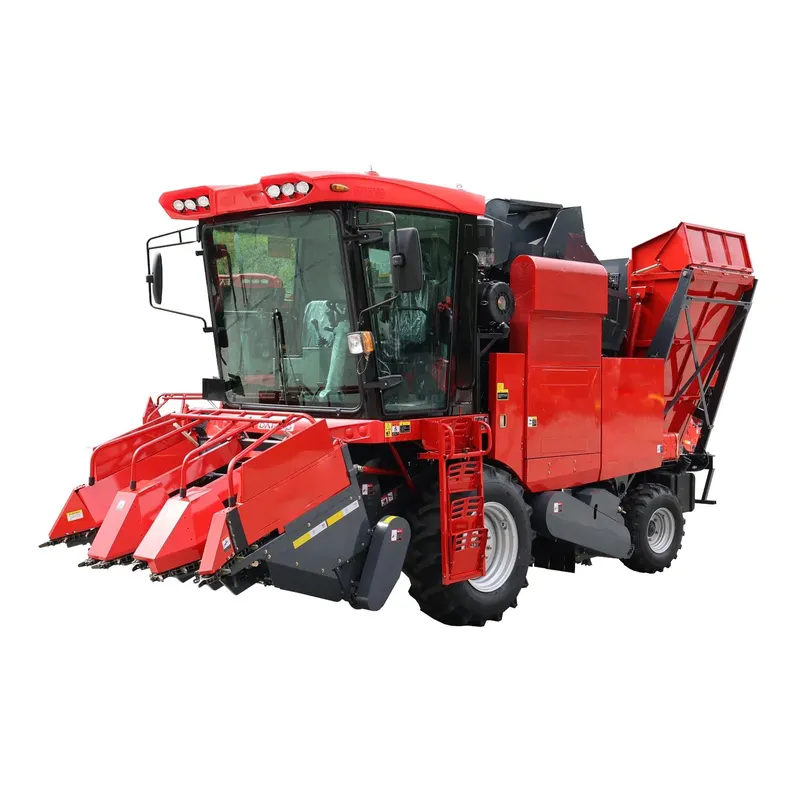
The front header gathers standing corn into the intake path and keeps entry aligned during field harvesting.
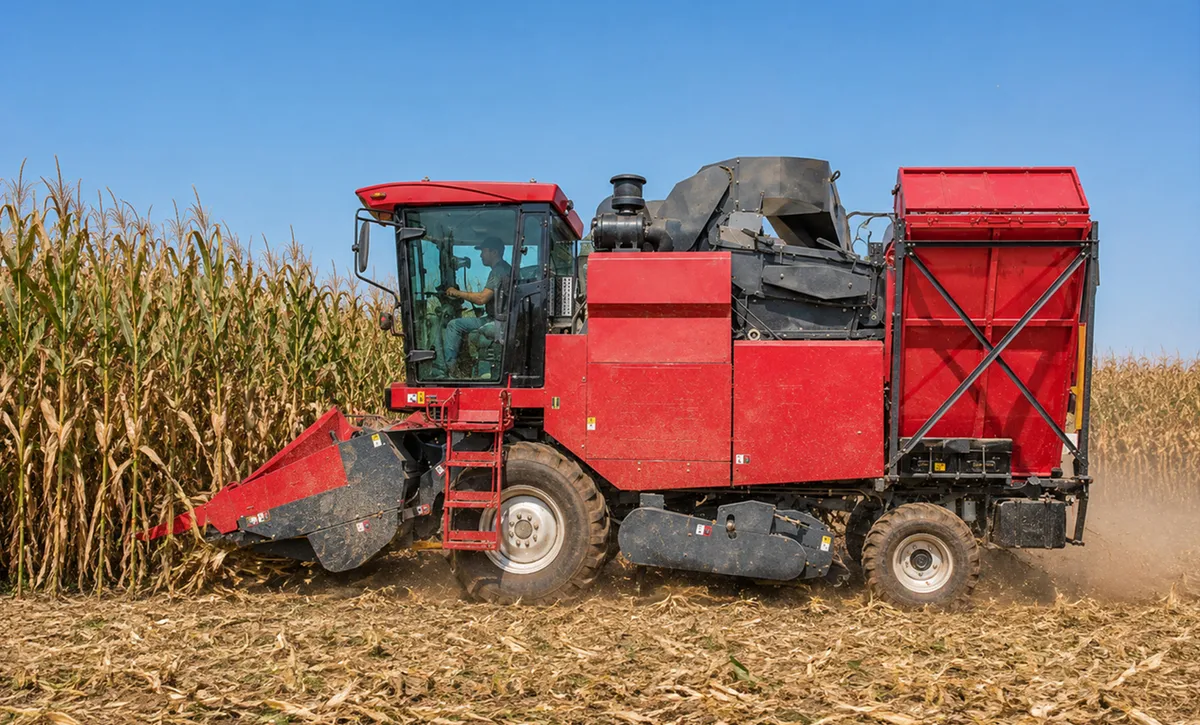 Three-Quarter-Field-Harvest.jpg


Corn Harvest From Header to Hopper
These scenes show a harvester moving through standing corn with the front header engaged and rear hopper receiving crop. The operator remains in the cab while the center route carries material through picking, conveying and peeling before collection. Rear, front, three-quarter and side views show residue, tire contact and dust.
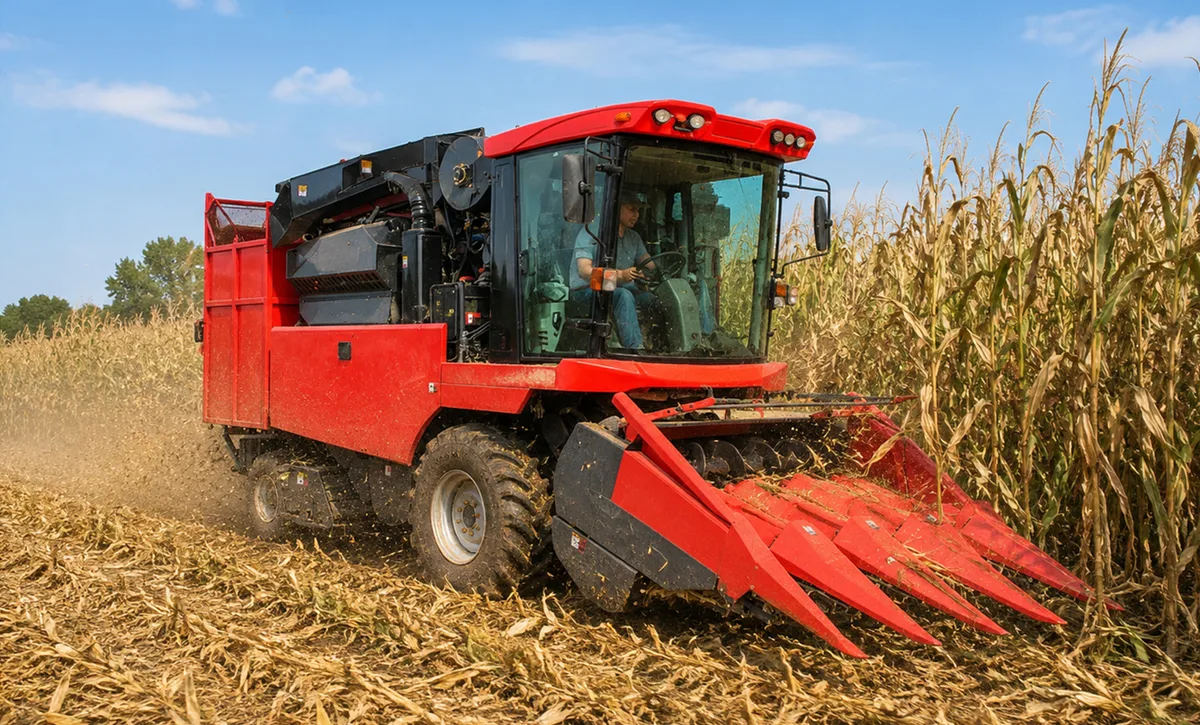 Rear-Working-Dust-Trail.png
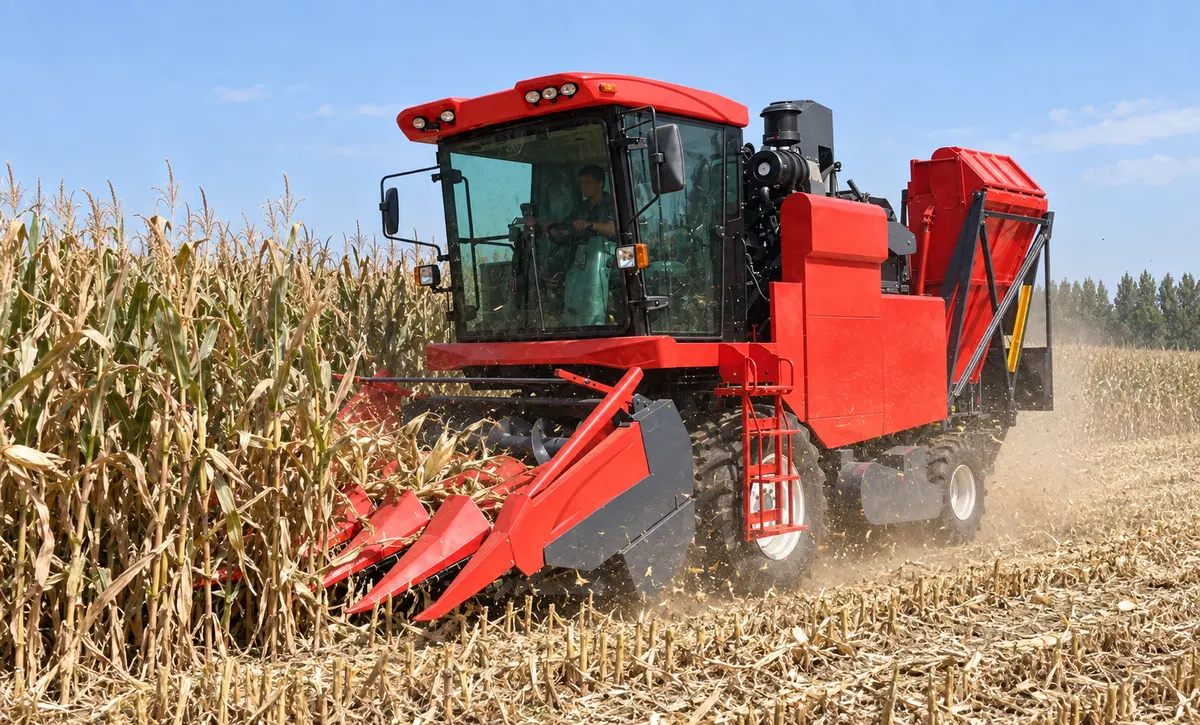 Front-Header-Engagement.jpgThree-Quarter-Field-Harvest.jpg
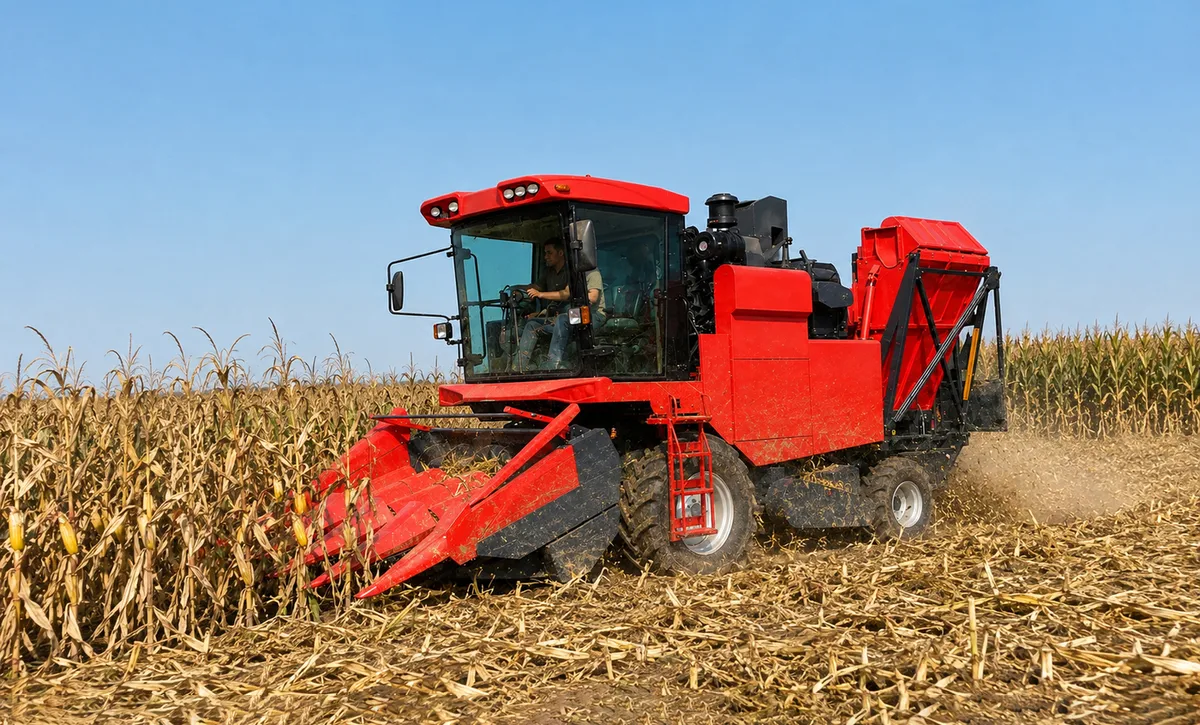 Side-Profile-Field-Pass.jpgRear-Working-Dust-Trail.pngFront-Header-Engagement.jpg

The front header gathers standing corn into the intake path and keeps entry aligned during field harvesting.
Visible guards frame the openings and guide standing corn toward the intake path.
The main chassis supports the mounted assemblies and keeps their positions aligned as one machine.
The cab forms the forward operator station and gives the operator a clear view of the header and row.
The visible engine and cooling assembly supplies drive power and manages heat during operation.
The processing housing contains visible peeling and crop-handling mechanisms between intake and transfer.
The central elevator raises harvested ears from the header and transfers them to the collection hopper.
Real on-site records from our factory, offering a practical view of our production capability and delivery readiness.
Our team is ready to advise you on the best product configuration and procurement plan.
info@eascoutia.com400 158 5899The product references show the machine harvesting standing corn with a front header and a rear collection hopper.
The documented header covers four operating rows with the supplied row arrangement.
Harvested grain is routed through the processing section to the rear hopper shown in the field scenes.
A swing-blade return unit positioned between the tires returns processed residue to the field.
Before use, check the header, hopper, guards, wheels, cab area and visible connections, then follow the operating documentation.
 Simplified explanation